
Buying Guide
Our Guide to the Best Solar Generators for Camping in 2026
Compare camping solar generators by watt-hours, AC output, panel pairing, solar input, weight, recharge time and campsite fit.
By Hardcastle's RV Editors
24 min read5 products evaluated
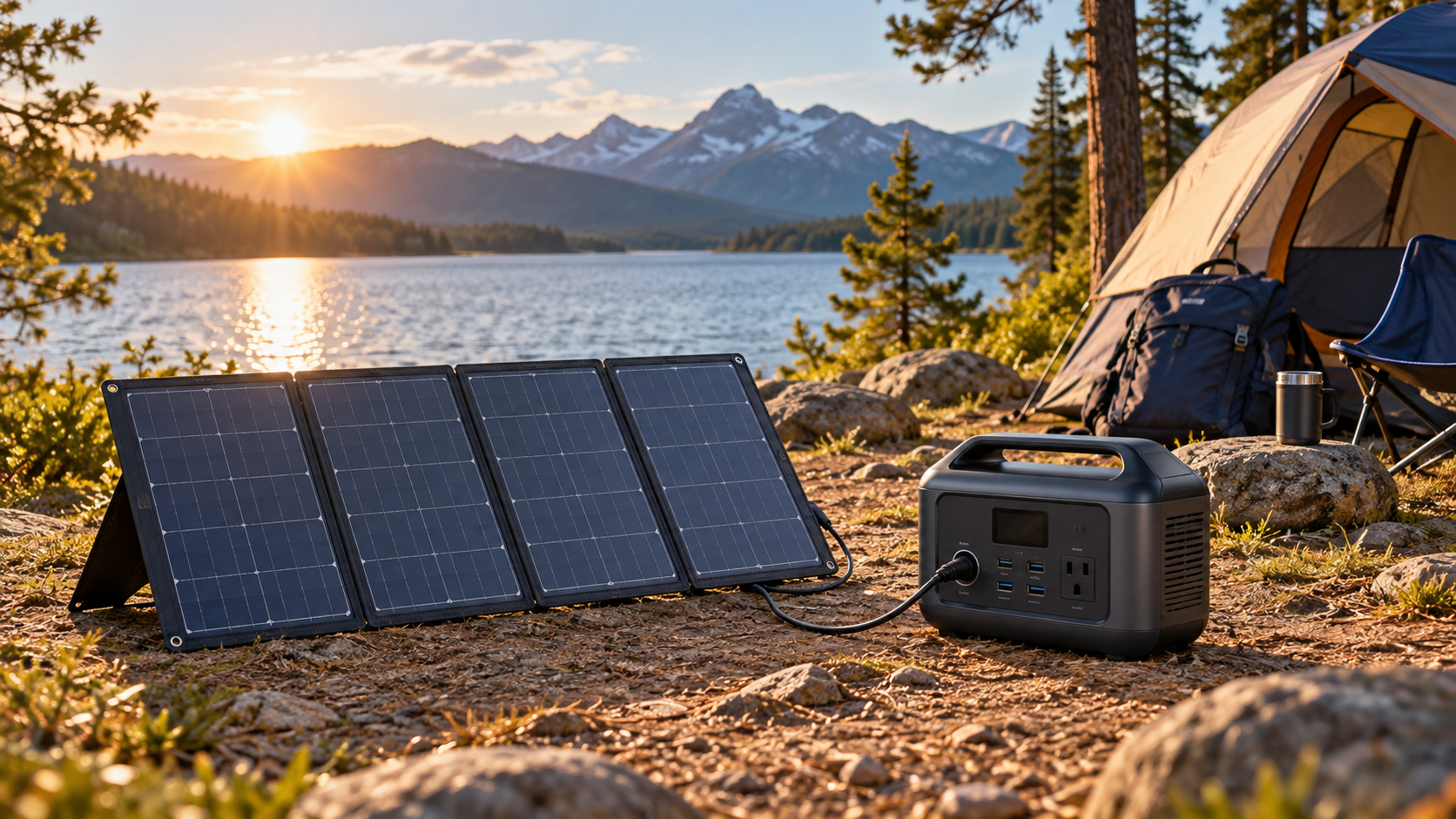
A camping solar generator is a battery, inverter, ports, charging system, and panel plan. A product can have enough watt-hours but still be wrong if the panel is too small, the solar input is limited, or the kit is too heavy for the campsite.
This roundup is based on current product pages, published specifications, product images, capacities, output claims, panel bundles, and recharge claims. The practical guidance below emphasizes solar refill math, panel sizing, high-watt cooking, and whether a small kit is enough for a full weekend.
Hardcastle’s RV field notes
The Rig Fit Check
A quick way to connect the shortlist to the space, workload and ownership details that matter after the box arrives.
- Start with the job
- Jackery Solar Generator 1000 v2 with 200W Panel leads this shortlist for Car campers who want a complete 1kWh-class battery and solar panel kit.. Use that fit as a reference point, then compare the alternatives against your own space and workload.
- Specs that separate the picks
- The first details to compare are Capacity: 1,070Wh, Capacity: 292Wh. Confirm the exact model and included components before ordering.
- Trade-off to plan for
- Balanced design may not lead every specification
The Practical Shortlist
A road-tested-thinking look at 5 options, organized around the job each one suits best.

Best overall camping kit
Jackery Solar Generator 1000 v2 with 200W Panel
Car campers who want a complete 1kWh-class battery and solar panel kit.
Our take Check price for Jackery Solar Generator 1000 v2 with 200W Panel (opens in a new tab)

Best lightweight kit
Jackery Solar Generator 300 with 40W Panel
Minimalist car campers and short trips focused on small electronics.
Our take Check price for Jackery Solar Generator 300 with 40W Panel (opens in a new tab)

Best station-only upgrade
Jackery Explorer 1000 v2
Campers who want 1kWh-class capacity but prefer choosing panels separately.
Our take Check price for Jackery Explorer 1000 v2 (opens in a new tab)

Best mid-capacity value
GRECELL EB500
Campers who want more than a mini station without carrying a full 1kWh system.
Best compact LFP station
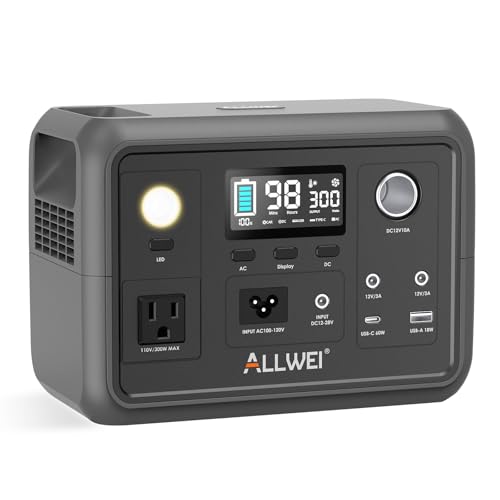
ALLWEI PPS300-4
Light camping and emergency electronics where low weight matters.
Our take Check price for ALLWEI PPS300-4 (opens in a new tab)
Why Each Pick Made the Cut
Best overall camping kit1 of 5
Jackery Solar Generator 1000 v2 with 200W Panel on Amazon (opens in a new tab)
Jackery Solar Generator 1000 v2 with 200W Panel makes the shortlist because balanced specification mix suits most general buyers.
Best for
- Car campers who want a complete 1kWh-class battery and solar panel kit.
Why it made the shortlist
This model is aimed at Car campers who want a complete 1kWh-class battery and solar panel kit.. The documented setup centers on capacity: 1,070Wh, continuous output: 1,500W, surge output: 3,000W.
The most useful documented advantage is balanced specification mix suits most general buyers. Its Listed weight: 23.8 lb specification sits at the upper end of the comparable range in this 3-product comparison. Confirm whether that figure refers to tool weight or working capacity before comparing it directly.
The main limitation to plan around is balanced design may not lead every specification. Confirm whether the stated figure refers to product weight or rated working capacity. Compare it with your lifting, transport and support requirements before deciding.
Key dimensions & specs
- Capacity: 1,070Wh
- Continuous output: 1,500W
- Surge output: 3,000W
- Listed weight: 23.8 lb
Pros
- Balanced specification mix suits most general buyers
- Compact power supports organized campsite setups
- 3,000W surge supports brief motor startup loads
- Includes 200W panel for solar charging
Cons
- Balanced design may not lead every specification
- High-watt appliances still drain capacity quickly
Best lightweight kit2 of 5
Jackery Solar Generator 300 with 40W Panel on Amazon (opens in a new tab)
Choose Jackery Solar Generator 300 with 40W Panel for heavier-duty design suits demanding regular use.
Best for
- Minimalist car campers and short trips focused on small electronics.
Why it made the shortlist
Jackery Solar Generator 300 with 40W Panel is positioned for Minimalist car campers and short trips focused on small electronics.. The documented setup centers on capacity: 292Wh, continuous output: 300W, surge output: 600W.
The feature doing most of the work here is heavier-duty design suits demanding regular use. Its Listed weight: 7.5 lb specification sits at between the lower and upper ends of the comparable range in this 3-product comparison. Confirm whether that figure refers to tool weight or working capacity before comparing it directly.
The practical constraint here is heavy-duty format can increase transport burden. Confirm whether the stated figure refers to product weight or rated working capacity. Compare it with your lifting, transport and support requirements before deciding.
Key dimensions & specs
- Capacity: 292Wh
- Continuous output: 300W
- Surge output: 600W
- Listed weight: 7.5 lb
Pros
- Heavier-duty design suits demanding regular use
- Compact power supports organized campsite setups
- 7.5 lb weight stays easy to carry
- 292Wh fits short-duration electronic device use
Cons
- Heavy-duty format can increase transport burden
- 300W excludes heaters and most cooking appliances
Best station-only upgrade3 of 5
Jackery Explorer 1000 v2 on Amazon (opens in a new tab)
Jackery Explorer 1000 v2 is the better fit when campers who want 1kWh-class capacity but prefer choosing panels separately.
Best for
- Campers who want 1kWh-class capacity but prefer choosing panels separately.
Why it made the shortlist
The intended use case is Campers who want 1kWh-class capacity but prefer choosing panels separately.. The documented setup centers on capacity: 1,070Wh, continuous output: 1,500W, surge output: 3,000W.
What separates it on paper is compact design favors limited storage spaces. Against the other 4 picks, the useful comparison starts with capacity: 1,070Wh and continuous output: 1,500W. Those details show whether its configuration suits the job better than a neighboring recommendation.
Before committing, account for compact format limits maximum capability headroom. Confirm the exact model number and included components before ordering. Check dimensions, compatibility and maintenance needs against the way you plan to use and store it.
Key dimensions & specs
- Capacity: 1,070Wh
- Continuous output: 1,500W
- Surge output: 3,000W
- Battery chemistry: LiFePO4
Pros
- Compact design favors limited storage spaces
- Portable design suits campsite power routines
- 3,000W surge helps absorb startup demand
- LiFePO4 chemistry supports frequent long-term cycling
Cons
- Compact format limits maximum capability headroom
- Runtime needs testing before overnight trips
- Solar panel requires a separate purchase
Best mid-capacity value4 of 5
GRECELL EB500 on Amazon (opens in a new tab)
Choose GRECELL EB500 for value-focused design prioritizes essential practical capabilities.
Best for
- Campers who want more than a mini station without carrying a full 1kWh system.
Why it made the shortlist
GRECELL EB500 is positioned for Campers who want more than a mini station without carrying a full 1kWh system.. The documented setup centers on capacity: 519Wh, continuous output: 500W, included panel: 100W.
The feature doing most of the work here is value-focused design prioritizes essential practical capabilities. Against the other 4 picks, the useful comparison starts with capacity: 519Wh and continuous output: 500W. Those details show whether its configuration suits the job better than a neighboring recommendation.
The practical constraint here is value focus may omit premium conveniences. Confirm the exact model number and included components before ordering. Check dimensions, compatibility and maintenance needs against the way you plan to use and store it.
Key dimensions & specs
- Capacity: 519Wh
- Continuous output: 500W
- Included panel: 100W
- Runtime claim: Up to 9 hours
Pros
- Value-focused design prioritizes essential practical capabilities
- Portable design suits campsite power routines
- 519Wh balances runtime with practical portability
- 500W supports several mid-draw electronic devices
Cons
- Value focus may omit premium conveniences
- Runtime needs testing before overnight trips
- Noise and fuel use rise under load
Best compact LFP station5 of 5
ALLWEI PPS300-4 on Amazon (opens in a new tab)
The strongest case for ALLWEI PPS300-4 is backup positioning offers a simpler alternative.
Best for
- Light camping and emergency electronics where low weight matters.
Why it made the shortlist
For Light camping and emergency electronics where low weight matters., this is one of the more relevant configurations in the shortlist. The documented setup centers on capacity: 256Wh, continuous output: 300W, surge output: 600W.
Its case starts with backup positioning offers a simpler alternative. Its Listed weight: 6.4 lb specification sits at the lower end of the comparable range in this 3-product comparison. Confirm whether that figure refers to tool weight or working capacity before comparing it directly.
The trade-off worth checking first is backup role offers less performance headroom. Confirm whether the stated figure refers to product weight or rated working capacity. Compare it with your lifting, transport and support requirements before deciding.
Key dimensions & specs
- Capacity: 256Wh
- Continuous output: 300W
- Surge output: 600W
- Listed weight: 6.4 lb
Pros
- Backup positioning offers a simpler alternative
- Compact power supports organized campsite setups
- 600W surge supports brief motor startup loads
- LiFePO4 cells suit regular repeated battery use
Cons
- Backup role offers less performance headroom
- 300W excludes heaters and most cooking appliances
How We Built This Shortlist
Each pick was assessed across 4 criteria weighted for real-world use.
- Published product specifications
- We used published product details for product names, images, product page URLs, watt-hour capacity, AC output, port details, panel bundles, and recharge claims. We excluded price, star rating, and review count from the ranking. The published specifications helped us separate true panel kits from station-only listings.
- Camping energy math
- We prioritized combinations that make sense for actual campsite use. A product scored higher when its capacity, output, and panel pairing created a coherent weekend plan. A small kit could still rank if it clearly served light electronics rather than pretending to be a fridge-and-appliance system.
- Recharge realism
- Solar recharge claims were treated as planning clues, not guarantees. We looked for panel wattage, charging time language, and whether the product could recover useful energy during a normal camping day. Systems with too little panel for their expected loads were treated more cautiously.
- Portability and role clarity
- Weight, handle design, included panels, and output limits shaped the rankings. The Jackery 1000 v2 kit wins as a broad camping solution, while the ALLWEI and Jackery 300 entries stay on the list because they solve light, portable roles. We avoided ranking by capacity alone.
What Matters Before You Choose a Solar Generator for Camping
Key buying criteria so you get the right fit the first time.
Usable watt-hours must match the trip
A 1,070Wh station like the Jackery 1000 v2 class can support a very different weekend than a 256Wh ALLWEI PPS300-4. Start with the watts and hours for each device, then subtract reserve for inverter loss, idle drain, cold weather, and cloudy-day uncertainty. Do not size from the product category name alone.
Panel wattage decides whether solar keeps up
The Jackery 300 kit includes a 40W panel, while the 1000 v2 kit includes a 200W panel. That difference matters more than many roundups admit because camping is a daily refill problem, not just a stored-energy problem. Match panel size to the energy you need to replace each day.
AC output is not the same as runtime
The Jackery 1000 v2 can output 1,500W, but high-watt appliances can drain a 1,070Wh battery quickly. The GRECELL EB500 has a lower 500W AC limit but may be plenty for electronics and small campsite loads. Use high AC output for short bursts, not as proof of long runtime.
Weight and cable bulk affect real camping use
A 23.8-pound station is fine for car camping but much less pleasant for long carries. Small kits like the Jackery 300 or ALLWEI PPS300-4 are easier to move, but their smaller batteries limit comfort loads. Choose the kit around the campsite distance from the vehicle.
Port selection can save battery
USB-C PD, DC outputs, and car ports can reduce conversion waste compared with using AC for everything. The GRECELL EB500 and Jackery units both offer multiple output types, which helps when charging phones, laptops, cameras, and 12V devices. Use the most efficient compatible port for each device.
Match a Solar Generator for Camping to Your RV
Match capacity to camping style
| Camping style | Better class | Example |
|---|---|---|
| Phones, lights, cameras, laptop | 250Wh to 500Wh | ALLWEI PPS300-4 or GRECELL EB500 |
| Weekend car camping with fridge cycles | 1,000Wh class | Jackery Solar Generator 1000 v2 |
| Very light trips with panel top-ups | Small station plus small panel | Jackery Solar Generator 300 |
Scroll sideways to see every column.
Estimate daily solar recovery
A panel does not produce its rated wattage all day. Shade, angle, clouds, heat, and charging limits reduce output. If your devices consume several hundred watt-hours per day, a small 40W panel is mainly a top-up tool, not a full recovery plan.
Use fuel or propane for heat when possible
Electric heat and electric cooking are hard on portable batteries. A 1,070Wh station can technically run some high-watt appliances, but the runtime may be short. For most camping trips, save battery energy for refrigeration, lighting, communication, medical devices, and electronics.
Before You Bring One Home
What size solar generator do I need for camping?
Light electronics can work with 250Wh to 500Wh. A fridge, CPAP, laptop work, or multiple nights usually pushes the recommendation toward 1,000Wh or more. Add solar only after you know how much energy you need to replace each day.
Is a 200W solar panel enough for camping?
A 200W panel can be enough for many weekend setups, but only with good sun and moderate loads. It is much stronger than a 40W panel for refilling a 1kWh station. Fridge use, shade, and cloudy weather can still require extra capacity.
Can a solar generator run a camping fridge?
Yes, if the inverter can handle startup and the battery has enough watt-hours for the fridge duty cycle. Hot weather makes fridges run more often. Test the fridge and station before depending on it for food storage.
Should I buy a bundle or station only?
A bundle is simpler because the panel is matched to the station. A station-only purchase can be smarter if you already own compatible panels or want a larger solar array. Check voltage, connector, and input limits before mixing brands.
Can I use a solar generator inside a tent?
Battery stations do not create exhaust during use, but they still need protection from water, heat, and physical damage. Follow the manual for charging, ventilation, and temperature limits. Keep cables routed where they will not be tripped over or pinched.
Why not buy the biggest battery?
Bigger batteries cost more, weigh more, and take longer to recharge from small panels. If your camping load is mostly phones and lights, a smaller station can be more pleasant to use. Buy enough capacity for the job, not the largest number available.
Bottom Line
Best overall: Jackery Solar Generator 1000 v2 with 200W Panel — best overall camping kit pick in this roundup. See the full verdicts above for every pick, with pros, cons and who each one suits.
Browse all solar generators for camping on Amazon — Prime-eligible options with current pricing.