
Buying Guide
6 Best 100 Watt RV Solar Panels in 2026: A Practical RV Guide
Six 100W 12V RV solar panels and starter kits compared on daily watt-hours, roof footprint, controller included and cost per watt, from $49.99 to $139.95.
By Hardcastle's RV Editors
10 min read6 products evaluated
A 100 watt panel is a nameplate number, not a daily harvest. That rating is measured in a lab at 1,000 watts per square meter of light and 25°C cell temperature, and a roof in July runs far hotter. Multiply 100W by 3, 5 and 7 peak sun hours and you get 300, 500 and 700 watt-hours as a ceiling. Once wiring, heat and controller losses take roughly a quarter (our estimate, not a listing claim), the usable figures fall to about 225, 375 and 525.
We compared six 100W options priced from $49.99 to $139.95 on cost per watt, physical footprint, what is in the box, and whether the listing lets you work out a real daily number. One of the six is a pair of panels, two are bare panels at very different prices, and three arrive with a controller, so the right pick depends mostly on what you already own.
Hardcastle’s RV field notes
The Rig Fit Check
A quick way to connect the shortlist to the space, workload and ownership details that matter after the box arrives.
- Start with the job
- Renogy 100 Watt N-Type 16BB Solar Panel (12V) leads this shortlist for hot-climate roofs and builds with an existing controller. Use that fit as a reference point, then compare the alternatives against your own space and workload.
- Specs that separate the picks
- The first details to compare are 25% N-type 16BB cells, 31.8 x 27.5 x 1.18 inches, 20A controller with LCD. Confirm the exact model and included components before ordering.
- Trade-off to plan for
- Bare panel, so you still buy a controller
The Practical Shortlist
A road-tested-thinking look at 6 options, organized around the job each one suits best.

Best Overall
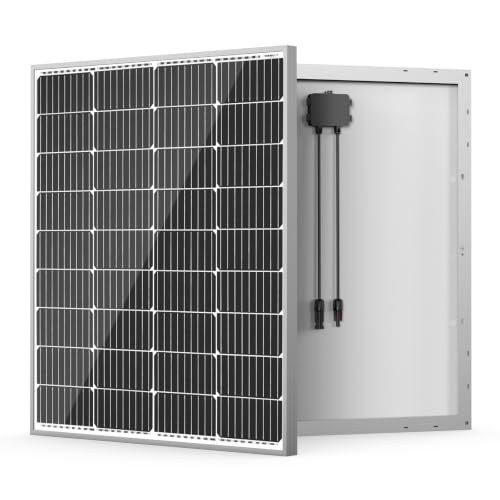
Renogy 100 Watt N-Type 16BB Solar Panel (12V)
hot-climate roofs and builds with an existing controller
Our take Check price for Renogy 100 Watt N-Type 16BB Solar Panel (12V) (opens in a new tab)
Best Compact Budget
HQST 100W 12V Solar Panel, 9BB, 23% Efficiency, IP65
buyers comparing capacity, compatibility, included components and storage needs
Our take Check price for HQST 100W 12V Solar Panel, 9BB, 23% Efficiency, IP65 (opens in a new tab)

Best Complete Kit
Voltset 100W 12V Solar Panel Kit with 20A Smart Charge Controller
first-time buyers wanting everything in one box
Our take Check price for Voltset 100W 12V Solar Panel Kit with 20A Smart Charge Controller (opens in a new tab)

Best Value Kit
Hoysicy 100W Solar Panel Kit with Controller, 12V Battery Maintainer
fixed battery hookups on a mid-range budget
Our take Check price for Hoysicy 100W Solar Panel Kit with Controller, 12V Battery Maintainer (opens in a new tab)
Best Warranty Terms
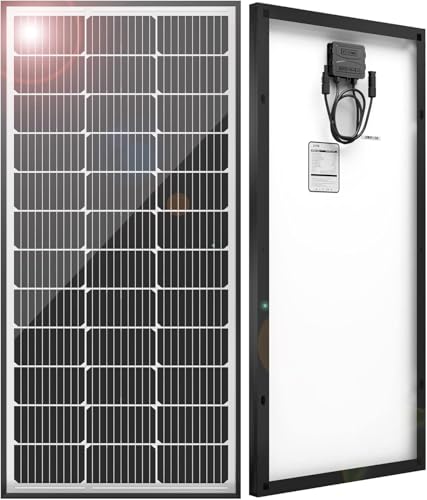
JJN 100 Watt 10BB Monocrystalline 12V Solar Panel, 23% Efficiency
owners who may sell the rig and want a transferable warranty
Our take Check price for JJN 100 Watt 10BB Monocrystalline 12V Solar Panel, 23% Efficiency (opens in a new tab)

Best Two-Panel Value
Rvpozwer 100W N-Type 18BB Solar Panels, 2 Pack, 12V/24V
buyers planning to grow from 100W to 200W
Our take Check price for Rvpozwer 100W N-Type 18BB Solar Panels, 2 Pack, 12V/24V (opens in a new tab)
Why Each Pick Made the Cut
Best Overall1 of 6
Renogy 100 Watt N-Type 16BB Solar Panel (12V) on Amazon (opens in a new tab)
Choose Renogy 100 Watt N-Type 16BB Solar Panel (12V) for listing publishes heat loss: minus 0.29 percent per degree Celsius.
Best for
- hot-climate roofs and builds with an existing controller
Why it made the shortlist
Renogy 100 Watt N-Type 16BB Solar Panel (12V) is positioned for hot-climate roofs and builds with an existing controller. The documented setup centers on 25% N-type 16BB cells, temp coefficient -0.29%/°C, iP65, tempered glass.
The feature doing most of the work here is listing publishes heat loss: minus 0.29 percent per degree Celsius. Against the other 5 picks, the useful comparison starts with 25% N-type 16BB cells and temp coefficient -0.29%/°C. Those details show whether its configuration suits the job better than a neighboring recommendation.
The practical constraint here is bare panel, so you still buy a controller. Confirm the exact model number and included components before ordering. Check dimensions, compatibility and maintenance needs against the way you plan to use and store it.
Key dimensions & specs
- 25% N-type 16BB cells
- Temp coefficient -0.29%/°C
- IP65, tempered glass
Pros
- Listing publishes heat loss: minus 0.29 percent per degree Celsius
- N-type 16BB cells at a listed 25 percent efficiency
- 11 percent smaller than the maker's earlier 100W panel
Cons
- Bare panel, so you still buy a controller
- Costs about $21 more than the HQST 100W
Best Compact Budget2 of 6
HQST 100W 12V Solar Panel, 9BB, 23% Efficiency, IP65 on Amazon (opens in a new tab)
HQST 100W 12V Solar Panel, 9BB, 23% Efficiency, IP65 makes the shortlist because square 31.8 by 27.5 inch size fits small roofs.
Best for
- buyers comparing capacity, compatibility, included components and storage needs
Why it made the shortlist
This model is aimed at buyers comparing capacity, compatibility, included components and storage needs. The documented setup centers on 31.8 x 27.5 x 1.18 inches, 23% Grade A+ cells, 5-year product assurance.
The most useful documented advantage is square 31.8 by 27.5 inch size fits small roofs. Against the other 5 picks, the useful comparison starts with 31.8 x 27.5 x 1.18 inches and 23% Grade A+ cells. Those details show whether its configuration suits the job better than a neighboring recommendation.
The main limitation to plan around is no temperature coefficient given for hot roofs. Measure the narrowest access point and the available storage footprint before ordering. Confirm what the stated dimension refers to on the exact model and configuration.
Key dimensions & specs
- 31.8 x 27.5 x 1.18 inches
- 23% Grade A+ cells
- 5-year product assurance
Pros
- Square 31.8 by 27.5 inch size fits small roofs
- Rated for 5,400 Pa snow load and 2,400 Pa wind
- Stated 80 percent output retention after 25 years
Cons
- No temperature coefficient given for hot roofs
- Older 9BB cells convert less than the Renogy
Best Complete Kit3 of 6
Voltset 100W 12V Solar Panel Kit with 20A Smart Charge Controller on Amazon (opens in a new tab)
The strongest case for Voltset 100W 12V Solar Panel Kit with 20A Smart Charge Controller is panel, 20A controller, cable and brackets arrive together.
Best for
- first-time buyers wanting everything in one box
Why it made the shortlist
For first-time buyers wanting everything in one box, this is one of the more relevant configurations in the shortlist. The documented setup centers on 20A controller with LCD, uSB and Type-C ports, four Z brackets included.
Its case starts with panel, 20A controller, cable and brackets arrive together. Against the other 5 picks, the useful comparison starts with 20A controller with LCD and uSB and Type-C ports. Those details show whether its configuration suits the job better than a neighboring recommendation.
The trade-off worth checking first is costs $68.90 more than the Renogy panel alone. Confirm the exact model number and included components before ordering. Check dimensions, compatibility and maintenance needs against the way you plan to use and store it.
Key dimensions & specs
- 20A controller with LCD
- USB and Type-C ports
- Four Z brackets included
Pros
- Panel, 20A controller, cable and brackets arrive together
- LCD shows charge status and battery mode
- Works with LiFePO4, AGM, gel and flooded batteries
- Built-in USB and Type-C ports charge small devices
Cons
- Costs $68.90 more than the Renogy panel alone
- 500 watt-hour daily claim ignores real-world losses
Best Value Kit4 of 6
Hoysicy 100W Solar Panel Kit with Controller, 12V Battery Maintainer on Amazon (opens in a new tab)
Hoysicy 100W Solar Panel Kit with Controller, 12V Battery Maintainer is the better fit when fixed battery hookups on a mid-range budget.
Best for
- fixed battery hookups on a mid-range budget
Why it made the shortlist
The intended use case is fixed battery hookups on a mid-range budget. The documented setup centers on 100W mono panel with controller, o-ring cables, Z-brackets, four-way controller protection.
What separates it on paper is o-ring battery cables suit a fixed installation. Against the other 5 picks, the useful comparison starts with 100W mono panel with controller and o-ring cables, Z-brackets. Those details show whether its configuration suits the job better than a neighboring recommendation.
Before committing, account for no display is mentioned for the controller. Confirm the exact model number and included components before ordering. Check dimensions, compatibility and maintenance needs against the way you plan to use and store it.
Key dimensions & specs
- 100W mono panel with controller
- O-ring cables, Z-brackets
- Four-way controller protection
Pros
- O-ring battery cables suit a fixed installation
- Controller guards against overcharge and short circuits
- Z-brackets and screws included in the box
- Costs $30 less than the Voltset kit
Cons
- No display is mentioned for the controller
Best Warranty Terms5 of 6
JJN 100 Watt 10BB Monocrystalline 12V Solar Panel, 23% Efficiency on Amazon (opens in a new tab)
Choose JJN 100 Watt 10BB Monocrystalline 12V Solar Panel, 23% Efficiency for transferable power warranty can help at resale.
Best for
- owners who may sell the rig and want a transferable warranty
Why it made the shortlist
JJN 100 Watt 10BB Monocrystalline 12V Solar Panel, 23% Efficiency is positioned for owners who may sell the rig and want a transferable warranty. The documented setup centers on 10BB mono cells, 23%, iP65 box, IP67 connectors, 30-year transferable warranty.
The feature doing most of the work here is transferable power warranty can help at resale. Against the other 5 picks, the useful comparison starts with 10BB mono cells, 23% and iP65 box, IP67 connectors. Those details show whether its configuration suits the job better than a neighboring recommendation.
The practical constraint here is warranty terms are cut off in the listing text. Confirm the exact model number and included components before ordering. Check dimensions, compatibility and maintenance needs against the way you plan to use and store it.
Key dimensions & specs
- 10BB mono cells, 23%
- IP65 box, IP67 connectors
- 30-year transferable warranty
Pros
- Transferable power warranty can help at resale
- IP67 connectors resist water at the cable joint
- Black frame suits a low-profile roof look
Cons
- Warranty terms are cut off in the listing text
Best Two-Panel Value6 of 6
Rvpozwer 100W N-Type 18BB Solar Panels, 2 Pack, 12V/24V on Amazon (opens in a new tab)
Rvpozwer 100W N-Type 18BB Solar Panels, 2 Pack, 12V/24V makes the shortlist because two panels for $89.99, about 45 cents per watt.
Best for
- buyers planning to grow from 100W to 200W
Why it made the shortlist
This model is aimed at buyers planning to grow from 100W to 200W. The documented setup centers on two 100W N-type panels, 18BB cells, 25% listed, max three in parallel.
The most useful documented advantage is two panels for $89.99, about 45 cents per watt. Against the other 5 picks, the useful comparison starts with two 100W N-type panels and 18BB cells, 25% listed. Those details show whether its configuration suits the job better than a neighboring recommendation.
The main limitation to plan around is needs roof space for 200W, not 100W. Confirm the exact model number and included components before ordering. Check dimensions, compatibility and maintenance needs against the way you plan to use and store it.
Key dimensions & specs
- Two 100W N-type panels
- 18BB cells, 25% listed
- Max three in parallel
Pros
- Two panels for $89.99, about 45 cents per watt
- N-type 18BB cells at a listed 25 percent
- Pre-drilled holes allow quick mounting on common brackets
Cons
- Needs roof space for 200W, not 100W
- Listing daily-output text contains a number typo
How We Built This Shortlist
Each pick was assessed across 5 criteria weighted for real-world use.
- Realistic daily watt-hours
- We turned each nameplate into 3, 5 and 7 sun hour figures and applied a stated 25 percent loss estimate, then flagged listings whose daily claims skip losses.
- Cost per watt and per box
- We divided price by delivered watts and separately noted what the box adds, such as a controller, cables or brackets, so kits are not compared to bare glass unfairly.
- Footprint and mounting
- We checked whether the listing gives exact dimensions, pre-drilled holes and bracket compatibility, since a 100W panel that does not fit beside a vent is no bargain.
- Heat and weather data
- We looked for a published temperature coefficient, wind and snow load ratings and IP codes rather than general phrases like durable or all-weather.
- Controller and expansion path
- We noted controller amps, battery types supported and the stated limit for adding panels, so a 100W start does not become a dead end.
What Matters Before You Choose a 100 Watt RV Solar Panel
Key buying criteria so you get the right fit the first time.
Nameplate vs daily watt-hours
A 100W rating describes output under laboratory light, not what the roof delivers on a normal day. Multiply watts by the peak sun hours for your location, which is often 3 to 7, then subtract roughly 25 percent for heat, wiring and controller losses to get a usable figure. Treat any listing claiming 500 watt-hours a day from one 100W panel as the best case at 5 sun hours with no losses.
Temperature coefficient
This number says how much output drops for each degree Celsius above 25°C, and roof cells commonly run 20 to 40 degrees hotter in summer. A coefficient of minus 0.29 percent per degree costs about 6 to 12 percent in that heat, while a missing value means you cannot compare. Find it in the specs table or bullets, and prefer a panel that publishes it.
Roof footprint and weight
Panel size decides whether it fits beside vents, AC shrouds and fan covers, and a 100W panel can be anywhere from a compact square to a long rectangle. Weight adds to roof load and affects bracket choice. Look for exact length and width in the listing, then lay out cardboard of the same size on your roof.
Controller amps and voltage
A 12V 100W panel makes about 5.5 to 6 amps at maximum power, so a 10A controller has headroom, but adding panels in parallel raises current quickly. The controller must support your battery chemistry, including lithium. Check the amp rating and the battery types listed, and confirm the cold-weather open-circuit voltage is below the controller's input limit.
What the box really contains
A kit may include a controller, cables and brackets, while a bare panel includes only the glass. Short alligator clip leads suit a portable use but not a permanent roof run, which needs fused cable of the right gauge. Read the package contents line and price the missing parts before deciding.
Expansion ceiling
A 100W panel is often the first of several, and a listing may cap the number of panels in series or parallel, as the Rvpozwer notes with three. Exceeding it can overload connectors or the controller. Check the maximum panel count and the controller's input limit before planning a 200W or 300W array.
Match a 100 Watt RV Solar Panel to Your RV
By What You Already Own
| Your situation | Recommended pick | Why |
|---|---|---|
| You already have a charge controller | Renogy 100W | Bare panel with the heat figure published |
| Starting from nothing, want everything in the box | Voltset Kit | Panel, 20A controller, cable, brackets |
| Fixed battery, want ring-terminal cables | Hoysicy Kit | O-ring cables for permanent hookups |
| Roof space is tight | HQST 100W | 31.8 by 27.5 inches, stated size |
| You want to double to 200W later | Rvpozwer Pair | Two N-type panels at $89.99 |
Scroll sideways to see every column.
By Budget
| Budget | Recommended pick |
|---|---|
| Under $60 | HQST 100W at $49.99 or JJN 100W at $59.99 |
| $70 to $90 | Renogy 100W at $71.05 or Rvpozwer Pair at $89.99 for 200W |
| $110 to $140 | Hoysicy Kit at $109.99 or Voltset Kit at $139.95 |
Bare Panel vs Panel Kit
- Bare panel
- You pay only for glass and cells, and you choose a controller that fits your battery and future expansion. The Renogy 100W, HQST 100W, JJN 100W and Rvpozwer Pair are bare. Add a controller and cables, which can cost more than the cheaper panels.
- Complete kit
- The controller, cables and brackets are matched, so a first install takes an afternoon. The Voltset Kit and Hoysicy Kit are bundled. The price is higher per watt and the included controller may cap how far you can expand.
Most first-time buyers are better served by a kit, while anyone with a controller already in the rig should buy the bare Renogy 100W or HQST 100W.
By Roof Heat and Space
| Your roof | Recommended pick | Why |
|---|---|---|
| Dark roof, summer in the Southwest | Renogy 100W | Minus 0.29 percent per degree stated |
| Cluttered roof with vents and a fan | HQST 100W | Square footprint with listed dimensions |
| Snow load matters in winter use | HQST 100W | 5,400 Pa snow load rating |
| Black frame wanted, wet connector joints | JJN 100W | Black frame, IP67 connectors |
Scroll sideways to see every column.
For Weekend Boondocking Specifically
- Look for
- A panel that, at 5 sun hours and 25 percent losses, replaces about 375 watt-hours a day, which covers lights, phone charging, a water pump and part of a small 12V compressor fridge's daily run.
- In this comparison
- The Renogy 100W gives the best hot-roof output, while the Voltset Kit covers a first install. If you need more than 375 watt-hours a day, the Rvpozwer Pair at 200W doubles the figure to about 750.
When to Spend More
- Spend more if
- You live in a hot region or plan an always-on fridge; the Renogy 100W publishes its heat loss, and the Voltset Kit saves wiring errors on a first install at $139.95.
- Save if
- You camp a few nights a month with a small battery; the HQST 100W at $49.99 or the Rvpozwer Pair at $89.99 gives the most watts per dollar.
Before You Bring One Home
How much power does a 100 watt RV solar panel really make?
At 5 peak sun hours the nominal figure is 500 watt-hours, and about 375 after a typical 25 percent loss estimate. At 3 sun hours that drops to about 225, and at 7 it reaches roughly 525. Shade, panel tilt and heat change it daily.
Can one 100W panel run an RV refrigerator?
A small 12V compressor fridge can fit within roughly 375 watt-hours a day, but a 120V residential fridge through an inverter usually cannot. Check the fridge's daily draw and add inverter losses. If the load is close to the limit, step up to the 200W Rvpozwer Pair.
Do I need a charge controller with a 100W panel?
Yes for any battery connection. A controller prevents overcharge and matches the voltage to the battery. Bare panels like the Renogy 100W need one added, while the Voltset and Hoysicy kits include one.
Is the 100W kit worth more than the bare panel?
If you need the controller anyway, a kit often costs about the same as buying separately and saves wiring errors. The Voltset costs $68.90 more than the Renogy panel, which is roughly what a basic controller and brackets cost. Skip it if you own a controller.
How do I connect a 100W panel to my battery?
Connect the controller to the battery first, then the panel, so the controller detects the system voltage. Use a fuse near the battery, and keep the cable run short. For roof installs, use properly sized cable and a sealed entry.
How do I keep a 100W panel producing over time?
Wipe the glass when dusty or after bird droppings, since a covered cell can drag down output. Inspect connectors for corrosion twice a year, and check mounting screws after long travel days.
Bottom Line
Best overall: Renogy 100 Watt N-Type 16BB Solar Panel (12V) — best overall pick in this roundup. See the full verdicts above for every pick, with pros, cons and who each one suits.
Browse all 100 watt rv solar panels on Amazon — Prime-eligible options with current pricing.