
Buying Guide
5 Best 1500 Watt Portable Power Stations in 2026: A Practical RV Guide
Five 1500W portable power stations compared on real Wh, weight, UPS, cycle life and solar bundles for RV fridges, kettles and CPAPs, from $499 to $999.
By Hardcastle's RV Editors
11 min read5 products evaluated
A 1500 watt portable power station is the size where a camper can run a kettle, a toaster or a compressor fridge with a laptop and CPAP beside it, all from a box you can still lift by yourself. It is also the size where the battery behind the inverter varies the most: two stations here share the same 1500W rating, yet one stores 1,024Wh and another 2,010Wh, which is nearly twice the runtime for about $130 more. The rated 1500W is continuous AC output. The 3,000W number beside it is a surge that lasts a moment.
We compared five stations from $499 to $999 that list 1500W as rated AC output: two Jackery 1000 v2 variants with different capacity and warranty claims, an Anker SOLIX S2000, and two Jackery solar bundles. We looked at stored watt-hours, weight, UPS switchover, cycle rating, solar input, outlet count and cost per watt-hour, and we say plainly where a listing does not publish a number. None has a TT-30 outlet, so none can replace a 30-amp RV shore connection. If you need that, the 3000 watt guide covers stations that do.
Hardcastle’s RV field notes
The Rig Fit Check
A quick way to connect the shortlist to the space, workload and ownership details that matter after the box arrives.
- Start with the job
- Jackery Explorer 1000 v2 Portable Power Station, 1070Wh, 1500W leads this shortlist for a balanced weight and runtime in a camper. Use that fit as a reference point, then compare the alternatives against your own space and workload.
- Specs that separate the picks
- The first details to compare are 1,070Wh LiFePO4, 1500W, 2,010Wh LFP, 1500W, 1,024Wh LiFePO4, 1500W. Confirm the exact model and included components before ordering.
- Trade-off to plan for
- One-hour charge needs the app each time
The Practical Shortlist
A road-tested-thinking look at 5 options, organized around the job each one suits best.

Best Overall
Jackery Explorer 1000 v2 Portable Power Station, 1070Wh, 1500W
a balanced weight and runtime in a camper
Our take Check price for Jackery Explorer 1000 v2 Portable Power Station, 1070Wh, 1500W (opens in a new tab)
Best Capacity per Dollar
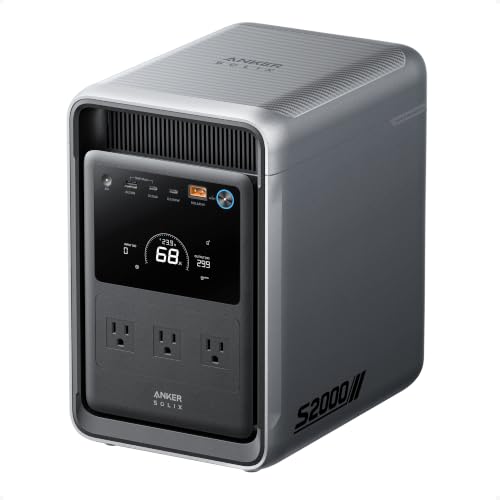
Anker SOLIX S2000 Portable Power Station, 2,010Wh, 1,500W
long runtime for fridge and home backup
Our take Check price for Anker SOLIX S2000 Portable Power Station, 2,010Wh, 1,500W (opens in a new tab)
Best UPS and Surge Protection
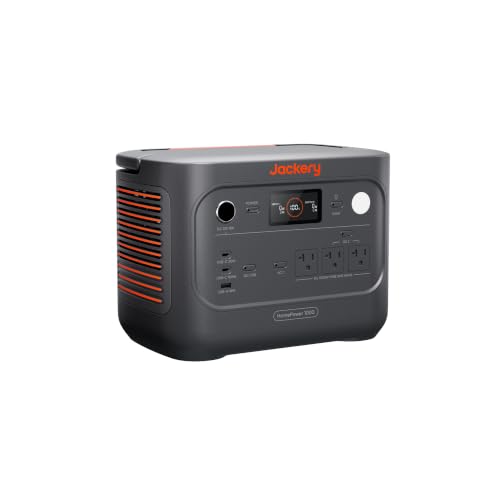
Jackery HomePower 1000 v2 Power Station, 1024Wh, 1500W
a PC and router that must not blink
Our take Check price for Jackery HomePower 1000 v2 Power Station, 1024Wh, 1500W (opens in a new tab)

Best Solar Bundle
Jackery Solar Generator 1000 v2 and 200W Solar Panel, 1070Wh, 1500W
a starter solar setup for weekends
Our take Check price for Jackery Solar Generator 1000 v2 and 200W Solar Panel, 1070Wh, 1500W (opens in a new tab)

Fastest Solar Recharge
Jackery Solar Generator 1000 v2 and 2x200W Panels, 1070Wh, 1500W
off-grid trips relying mainly on sun
Our take Check price for Jackery Solar Generator 1000 v2 and 2x200W Panels, 1070Wh, 1500W (opens in a new tab)
Why Each Pick Made the Cut
Best Overall1 of 5
Jackery Explorer 1000 v2 Portable Power Station, 1070Wh, 1500W on Amazon (opens in a new tab)
Choose Jackery Explorer 1000 v2 Portable Power Station, 1070Wh, 1500W for weighs 23.8 pounds with a foldable handle.
Best for
- a balanced weight and runtime in a camper
Why it made the shortlist
Jackery Explorer 1000 v2 Portable Power Station, 1070Wh, 1500W is positioned for a balanced weight and runtime in a camper. The documented setup centers on 1,070Wh LiFePO4, 1500W, 23.8 lb, three AC, 4,000 cycles to 70 percent.
The feature doing most of the work here is weighs 23.8 pounds with a foldable handle. Its 23.8 lb, three AC specification sits at between the lower and upper ends of the comparable range in this 4-product comparison. Confirm whether that figure refers to tool weight or working capacity before comparing it directly.
The practical constraint here is one-hour charge needs the app each time. Confirm whether the stated figure refers to product weight or rated working capacity. Compare it with your lifting, transport and support requirements before deciding.
Key dimensions & specs
- 1,070Wh LiFePO4, 1500W
- 23.8 lb, three AC
- 4,000 cycles to 70 percent
Pros
- Weighs 23.8 pounds with a foldable handle
- Three pure sine wave AC outlets
- 100W USB-C PD charges laptops quickly
- Recharges in 1 hour with app emergency mode
Cons
- One-hour charge needs the app each time
- Solar panels are not included in the box
Best Capacity per Dollar2 of 5
Anker SOLIX S2000 Portable Power Station, 2,010Wh, 1,500W on Amazon (opens in a new tab)
Anker SOLIX S2000 Portable Power Station, 2,010Wh, 1,500W makes the shortlist because 2,010Wh, nearly double the Jackery 1000 v2.
Best for
- long runtime for fridge and home backup
Why it made the shortlist
This model is aimed at long runtime for fridge and home backup. The documented setup centers on 2,010Wh LFP, 1500W, 35.7 lb, 10,000 cycles, 400W solar, under 10ms UPS.
The most useful documented advantage is 2,010Wh, nearly double the Jackery 1000 v2. Its 35.7 lb, 10,000 cycles specification sits at the upper end of the comparable range in this 4-product comparison. Confirm whether that figure refers to tool weight or working capacity before comparing it directly.
The main limitation to plan around is weighs 35.7 pounds, 11.9 lb over Jackery 1000 v2. Confirm whether the stated figure refers to product weight or rated working capacity. Compare it with your lifting, transport and support requirements before deciding.
Key dimensions & specs
- 2,010Wh LFP, 1500W
- 35.7 lb, 10,000 cycles
- 400W solar, under 10ms UPS
Pros
- 2,010Wh, nearly double the Jackery 1000 v2
- 6W idle draw keeps standby loss low
- Front and rear outlets keep cords tidy
Cons
- Weighs 35.7 pounds, 11.9 lb over Jackery 1000 v2
- No 12V DC port for car-style gear
Best UPS and Surge Protection3 of 5
Jackery HomePower 1000 v2 Power Station, 1024Wh, 1500W on Amazon (opens in a new tab)
The strongest case for Jackery HomePower 1000 v2 Power Station, 1024Wh, 1500W is 10ms UPS for PCs, routers and NAS drives.
Best for
- a PC and router that must not blink
Why it made the shortlist
For a PC and router that must not blink, this is one of the more relevant configurations in the shortlist. The documented setup centers on 1,024Wh LiFePO4, 1500W, 10ms UPS, 3kV surge shield, 23.4 lb, 6,000 plus cycles.
Its case starts with 10ms UPS for PCs, routers and NAS drives. Its 23.4 lb, 6,000 plus cycles specification sits at the lower end of the comparable range in this 4-product comparison. Confirm whether that figure refers to tool weight or working capacity before comparing it directly.
The trade-off worth checking first is costs $50 more than Jackery 1000 v2 for 46Wh less. Confirm whether the stated figure refers to product weight or rated working capacity. Compare it with your lifting, transport and support requirements before deciding.
Key dimensions & specs
- 1,024Wh LiFePO4, 1500W
- 10ms UPS, 3kV surge shield
- 23.4 lb, 6,000 plus cycles
Pros
- 10ms UPS for PCs, routers and NAS drives
- Built-in 3,000V surge and lightning protection shield
- Weighs 23.4 pounds, lightest of the five
Cons
- Costs $50 more than Jackery 1000 v2 for 46Wh less
- Solar panels are not included in the box
Best Solar Bundle4 of 5
Jackery Solar Generator 1000 v2 and 200W Solar Panel, 1070Wh, 1500W on Amazon (opens in a new tab)
Jackery Solar Generator 1000 v2 and 200W Solar Panel, 1070Wh, 1500W is the better fit when a starter solar setup for weekends.
Best for
- a starter solar setup for weekends
Why it made the shortlist
The intended use case is a starter solar setup for weekends. The documented setup centers on 1,070Wh, 1500W + 200W panel, 23.8 lb station, three AC, 100W USB-C.
What separates it on paper is includes a 200W solar panel in the box. Its 23.8 lb station specification sits at between the lower and upper ends of the comparable range in this 4-product comparison. Confirm whether that figure refers to tool weight or working capacity before comparing it directly.
Before committing, account for panel adds $200 over the standalone Explorer. Confirm whether the stated figure refers to product weight or rated working capacity. Compare it with your lifting, transport and support requirements before deciding.
Key dimensions & specs
- 1,070Wh, 1500W + 200W panel
- 23.8 lb station
- Three AC, 100W USB-C
Pros
- Includes a 200W solar panel in the box
- Same 1,070Wh station as the standalone model
- Lists a 600W alternator charging option
- Five years of coverage noted in the contents
Cons
- Panel adds $200 over the standalone Explorer
- One 200W panel is a slow refill for 1,070Wh
Fastest Solar Recharge5 of 5
Jackery Solar Generator 1000 v2 and 2x200W Panels, 1070Wh, 1500W on Amazon (opens in a new tab)
Choose Jackery Solar Generator 1000 v2 and 2x200W Panels, 1070Wh, 1500W for two 200W panels give 400W of solar input.
Best for
- off-grid trips relying mainly on sun
Why it made the shortlist
Jackery Solar Generator 1000 v2 and 2x200W Panels, 1070Wh, 1500W is positioned for off-grid trips relying mainly on sun. The documented setup centers on 1,070Wh, 1500W + 2 panels, 400W solar input, 80 percent in 3 hours.
The feature doing most of the work here is two 200W panels give 400W of solar input. Against the other 4 picks, the useful comparison starts with 1,070Wh, 1500W + 2 panels and 400W solar input. Those details show whether its configuration suits the job better than a neighboring recommendation.
The practical constraint here is highest cost per Wh at about $0.93. Confirm the exact model number and included components before ordering. Check dimensions, compatibility and maintenance needs against the way you plan to use and store it.
Key dimensions & specs
- 1,070Wh, 1500W + 2 panels
- 400W solar input
- 80 percent in 3 hours
Pros
- Two 200W panels give 400W of solar input
- Claims about 3 hours from 0 to 80 percent
- Keeps the 23.8 pound station weight
Cons
- Highest cost per Wh at about $0.93
- Panel weight and size are not given in the listing
How We Built This Shortlist
Each pick was assessed across 5 criteria weighted for real-world use.
- Rated AC output
- We kept only listings with a rated 1500W AC output and tracked the 3,000W surge separately, so a short boost is never counted as a load you can hold.
- Stored energy
- We compared listed Wh from 1,024Wh to 2,010Wh and divided price by Wh, since the 1500W inverter rating does not say how long the battery lasts.
- Weight and carry
- We compared 23.4 to 35.7 pounds, because the difference decides whether one person can carry the station up RV steps.
- UPS, surge and cycle life
- We checked stated UPS switchover times, surge protection and cycle ratings from 4,000 to 10,000, and marked what is not stated.
- Solar value
- We separated the standalone stations from the Jackery bundles and worked out what each panel adds to the price.
What Matters Before You Choose a 1500 Watt Portable Power Station
Key buying criteria so you get the right fit the first time.
Continuous versus peak watts
The 1500W rating is what the inverter can hold, while the 3,000W peak lasts a moment for a motor start. A 1,500W kettle plus a toaster will trip it even though each alone fits. Look for the word rated or continuous and add the appliances you run together.
Stored watt-hours
At 1500W the battery is the limiting factor, so 1,070Wh and 2,010Wh give very different days. A 100W fridge, lights and laptop load runs roughly 9 hours on 1,070Wh as an estimate. Compare the Wh in the title and divide price by it.
Weight and steps
The listed weights run 23.4 to 35.7 pounds, and the heavier one is a genuine two-hand carry. A foldable handle helps but does not reduce mass. Check the listed weight and decide where the station will live.
UPS and surge protection
A UPS switchover under 10ms keeps a PC and router up through a power flicker, while a surge shield helps when you plug into a campground pedestal. Only some listings state these numbers. Look for the milliseconds and the surge voltage in the bullets.
Cycle rating and chemistry
Ratings here run from 4,000 cycles to 70 percent up to 10,000 cycles, and all use LFP. A weekly user will never wear out any of them, but a daily cycler will. Look for the cycle count and the capacity retained at that number.
Solar input and bundles
Solar input limits run to 400W, and a single 200W panel refills 1,070Wh slowly. Bundles hide a panel price of roughly $200 to $300 each. Check the maximum solar input and what is actually in the box.
Match a 1500 Watt Portable Power Station to Your RV
By Runtime Needed
The inverter is the same 1500W everywhere, so pick on the battery.
| Your situation | Recommended pick | Why |
|---|---|---|
| Full day of fridge, lights and laptop | Anker S2000 | 2,010Wh with a 6W idle draw |
| A night of CPAP plus a morning kettle | Jackery 1000 v2 | 1,070Wh at 23.8 pounds |
| Desk setup that cannot blink | HomePower 1000 v2 | 10ms UPS and surge shield |
| Weekend trips refilling from sun | Jackery Kit 200W | Includes one 200W panel |
| Week-long off-grid use | Jackery Kit 400W | 400W of solar, 80 percent in about 3 hours |
Scroll sideways to see every column.
Estimate: 1,070Wh at a 100W average load runs roughly 9 hours after losses.
By Budget
| Budget | Recommended pick |
|---|---|
| Under $500 | Jackery 1000 v2 at $499 |
| $550 to $700 | HomePower 1000 v2 at $549, Anker S2000 at $679.99 or Jackery Kit 200W at $699 |
| Around $1,000 | Jackery Kit 400W at $999 |
Light Carry vs Big Battery
- Light carry
- The Jackery 1000 v2 at 23.8 pounds and the HomePower 1000 v2 at 23.4 pounds can be moved with one hand and a foldable handle.
- Big battery
- The Anker S2000 holds 2,010Wh, about 1.9 times the Jackery's 1,070Wh, but weighs 35.7 pounds, 11.9 pounds more.
Most RV owners should default to the lighter Jackery unless a full day of fridge runtime is the goal.
By Protection Features
| Protection need | Recommended pick |
|---|---|
| Surge and lightning shield | HomePower 1000 v2 |
| Under 10ms UPS and low idle draw | Anker S2000 |
| Best stated cycle life | Anker S2000 at 10,000 cycles |
| Mid cycle life with solar in the box | Jackery Kit 200W |
For Running a Kettle and Toaster Specifically
- Look for
- A rated 1500W output that covers the appliance's running wattage, plus enough Wh for the cycle. A 1,200W kettle for 5 minutes uses about 100Wh as an estimate.
- In this comparison
- All five handle a 1,200W kettle, and the Jackery 1000 v2 does it at the lowest price. Avoid running two heating appliances at once, since combined draw can exceed 1,500W.
When to Spend More
- Spend more if
- You need runtime or protection: the Anker S2000 adds 940Wh for $180.99, and the HomePower 1000 v2 adds a 10ms UPS and surge shield for $50.
- Save if
- You mainly run a CPAP and a laptop: the Jackery 1000 v2 at $499 does that for the lowest cost.
Before You Bring One Home
What can a 1500 watt portable power station run in an RV?
A kettle, toaster, coffee maker, fridge, laptop, router and CPAP fit if you keep the combined running load under 1500W. A roof air conditioner, electric heater or full-power microwave with other loads will exceed it. Add appliance wattages and stay under the rating.
Can it run an RV air conditioner?
Often no. A typical roof air conditioner draws more than 1500W at startup and needs a larger inverter. Check the label for running and starting amps before relying on a 1500W station.
Is the HomePower 1000 v2 worth $50 over the Explorer 1000 v2?
If you need a stated 10ms UPS, surge protection or the 6,000-cycle rating, yes. For runtime it is 46Wh smaller, so no. Choose by feature, not capacity.
How do I get the one-hour charge on the Jackery?
Turn on emergency charging in the Jackery app before each charge. The default is a 1.7-hour mode on the Explorer 1000 v2 and a 1.25-hour mode on the HomePower. The faster mode is for emergencies.
Should I buy the solar bundle or panels separately?
The bundles price a 200W panel at about $200 and the second at about $300. Compare with the panel prices you can find separately and the maximum solar input of the station before deciding.
Can I use it while it is charging?
The Anker and Jackery listings describe UPS switchover and charging modes, which allow use while plugged in. Heavy loads while charging generate heat, so leave room for airflow.
Bottom Line
Best overall: Jackery Explorer 1000 v2 Portable Power Station, 1070Wh, 1500W — best overall pick in this roundup. See the full verdicts above for every pick, with pros, cons and who each one suits.
Browse all 1500 watt portable power stations on Amazon — Prime-eligible options with current pricing.