
Buying Guide
6 Best All In One Solar Charge Controller Inverter in 2026: A Practical RV Guide
Six all-in-one hybrid inverters with built-in MPPT solar charge controllers for RVs and off-grid rigs on 24V and 48V banks, with voltage and output caveats.
By Hardcastle's RV Editors
10 min read6 products evaluated
An all-in-one hybrid unit packs an inverter, an MPPT solar charge controller and usually an AC battery charger into one box, which saves wiring and space compared with buying each piece. These are not plain charge controllers, though, and nearly all of them need a 24V or 48V battery bank rather than a typical 12V RV house bank.
This guide compares six such units by output voltage, battery bank voltage, MPPT size and monitoring. Because several listings are home-backup products, this guide flags where the AC output is 220/230V rather than the 120V that RV outlets expect.
Hardcastle’s RV field notes
The Rig Fit Check
A quick way to connect the shortlist to the space, workload and ownership details that matter after the box arrives.
- Start with the job
- Renogy 48V 3500W Pure Sine Wave Inverter leads this shortlist for 48V 120V all-in-one. Use that fit as a reference point, then compare the alternatives against your own space and workload.
- Specs that separate the picks
- The first details to compare are 3500W inverter, 48V to 120V, 4000W hybrid inverter, 24V, 3000W hybrid inverter, 24V. Confirm the exact model and included components before ordering.
- Trade-off to plan for
- Needs a 48V battery bank
The Practical Shortlist
A road-tested-thinking look at 6 options, organized around the job each one suits best.

Best Overall
Renogy 48V 3500W Pure Sine Wave Inverter
48V 120V all-in-one
Our take Check price for Renogy 48V 3500W Pure Sine Wave Inverter (opens in a new tab)

Best High-Output
POWLAND 4000W Hybrid Solar Inverter
High-output 24V
Our take Check price for POWLAND 4000W Hybrid Solar Inverter (opens in a new tab)

Best Mid-Size 24V
VEVOR Hybrid Solar Inverter
Mid-size 24V
Our take Check price for VEVOR Hybrid Solar Inverter (opens in a new tab)
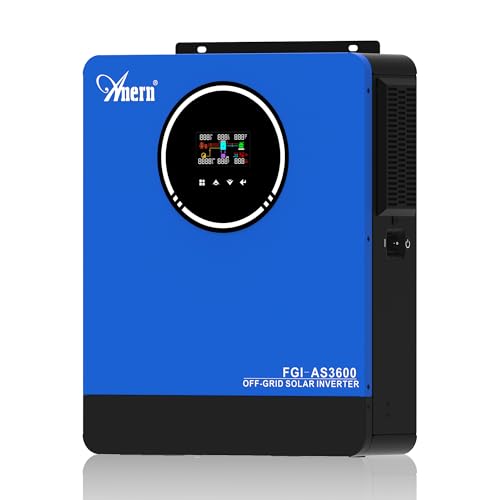
Best 24V Value
Anern 3600W Hybrid Solar Inverter 24V to 110VAC All in One for Home Backup
Budget 24V
Our take Check price for Anern 3600W Hybrid Solar Inverter 24V to 110VAC All in One for Home Backup (opens in a new tab)

Best for 230V Systems
VEVOR Hybrid Solar Inverter
230V off-grid
Our take Check price for VEVOR Hybrid Solar Inverter (opens in a new tab)

Best Wind-Solar Hybrid
Solar Charge Controller
Wind plus solar
Our take Check price for Solar Charge Controller (opens in a new tab)
Why Each Pick Made the Cut
Best Overall1 of 6
Renogy 48V 3500W Pure Sine Wave Inverter on Amazon (opens in a new tab)
Choose Renogy 48V 3500W Pure Sine Wave Inverter for combines inverter, MPPT and 40A charger in one case.
Best for
- 48V 120V all-in-one
Why it made the shortlist
Renogy 48V 3500W Pure Sine Wave Inverter is positioned for 48V 120V all-in-one. The documented setup centers on 3500W inverter, 48V to 120V, 80A/145V MPPT built in, 40A AC and generator charging.
The feature doing most of the work here is combines inverter, MPPT and 40A charger in one case. Its 3500W inverter, 48V to 120V specification sits at the upper end of the comparable range in this 5-product comparison. Treat the battery platform and included charger as part of the fit, not just the headline number.
The practical constraint here is needs a 48V battery bank. Confirm whether the battery and charger are included with the exact package. Check platform compatibility and published runtime against the area or workload you need to cover.
Key dimensions & specs
- 3500W inverter, 48V to 120V
- 80A/145V MPPT built in
- 40A AC and generator charging
Pros
- Combines inverter, MPPT and 40A charger in one case
- 7000W peak surge for motor start-up
- 48W idle draw, 25W in power-saving mode
- Takes over the load if solar or AC charging fails
Cons
- Needs a 48V battery bank
- Costs far more than a plain controller
Best High-Output2 of 6
POWLAND 4000W Hybrid Solar Inverter on Amazon (opens in a new tab)
POWLAND 4000W Hybrid Solar Inverter makes the shortlist because 4000W continuous with 8000W surge.
Best for
- High-output 24V
Why it made the shortlist
This model is aimed at High-output 24V. The documented setup centers on 4000W hybrid inverter, 24V, 140A MPPT charge controller, 6.25-inch glass LCD.
The most useful documented advantage is 4000W continuous with 8000W surge. Its 4000W hybrid inverter, 24V specification sits at the lower end of the comparable range in this 5-product comparison. Treat the battery platform and included charger as part of the fit, not just the headline number.
The main limitation to plan around is needs a 24V battery bank. Confirm whether the battery and charger are included with the exact package. Check platform compatibility and published runtime against the area or workload you need to cover.
Key dimensions & specs
- 4000W hybrid inverter, 24V
- 140A MPPT charge controller
- 6.25-inch glass LCD
Pros
- 4000W continuous with 8000W surge
- Pure sine wave 120V AC output
- Large glass LCD with touch buttons
- Three cooling fans and multiple protections
Cons
- Needs a 24V battery bank
- Heavy and large for a small RV
Best Mid-Size 24V3 of 6
VEVOR Hybrid Solar Inverter on Amazon (opens in a new tab)
The strongest case for VEVOR Hybrid Solar Inverter is 120V AC output matches US outlets.
Best for
- Mid-size 24V
Why it made the shortlist
For Mid-size 24V, this is one of the more relevant configurations in the shortlist. The documented setup centers on 3000W hybrid inverter, 24V, 100A MPPT charging, built-in Wi-Fi module.
Its case starts with 120V AC output matches US outlets. Its 3000W hybrid inverter, 24V specification sits at the lower end of the comparable range in this 5-product comparison. Treat the battery platform and included charger as part of the fit, not just the headline number.
The trade-off worth checking first is needs a 24V battery bank. Confirm whether the battery and charger are included with the exact package. Check platform compatibility and published runtime against the area or workload you need to cover.
Key dimensions & specs
- 3000W hybrid inverter, 24V
- 100A MPPT charging
- Built-in Wi-Fi module
Pros
- 120V AC output matches US outlets
- Charges up to 100A from solar
- Wi-Fi monitoring built in
- Lithium, lead-acid and custom battery support
Cons
- Needs a 24V battery bank
- Remote monitoring depends on a Wi-Fi connection
Best 24V Value4 of 6
Anern 3600W Hybrid Solar Inverter 24V to 110VAC All in One for Home Backup on Amazon (opens in a new tab)
Anern 3600W Hybrid Solar Inverter 24V to 110VAC All in One for Home Backup is the better fit when budget 24V.
Best for
- Budget 24V
Why it made the shortlist
The intended use case is Budget 24V. The documented setup centers on 3600W hybrid inverter, 24V, 120A MPPT controller, four charging modes.
What separates it on paper is 120A MPPT controller built in. Its 3600W hybrid inverter, 24V specification sits at the lower end of the comparable range in this 5-product comparison. Treat the battery platform and included charger as part of the fit, not just the headline number.
Before committing, account for needs a 24V battery bank. Confirm whether the battery and charger are included with the exact package. Check platform compatibility and published runtime against the area or workload you need to cover.
Key dimensions & specs
- 3600W hybrid inverter, 24V
- 120A MPPT controller
- Four charging modes
Pros
- 120A MPPT controller built in
- Works with or without a battery
- Four charging modes including solar priority
- LCD and LEDs show input and output status
Cons
- Needs a 24V battery bank
- Marketed for home backup, not RVs
Best for 230V Systems5 of 6
VEVOR Hybrid Solar Inverter on Amazon (opens in a new tab)
Choose VEVOR Hybrid Solar Inverter for combines inverter and MPPT controller.
Best for
- 230V off-grid
Why it made the shortlist
VEVOR Hybrid Solar Inverter is positioned for 230V off-grid. The documented setup centers on 6000W hybrid inverter, 48V, 220/230V single-phase AC output, built-in MPPT and Wi-Fi.
The feature doing most of the work here is combines inverter and MPPT controller. Its 6000W hybrid inverter, 48V specification sits at the upper end of the comparable range in this 5-product comparison. Treat the battery platform and included charger as part of the fit, not just the headline number.
The practical constraint here is output is 220/230V, not US 120V. Confirm whether the battery and charger are included with the exact package. Check platform compatibility and published runtime against the area or workload you need to cover.
Key dimensions & specs
- 6000W hybrid inverter, 48V
- 220/230V single-phase AC output
- Built-in MPPT and Wi-Fi
Pros
- Combines inverter and MPPT controller
- Wi-Fi module for remote monitoring
- Designed for 48V battery systems
- Supports a range of battery types
Cons
- Output is 220/230V, not US 120V
- Overkill for a typical RV power budget
Best Wind-Solar Hybrid6 of 6
Solar Charge Controller on Amazon (opens in a new tab)
Solar Charge Controller makes the shortlist because takes both a wind turbine and solar panels.
Best for
- Wind plus solar
Why it made the shortlist
This model is aimed at Wind plus solar. The documented setup centers on 600W wind plus 400W solar input, dual MPPT with inverter function, sheet metal body.
The most useful documented advantage is takes both a wind turbine and solar panels. Against the other 5 picks, the useful comparison starts with 600W wind plus 400W solar input and dual MPPT with inverter function. Those details show whether its configuration suits the job better than a neighboring recommendation.
The main limitation to plan around is wind input is irrelevant for most RV setups. Confirm the exact model number and included components before ordering. Check dimensions, compatibility and maintenance needs against the way you plan to use and store it.
Key dimensions & specs
- 600W wind plus 400W solar input
- Dual MPPT with inverter function
- Sheet metal body
Pros
- Takes both a wind turbine and solar panels
- Dual MPPT tracking for the two sources
- Sheet metal body that resists impact
- Over-voltage, under-voltage and overheat protection
Cons
- Wind input is irrelevant for most RV setups
- Inverter output spec needs checking before buying
How We Built This Shortlist
Each pick was assessed across 5 criteria weighted for real-world use.
- Output voltage
- This guide checks whether each unit outputs 120V or 220/230V, because that decides whether it works with US RV outlets.
- Battery bank voltage
- 24V and 48V requirements were compared against the 12V banks most RVs carry.
- Built-in MPPT
- Amp ratings and PV limits of the integrated controller were compared, since they set array size.
- Monitoring
- LCD, glass display and Wi-Fi monitoring were noted as everyday usability.
- Fit for RVs
- Size, idle draw and home-backup orientation were weighed against RV mounting realities.
What Matters Before You Choose an All In One Solar Charge Controller Inverter
Key buying criteria so you get the right fit the first time.
AC output voltage
US RV outlets expect 120V, while some hybrid inverters output single-phase 220/230V. Plugging a 120V appliance into a 230V output can destroy it, and a 230V unit cannot power an RV air conditioner built for 120V. Check the output voltage line on the listing, and treat any unit that lists only 220/230V as unsuitable for standard RV outlets.
Battery bank voltage
Most all-in-one inverters here need a 24V or 48V battery bank, whereas a typical RV house bank is 12V. Moving to 24V or 48V means new batteries or a series rewire, plus heavier planning for fusing and wire gauge. Compare your bank voltage with the listing before you fall for a spec sheet.
Continuous versus surge watts
Continuous watts cover steady loads, while surge watts cover the short spike when a motor starts. A rooftop air conditioner or microwave can need two to three times its running watts for a moment. Add up the appliances you plan to run together and compare against both numbers on the listing.
Built-in MPPT size and PV limit
The integrated controller's amp rating and PV voltage limit decide how big an array you can connect, and an 80A controller on a 48V bank accepts roughly twice the array of the same amps on 24V. Panels in series raise voltage, so compare your string voltage in cold weather with the listed PV maximum. Look for the PV watts per battery voltage on the listing.
Idle draw and standby behavior
An inverter draws power even with nothing plugged in, and a unit like Renogy 48V 3500W lists 48W idle and about 25W in power-saving mode. On a battery that you rely on overnight, that is a meaningful drain. Look for the idle figure on the listing and a power-saving mode if the rig sits unused.
Match an All In One Solar Charge Controller Inverter to Your RV
By Battery Bank Voltage
| Your situation | Recommended pick | Why |
|---|---|---|
| 48V bank, 120V output | Renogy 48V 3500W | 3500W with an 80A MPPT and AC charger. |
| 24V bank, big loads | POWLAND 4000W 24V | 4000W with 8000W surge and 140A MPPT. |
| 24V bank, moderate loads | VEVOR 3000W 24V | 3000W with 100A MPPT and Wi-Fi. |
| 24V bank, tight budget | Anern 3600W 24V | 3600W with a 120A MPPT. |
| 48V bank, 230V equipment | VEVOR 6000W 48V | 6000W with 220/230V output. |
Scroll sideways to see every column.
By Budget
| Budget | Recommended pick |
|---|---|
| $280 to $320 | Anern 3600W 24V or VEVOR 3000W 24V |
| $310 to $400 | POWLAND 4000W 24V or VEVOR 6000W 48V |
| $460 to $470 | Holigie Wind-Solar Hybrid or Renogy 48V 3500W |
Home-Backup Design vs RV Design
- Home-backup
- Home units are larger, may be heavier and are often marketed for fixed installs with good ventilation. Anern 3600W 24V and VEVOR 6000W 48V fit that description.
- RV-friendly
- RV-friendly units advertise power-saving modes and 120V output. Renogy 48V 3500W lists both a power-saving mode and 120V AC.
Most RV owners should start with Renogy 48V 3500W and treat Anern 3600W 24V as a home-backup unit adapted to a rig.
By Monitoring Preference
| Monitoring | Recommended pick |
|---|---|
| Wi-Fi remote monitoring | VEVOR 3000W 24V |
| Large touch-style glass LCD | POWLAND 4000W 24V |
| LCD with status LEDs | Anern 3600W 24V |
| LCD for wind and solar together | Holigie Wind-Solar Hybrid |
For Large Off-Grid RVs Specifically
- Look for
- Look for 120V output, a 24V or 48V bank you already own, enough surge watts for your air conditioner and a low idle draw.
- In this comparison
- Renogy 48V 3500W and POWLAND 4000W 24V both give 120V output with big MPPT controllers, with Renogy 48V 3500W lowest on idle draw.
When to Spend More
- Spend more if
- Spend more if you need large 120V output and a 140A MPPT, where POWLAND 4000W 24V or Renogy 48V 3500W earns its price over Anern 3600W 24V.
- Save if
- Save if your loads are moderate and your bank is 24V, since VEVOR 3000W 24V covers the job for less.
Before You Bring One Home
Can an all-in-one inverter run from a 12V RV battery?
Not the units in this guide. Their listings specify 24V or 48V battery systems, so a 12V rig needs either a bank rewire or a different product.
What is the biggest mistake buyers make with these?
Buying a 220/230V unit for 120V RV outlets. Always read the AC output line before comparing watts, because VEVOR 6000W 48V is a good example of a strong unit that does not match US outlets.
Is an all-in-one worth it over separate parts?
It saves wiring and space and gives one monitoring screen. The tradeoff is that one failure can take both the inverter and the solar controller offline, so plan a backup path.
What is the safest way to wire a all-in-one hybrid inverter?
Add the running watts of everything you will use at once, then compare against the unit's continuous and surge ratings. Leave about 20 percent headroom on the continuous number. On a all-in-one hybrid inverter, double-check polarity at every terminal before powering up and use wire sized for the rated amps.
How should I maintain a all-in-one hybrid inverter?
On a all-in-one hybrid inverter, tighten terminals and inspect cable insulation at the start of each season, and keep vents, fans or heat-sink surfaces free of dust. Keep vents and fans clear of dust, check terminal torque each season and update any app or Wi-Fi settings. Mount the unit where it can shed heat.
Bottom Line
Best overall: Renogy 48V 3500W Pure Sine Wave Inverter — best overall pick in this roundup. See the full verdicts above for every pick, with pros, cons and who each one suits.
Browse all all in one solar charge controller inverter on Amazon — Prime-eligible options with current pricing.