
Buying Guide
6 Best Lithium RV Batteries in 2026: A Practical RV Guide
Our pick of the best lithium RV batteries for 2026, ranked on BMS protection, cold-weather safety, fit, warranty, and how well each drops into a real RV.
By Hardcastle's RV Editors
11 min read6 products evaluated
Swapping lead-acid for LiFePO4 is the single biggest upgrade most RV owners make to their 12V system, but the battery itself is only half the decision. A good lithium pick has to fit your existing battery box, protect itself in freezing weather, and cooperate with the converter and solar controller already installed in your rig.
This roundup ranks lithium RV batteries on overall quality rather than the lowest sticker price. We compared BMS protections, low-temperature behavior, monitoring, case size, and warranty terms across 100Ah drop-ins and 300Ah-class house banks, based on published specs and buyer feedback, so you can match a battery to how you actually camp.
Hardcastle’s RV field notes
The Rig Fit Check
A quick way to connect the shortlist to the space, workload and ownership details that matter after the box arrives.
- Start with the job
- Power Queen 12V 125Ah LiFePO4 Battery, Group 27, Bluetooth leads this shortlist for Most RV owners replacing one or two lead-acid house batteries. Use that fit as a reference point, then compare the alternatives against your own space and workload.
- Specs that separate the picks
- The first details to compare are 125Ah in a Group 27 case, 314Ah, 4019Wh, 300Ah with self-heating. Confirm the exact model and included components before ordering.
- Trade-off to plan for
- Not a starting battery, house loads only
The Practical Shortlist
A road-tested-thinking look at 6 options, organized around the job each one suits best.

Best Overall
Power Queen 12V 125Ah LiFePO4 Battery, Group 27, Bluetooth
Most RV owners replacing one or two lead-acid house batteries
Our take Check price for Power Queen 12V 125Ah LiFePO4 Battery, Group 27, Bluetooth (opens in a new tab)

Best High Capacity
ECO-WORTHY 12V 314Ah LiFePO4 Battery, Bluetooth, SOC Display
Boondockers running a fridge, inverter, and fans off-grid
Our take Check price for ECO-WORTHY 12V 314Ah LiFePO4 Battery, Bluetooth, SOC Display (opens in a new tab)

Best for Cold Weather
VATRER 12.8V 300Ah Self-Heating LiFePO4 Battery, App Monitoring
Four-season campers and ski-trip RVers
Our take Check price for VATRER 12.8V 300Ah Self-Heating LiFePO4 Battery, App Monitoring (opens in a new tab)
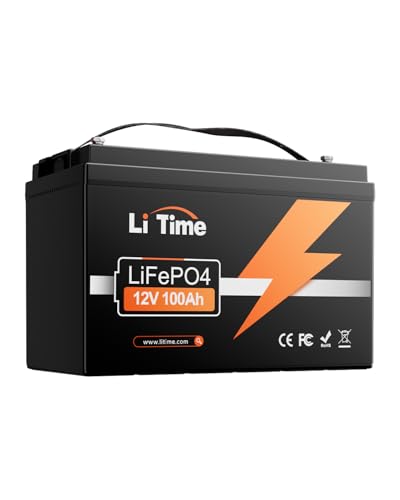
Best Warranty Support
LiTime 12V 100Ah Group 31 LiFePO4 Deep Cycle Battery
Owners who value a long warranty from an established brand
Our take Check price for LiTime 12V 100Ah Group 31 LiFePO4 Deep Cycle Battery (opens in a new tab)

Best Group 24 Fit
MARSENERGY 12V 100Ah LiFePO4 Battery, Bluetooth, Group 24
Small trailers and pop-ups with a Group 24 tray
Our take Check price for MARSENERGY 12V 100Ah LiFePO4 Battery, Bluetooth, Group 24 (opens in a new tab)

Best Basic Drop-In
Mighty Max ML100-12LI 12V 100Ah Lithium Battery, Group 30H
Budget-minded owners who want a plain lead-acid replacement
Our take Check price for Mighty Max ML100-12LI 12V 100Ah Lithium Battery, Group 30H (opens in a new tab)
Why Each Pick Made the Cut
Best Overall1 of 6
Power Queen 12V 125Ah LiFePO4 Battery, Group 27, Bluetooth on Amazon (opens in a new tab)
Power Queen 12V 125Ah LiFePO4 Battery, Group 27, Bluetooth is the better fit when most RV owners replacing one or two lead-acid house batteries.
Best for
- Most RV owners replacing one or two lead-acid house batteries
Why it made the shortlist
The intended use case is Most RV owners replacing one or two lead-acid house batteries. The documented setup centers on 125Ah in a Group 27 case, bluetooth 5.0 app, uN38.3, ABYC E-13.
What separates it on paper is extra 25Ah fits the same Group 27 box. Its 125Ah in a Group 27 case specification sits at between the lower and upper ends of the comparable range in this 5-product comparison. Treat the battery platform and included charger as part of the fit, not just the headline number.
Before committing, account for not a starting battery, house loads only. Confirm whether the battery and charger are included with the exact package. Check platform compatibility and published runtime against the area or workload you need to cover.
Key dimensions & specs
- 125Ah in a Group 27 case
- Bluetooth 5.0 app
- UN38.3, ABYC E-13
Pros
- Extra 25Ah fits the same Group 27 box
- Bluetooth app shows SOC, current, and temperature
- Lists ABYC E-13 and UN38.3 compliance
- Rated up to 15,000 cycles
Cons
- Not a starting battery, house loads only
- Group 27 is too long for Group 24 trays
Best High Capacity2 of 6
ECO-WORTHY 12V 314Ah LiFePO4 Battery, Bluetooth, SOC Display on Amazon (opens in a new tab)
Choose ECO-WORTHY 12V 314Ah LiFePO4 Battery, Bluetooth, SOC Display for over 4kWh replaces three 100Ah batteries.
Best for
- Boondockers running a fridge, inverter, and fans off-grid
Why it made the shortlist
ECO-WORTHY 12V 314Ah LiFePO4 Battery, Bluetooth, SOC Display is positioned for Boondockers running a fridge, inverter, and fans off-grid. The documented setup centers on 314Ah, 4019Wh, 200A BMS, charge cutoff at 19.4°F.
The feature doing most of the work here is over 4kWh replaces three 100Ah batteries. Its 314Ah, 4019Wh specification sits at the upper end of the comparable range in this 5-product comparison. Treat the battery platform and included charger as part of the fit, not just the headline number.
The practical constraint here is 60.4 lbs is a two-person lift. Confirm whether the battery and charger are included with the exact package. Check platform compatibility and published runtime against the area or workload you need to cover.
Key dimensions & specs
- 314Ah, 4019Wh
- 200A BMS
- Charge cutoff at 19.4°F
Pros
- Over 4kWh replaces three 100Ah batteries
- Built-in SOC display plus Bluetooth app
- Buzzer alerts you to battery faults
- 200A BMS handles a 2000W inverter
Cons
- 60.4 lbs is a two-person lift
- 16.3 inch case needs a large compartment
Best for Cold Weather3 of 6
VATRER 12.8V 300Ah Self-Heating LiFePO4 Battery, App Monitoring on Amazon (opens in a new tab)
VATRER 12.8V 300Ah Self-Heating LiFePO4 Battery, App Monitoring makes the shortlist because self-heating lets it charge in freezing weather.
Best for
- Four-season campers and ski-trip RVers
Why it made the shortlist
This model is aimed at Four-season campers and ski-trip RVers. The documented setup centers on 300Ah with self-heating, app shows cycle count, 5000 cycles at 100% DOD.
The most useful documented advantage is self-heating lets it charge in freezing weather. Its 300Ah with self-heating specification sits at between the lower and upper ends of the comparable range in this 5-product comparison. Treat the battery platform and included charger as part of the fit, not just the headline number.
The main limitation to plan around is brand advises against series golf cart use. Confirm whether the battery and charger are included with the exact package. Check platform compatibility and published runtime against the area or workload you need to cover.
Key dimensions & specs
- 300Ah with self-heating
- App shows cycle count
- 5000 cycles at 100% DOD
Pros
- Self-heating lets it charge in freezing weather
- App tracks voltage, temperature, and cycle count
- Rated 5000 cycles at full depth
- Grade A cells with full BMS protection
Cons
- Brand advises against series golf cart use
Best Warranty Support4 of 6
LiTime 12V 100Ah Group 31 LiFePO4 Deep Cycle Battery on Amazon (opens in a new tab)
The strongest case for LiTime 12V 100Ah Group 31 LiFePO4 Deep Cycle Battery is five-year warranty with 24-hour tech support.
Best for
- Owners who value a long warranty from an established brand
Why it made the shortlist
For Owners who value a long warranty from an established brand, this is one of the more relevant configurations in the shortlist. The documented setup centers on 100Ah, Group 31 case, 22.05 lbs, 5-year warranty.
Its case starts with five-year warranty with 24-hour tech support. Its 100Ah, Group 31 case specification sits at the lower end of the comparable range in this 5-product comparison. Treat the battery platform and included charger as part of the fit, not just the headline number.
The trade-off worth checking first is no Bluetooth monitoring. Confirm whether the battery and charger are included with the exact package. Check platform compatibility and published runtime against the area or workload you need to cover.
Key dimensions & specs
- 100Ah, Group 31 case
- 22.05 lbs
- 5-year warranty
Pros
- Five-year warranty with 24-hour tech support
- Light enough at 22 lbs to lift alone
- Group 31 size fits common RV trays
- Covered by product liability insurance
Cons
- No Bluetooth monitoring
- Pricier than other 100Ah drop-ins
Best Group 24 Fit5 of 6
MARSENERGY 12V 100Ah LiFePO4 Battery, Bluetooth, Group 24 on Amazon (opens in a new tab)
MARSENERGY 12V 100Ah LiFePO4 Battery, Bluetooth, Group 24 is the better fit when small trailers and pop-ups with a Group 24 tray.
Best for
- Small trailers and pop-ups with a Group 24 tray
Why it made the shortlist
The intended use case is Small trailers and pop-ups with a Group 24 tray. The documented setup centers on group 24 size, 21 lbs, bluetooth monitoring, low-temp cell additives.
What separates it on paper is true Group 24 dimensions for small trays. Against the other 5 picks, the useful comparison starts with group 24 size, 21 lbs and bluetooth monitoring. Those details show whether its configuration suits the job better than a neighboring recommendation.
Before committing, account for 100A limit caps inverter size near 1000W. Confirm whether the stated figure refers to product weight or rated working capacity. Compare it with your lifting, transport and support requirements before deciding.
Key dimensions & specs
- Group 24 size, 21 lbs
- Bluetooth monitoring
- Low-temp cell additives
Pros
- True Group 24 dimensions for small trays
- Fully waterproof case suits tongue mounts
- Rated 4500 cycles at full depth
Cons
- 100A limit caps inverter size near 1000W
- Fewer published certifications than Power Queen
Best Basic Drop-In6 of 6
Mighty Max ML100-12LI 12V 100Ah Lithium Battery, Group 30H on Amazon (opens in a new tab)
Choose Mighty Max ML100-12LI 12V 100Ah Lithium Battery, Group 30H for simple drop-in with no app to set up.
Best for
- Budget-minded owners who want a plain lead-acid replacement
Why it made the shortlist
Mighty Max ML100-12LI 12V 100Ah Lithium Battery, Group 30H is positioned for Budget-minded owners who want a plain lead-acid replacement. The documented setup centers on 100Ah, Group 30H case, internal thread terminals, up to 4 in series or parallel.
The feature doing most of the work here is simple drop-in with no app to set up. Its 100Ah, Group 30H case specification sits at the lower end of the comparable range in this 5-product comparison. Treat the battery platform and included charger as part of the fit, not just the headline number.
The practical constraint here is only a one-year warranty. Confirm whether the battery and charger are included with the exact package. Check platform compatibility and published runtime against the area or workload you need to cover.
Key dimensions & specs
- 100Ah, Group 30H case
- Internal thread terminals
- Up to 4 in series or parallel
Pros
- Simple drop-in with no app to set up
- Supports up to four identical batteries
- Group 30H fits larger RV trays
- Widely stocked brand for quick replacement
Cons
- Only a one-year warranty
- Rated 2500 cycles, lowest here
How We Built This Shortlist
Each pick was assessed across 5 criteria weighted for real-world use.
- BMS Current vs Real RV Loads
- Compared each BMS continuous rating against common RV inverter sizes, since a 100A BMS caps a single 12V battery near 1000W while 200A supports a 2000W unit.
- Cold-Weather Charging Behavior
- Checked whether each battery cuts off charging below freezing, at what listed temperature, or warms its own cells, since charging LiFePO4 below 32°F damages it.
- Physical Fit in RV Battery Boxes
- Matched listed dimensions to BCI group sizes (24, 27, 30H, 31) so a pick can actually replace the lead-acid already in a tongue box or compartment.
- Warranty and Documentation
- Weighted warranty length, published certifications like UN38.3, and support access, since a 10-year lifespan claim means little without a reachable seller.
- Monitoring Without Extra Hardware
- Gave credit for built-in Bluetooth or an on-case display that shows state of charge, since lithium voltage stays flat and makes a voltmeter a poor fuel gauge.
What Matters Before You Choose a Lithium RV Battery
Key buying criteria so you get the right fit the first time.
BMS Continuous Current Rating
The battery management system sets how many amps the battery will deliver before shutting itself off. That matters because inverter draw scales fast: a 1000W load pulls roughly 85A to 100A from a 12V battery, so a 100A BMS is at its limit while a 200A BMS has headroom for a 2000W unit. Look for the continuous BMS figure in the title or bullets, and ignore short surge numbers when sizing an inverter.
Low-Temperature Charge Protection
LiFePO4 cells can be permanently damaged if they are charged below freezing, even though they can discharge in the cold. A battery with low-temperature cutoff simply stops accepting charge, while a self-heating battery warms its cells first so solar keeps working. Check the listing for the exact cutoff temperature, often 32°F or 19.4°F, or the words self-heating.
Physical Group Size
RV battery trays and tongue boxes are built around BCI group sizes such as 24, 27, and 31, and a battery that is half an inch too long will not close the lid. Lithium lets you fit more amp hours in the same box, which is why a 125Ah Group 27 battery is worth seeking out. Measure your tray and compare it to the listed length, width, and height rather than trusting the word drop-in.
Charging Compatibility with Your Converter
Many older RV converters are built for lead-acid and hold the battery at a float voltage that never fully charges lithium. A LiFePO4 battery wants roughly 14.2V to 14.6V absorption with float disabled or low. Check your converter label for a lithium mode before buying, and budget for a lithium-capable converter if it lacks one.
Warranty Length and Support
Most listings promise a 10-year life, but the warranty is the only part of that promise you can enforce. Five years is common among established brands, while some budget batteries carry only one year. Read the warranty line in the bullets and look for a named support channel, not just a lifespan claim.
Built-In Monitoring
Lithium voltage stays nearly flat from 90% to 20% charge, so a simple voltmeter tells you almost nothing about remaining capacity. Bluetooth apps or on-case displays read the BMS and show true state of charge and cell temperature. If a battery has neither, plan on adding a shunt-based monitor, which adds cost to the cheaper picks.
Match a Lithium RV Battery to Your RV
By How You Camp
Match capacity to the way you actually use the rig, not the biggest number on the page.
| Your camping style | Recommended pick | Why |
|---|---|---|
| Campgrounds with hookups, occasional dry night | Power Queen 125Ah | 125Ah covers lights, fans, and the water pump overnight in a stock box |
| Multi-day boondocking with an inverter | ECO-WORTHY 314Ah | 4019Wh and a 200A BMS run a fridge and microwave |
| Winter or ski trips without shore power | VATRER 300Ah Self-Heating | Self-heating lets solar keep charging below freezing |
| Pop-up or teardrop with a small tray | MARSENERGY 100Ah | True Group 24 size at 21 lbs |
| Build a bank gradually over seasons | LiTime 100Ah Group 31 | Add identical Group 31 units with warranty backing |
Scroll sideways to see every column.
By Budget
| Budget | Recommended pick | What you get |
|---|---|---|
| Under $250 | MARSENERGY 100Ah | Bluetooth and Group 24 fit for about $240 |
| $250 to $300 | Power Queen 125Ah | 125Ah, Bluetooth, and ABYC E-13 listing for about $265 |
| $250 to $310, no app needed | LiTime 100Ah Group 31 | Five-year warranty and established support |
| $500 to $600 | ECO-WORTHY 314Ah | Highest capacity per dollar among the large picks |
| About $600 | VATRER 300Ah Self-Heating | Pay the extra for self-heating |
Scroll sideways to see every column.
One Large Battery vs Several 100Ah Batteries
- One large battery
- A single 300Ah-class battery uses one BMS and one set of cables, so there are fewer connections to balance and corrode. The downside is weight over 60 lbs and one point of failure. In this roundup: ECO-WORTHY 314Ah and VATRER 300Ah Self-Heating.
- Several 100Ah-class batteries
- Identical smaller batteries wired in parallel can each be lifted by one person, fit standard trays, and let you spread cost over time. You need matched units and equal-length cables. In this roundup: Power Queen 125Ah, LiTime 100Ah Group 31, MARSENERGY 100Ah, and Mighty Max ML100-12LI.
Most travel trailer owners should start with one or two 100Ah-class batteries like the Power Queen 125Ah; choose a single large battery only if you have the floor space and want 300Ah or more.
By Monitoring Preference
| How you want to track charge | Recommended pick | Notes |
|---|---|---|
| Glance at the battery itself | ECO-WORTHY 314Ah | On-case SOC display plus app |
| Phone app with cycle history | VATRER 300Ah Self-Heating | App logs cycle count and temperature |
| Phone app on a small battery | MARSENERGY 100Ah | Bluetooth on a Group 24 drop-in |
| Separate shunt monitor already installed | LiTime 100Ah Group 31 | No app to duplicate your existing gauge |
| Cheapest possible, add monitor later | Mighty Max ML100-12LI | Plain BMS, pair with a shunt |
Scroll sideways to see every column.
For Solar Boondocking Specifically
- Look for
- A BMS rated at least 150A to 200A if you run an inverter, low-temperature charge protection or self-heating so cold mornings do not damage cells, and enough capacity to cover two cloudy days. Set your solar controller to a LiFePO4 profile with equalization disabled.
- In this comparison
- The ECO-WORTHY 314Ah is the strongest solar boondocking pick in warm and mild weather because of its 4019Wh and 200A BMS. Switch to the VATRER 300Ah Self-Heating if your trips regularly see overnight frost.
When to Spend More
- Spend more if
- You camp in freezing weather or run high-draw appliances off an inverter. The VATRER 300Ah Self-Heating adds heating and the ECO-WORTHY 314Ah adds a 200A BMS and 4kWh, both of which change what your rig can do off-grid.
- Save if
- You mostly stay at hookup sites and only need overnight power. The MARSENERGY 100Ah or Mighty Max ML100-12LI gives you the lithium weight savings and depth of discharge without paying for capacity you will not use.
Before You Bring One Home
Will a lithium RV battery work with my existing converter?
It will usually power the rig, but many older converters charge with a lead-acid profile that never fully charges LiFePO4 and may float it at the wrong voltage. Check for a lithium setting on the converter label. If there is none, a lithium-compatible converter or charger is the usual fix.
Can I charge a lithium RV battery from my tow vehicle's alternator?
Not directly in most cases. Lithium can pull far more current than lead-acid, which can overheat an alternator, so a DC-DC charger between the vehicle and the RV battery is the standard solution. It also delivers the correct lithium charge voltage.
Is the Power Queen 125Ah worth it over a basic 100Ah drop-in?
If you have a Group 27 tray, yes for most owners. You get 25% more capacity in the same box plus Bluetooth monitoring, for a modest price increase over plain 100Ah batteries like the Mighty Max.
What is the biggest mistake when switching to lithium?
Mixing a new lithium battery with old lead-acid batteries in the same bank. The two chemistries charge at different voltages, so remove the lead-acid batteries entirely or isolate them, and update your solar controller and converter settings to a LiFePO4 profile.
How should I store a lithium RV battery over winter?
Charge it to roughly 50% to 70%, disconnect all loads or use the battery switch so parasitic draws do not drain it, and keep it somewhere above freezing if you plan to charge it. Check the charge every couple of months.
Do I need a heated lithium battery?
Only if you charge in freezing temperatures, such as solar charging at a winter campsite. If the battery lives in a heated space or you only camp in mild weather, a standard battery with low-temperature charge cutoff is enough.
Bottom Line
Best overall: Power Queen 12V 125Ah LiFePO4 Battery, Group 27, Bluetooth — best overall pick in this roundup. See the full verdicts above for every pick, with pros, cons and who each one suits.
Browse all lithium rv batteries on Amazon — Prime-eligible options with current pricing.