
Buying Guide
6 Best Portable Power Stations for an RV Air Conditioner in 2026: A Practical RV Guide
Six portable power stations compared for running an RV air conditioner: capacity, AC output, TT-30 outlet, weight and runtime math, with honest limits.
By Hardcastle's RV Editors
12 min read6 products evaluated
Running a rooftop air conditioner from a portable power station is possible, but it is a limited-hours job, and the honest answer is not the one most listings imply. The method is simple: runtime in hours is roughly battery watt-hours divided by the air conditioner's running watts, then reduced for inverter losses. As an illustration only, a 2,048Wh station feeding a 1,000 watt running load lasts about 2 hours before losses. Your own number comes from the unit's nameplate, which you should read before buying anything.
We compared six stations from $899.99 to $1,349 and sorted them by what matters for an air conditioner: usable capacity, AC output, whether there is a TT-30 outlet that takes an RV cord, surge handling, weight, and how quickly each recharges. Only one listing, Anker's, says its station runs most window and RV air conditioners. The others publish AC output and capacity, and you do the arithmetic against your own unit's start-up and running load.
Hardcastle’s RV field notes
The Rig Fit Check
A quick way to connect the shortlist to the space, workload and ownership details that matter after the box arrives.
- Start with the job
- BLUETTI Elite 300 Portable Power Station for RV & Home Backup, 3014.4Wh leads this shortlist for TT-30 hookup with the most capacity per dollar. Use that fit as a reference point, then compare the alternatives against your own space and workload.
- Specs that separate the picks
- The first details to compare are 3,014.4Wh, 2,400W AC output, 3,072Wh, 3,000W AC output, 3,072Wh, 3,600W, 7,200W surge. Confirm the exact model and included components before ordering.
- Trade-off to plan for
- Feature text gives no weight or dimensions
The Practical Shortlist
A road-tested-thinking look at 6 options, organized around the job each one suits best.
Best Overall
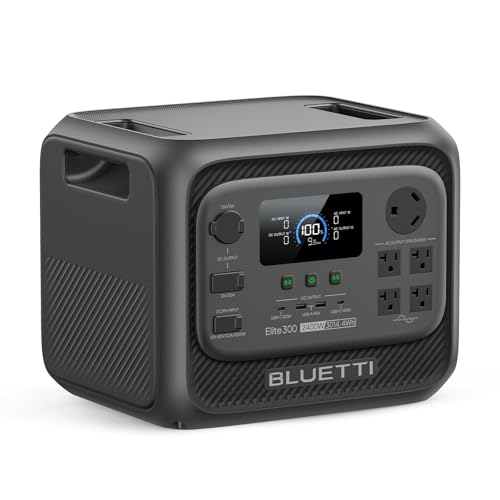
BLUETTI Elite 300 Portable Power Station for RV & Home Backup, 3014.4Wh
TT-30 hookup with the most capacity per dollar
Our take Check price for BLUETTI Elite 300 Portable Power Station for RV & Home Backup, 3014.4Wh (opens in a new tab)

Best Value With Boost Mode
DABBSSON Portable Power Station 3000L, 3072Wh, 3000W AC Output, 3600W Power Boost
air conditioner start-up headroom on a budget
Our take Check price for DABBSSON Portable Power Station 3000L, 3072Wh, 3000W AC Output, 3600W Power Boost (opens in a new tab)

Best Documented Recharging
Jackery HomePower 3000 Portable Power Station, 3072Wh, 3600W AC Output
fast recharging and the highest surge
Our take Check price for Jackery HomePower 3000 Portable Power Station, 3072Wh, 3600W AC Output (opens in a new tab)

Best Capacity and Expandability
ABOK Ark3600 Portable Power Station 3600W, 3840Wh LiFePO4 Battery
maximum runtime now with room to expand
Our take Check price for ABOK Ark3600 Portable Power Station 3600W, 3840Wh LiFePO4 Battery (opens in a new tab)
Best Lightweight and Fast Charge
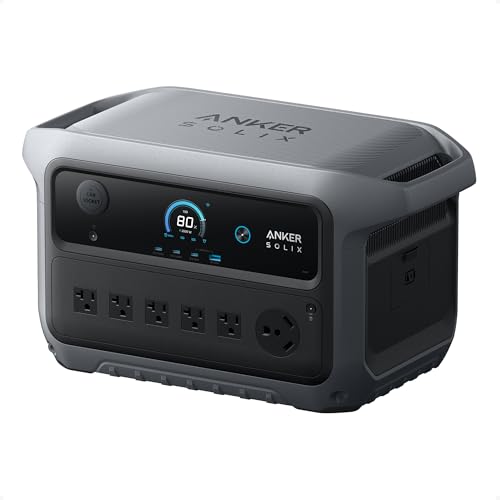
Anker SOLIX C2000 Gen 2 Portable Power Station, 2,048Wh, 2,400W
liftable weight and the fastest recharge
Our take Check price for Anker SOLIX C2000 Gen 2 Portable Power Station, 2,048Wh, 2,400W (opens in a new tab)

Best Expandable Option
BLUETTI AC200PL Portable Power Station 2304Wh 2400W LiFePO4 Solar Generator
TT30 outlet with fast AC recharging
Our take Check price for BLUETTI AC200PL Portable Power Station 2304Wh 2400W LiFePO4 Solar Generator (opens in a new tab)
Why Each Pick Made the Cut
Best Overall1 of 6
BLUETTI Elite 300 Portable Power Station for RV & Home Backup, 3014.4Wh on Amazon (opens in a new tab)
BLUETTI Elite 300 Portable Power Station for RV & Home Backup, 3014.4Wh makes the shortlist because includes a TT-30 outlet that takes an RV cord.
Best for
- TT-30 hookup with the most capacity per dollar
Why it made the shortlist
This model is aimed at TT-30 hookup with the most capacity per dollar. The documented setup centers on 3,014.4Wh, 2,400W AC output, tT-30 and 12V/30A outlets, 10ms UPS switchover.
The most useful documented advantage is includes a TT-30 outlet that takes an RV cord. Its TT-30 and 12V/30A outlets specification sits at the lower end of the comparable range in this 2-product comparison. Treat the battery platform and included charger as part of the fit, not just the headline number.
The main limitation to plan around is feature text gives no weight or dimensions. Confirm whether the battery and charger are included with the exact package. Check platform compatibility and published runtime against the area or workload you need to cover.
Key dimensions & specs
- 3,014.4Wh, 2,400W AC output
- TT-30 and 12V/30A outlets
- 10ms UPS switchover
Pros
- Includes a TT-30 outlet that takes an RV cord
- About 3kWh of stored energy for $1,098.99
- 12V/30A DC output runs fridges and water pumps
- App monitoring and 10ms UPS switchover are listed
Cons
- Feature text gives no weight or dimensions
- 2,400W output limits air conditioner start-up headroom
Best Value With Boost Mode2 of 6
DABBSSON Portable Power Station 3000L, 3072Wh, 3000W AC Output, 3600W Power Boost on Amazon (opens in a new tab)
The strongest case for DABBSSON Portable Power Station 3000L, 3072Wh, 3000W AC Output, 3600W Power Boost is 3,000W rated output beats most stations here.
Best for
- air conditioner start-up headroom on a budget
Why it made the shortlist
For air conditioner start-up headroom on a budget, this is one of the more relevant configurations in the shortlist. The documented setup centers on 3,072Wh, 3,000W AC output, 3,600W Power Boost mode, tT-30 outlet, 5-year warranty.
Its case starts with 3,000W rated output beats most stations here. Against the other 5 picks, the useful comparison starts with 3,072Wh, 3,000W AC output and 3,600W Power Boost mode. Those details show whether its configuration suits the job better than a neighboring recommendation.
The trade-off worth checking first is no weight or recharge time is published. Confirm the exact model number and included components before ordering. Check dimensions, compatibility and maintenance needs against the way you plan to use and store it.
Key dimensions & specs
- 3,072Wh, 3,000W AC output
- 3,600W Power Boost mode
- TT-30 outlet, 5-year warranty
Pros
- 3,000W rated output beats most stations here
- Five-year warranty is the longest listed
- TT-30 outlet is built in for RV hookups
Cons
- No weight or recharge time is published
Best Documented Recharging3 of 6
Jackery HomePower 3000 Portable Power Station, 3072Wh, 3600W AC Output on Amazon (opens in a new tab)
Jackery HomePower 3000 Portable Power Station, 3072Wh, 3600W AC Output is the better fit when fast recharging and the highest surge.
Best for
- fast recharging and the highest surge
Why it made the shortlist
The intended use case is fast recharging and the highest surge. The documented setup centers on 3,072Wh, 3,600W, 7,200W surge, recharges in 2.2 hours by AC, built-in TT-30 RV port.
What separates it on paper is recharge times are published in hours. Against the other 5 picks, the useful comparison starts with 3,072Wh, 3,600W, 7,200W surge and recharges in 2.2 hours by AC. Those details show whether its configuration suits the job better than a neighboring recommendation.
Before committing, account for costs $250 to $320 more than similar 3kWh units. Confirm the exact model number and included components before ordering. Check dimensions, compatibility and maintenance needs against the way you plan to use and store it.
Key dimensions & specs
- 3,072Wh, 3,600W, 7,200W surge
- Recharges in 2.2 hours by AC
- Built-in TT-30 RV port
Pros
- Recharge times are published in hours
- UL-certified UPS switches in 20ms or less
- LiFePO4 cells rated at 4,000 cycles
Cons
- Costs $250 to $320 more than similar 3kWh units
- Feature text gives no weight in pounds
Best Capacity and Expandability4 of 6
ABOK Ark3600 Portable Power Station 3600W, 3840Wh LiFePO4 Battery on Amazon (opens in a new tab)
Choose ABOK Ark3600 Portable Power Station 3600W, 3840Wh LiFePO4 Battery for largest capacity of the six at 3,840Wh.
Best for
- maximum runtime now with room to expand
Why it made the shortlist
ABOK Ark3600 Portable Power Station 3600W, 3840Wh LiFePO4 Battery is positioned for maximum runtime now with room to expand. The documented setup centers on 3,840Wh, expandable to 11,520Wh, 3,600W rated, 4,500W peak, telescoping handle and wheels.
The feature doing most of the work here is largest capacity of the six at 3,840Wh. Against the other 5 picks, the useful comparison starts with 3,840Wh, expandable to 11,520Wh and 3,600W rated, 4,500W peak. Those details show whether its configuration suits the job better than a neighboring recommendation.
The practical constraint here is listing does not name a TT-30 RV outlet. Confirm the exact model number and included components before ordering. Check dimensions, compatibility and maintenance needs against the way you plan to use and store it.
Key dimensions & specs
- 3,840Wh, expandable to 11,520Wh
- 3,600W rated, 4,500W peak
- Telescoping handle and wheels
Pros
- Largest capacity of the six at 3,840Wh
- Expands up to 11,520Wh with add-on batteries
- Wheels and a telescoping handle ease moving it
- Solar input accepts up to 2,000W
Cons
- Listing does not name a TT-30 RV outlet
- AC recharge is capped at 1,500W
Best Lightweight and Fast Charge5 of 6
Anker SOLIX C2000 Gen 2 Portable Power Station, 2,048Wh, 2,400W on Amazon (opens in a new tab)
Anker SOLIX C2000 Gen 2 Portable Power Station, 2,048Wh, 2,400W makes the shortlist because only listing with a weight, 41.7 pounds.
Best for
- liftable weight and the fastest recharge
Why it made the shortlist
This model is aimed at liftable weight and the fastest recharge. The documented setup centers on 2,048Wh, 2,400W, 4,000W peak, 41.7 lb, compact frame, 0 to 100% in 58 minutes.
The most useful documented advantage is only listing with a weight, 41.7 pounds. Against the other 5 picks, the useful comparison starts with 2,048Wh, 2,400W, 4,000W peak and 41.7 lb, compact frame. Those details show whether its configuration suits the job better than a neighboring recommendation.
The main limitation to plan around is holds about 1,000Wh less than the 3kWh units. Confirm whether the stated figure refers to product weight or rated working capacity. Compare it with your lifting, transport and support requirements before deciding.
Key dimensions & specs
- 2,048Wh, 2,400W, 4,000W peak
- 41.7 lb, compact frame
- 0 to 100% in 58 minutes
Pros
- Only listing with a weight, 41.7 pounds
- Full recharge in 58 minutes by AC and solar
- Expands to 4kWh with an expansion battery
Cons
- Holds about 1,000Wh less than the 3kWh units
- Listing does not name a TT-30 RV outlet
Best Expandable Option6 of 6
BLUETTI AC200PL Portable Power Station 2304Wh 2400W LiFePO4 Solar Generator on Amazon (opens in a new tab)
The strongest case for BLUETTI AC200PL Portable Power Station 2304Wh 2400W LiFePO4 Solar Generator is includes a TT30 port for an RV cord.
Best for
- TT30 outlet with fast AC recharging
Why it made the shortlist
For TT30 outlet with fast AC recharging, this is one of the more relevant configurations in the shortlist. The documented setup centers on 2,304Wh, 2,400W AC output, tT30 port, 48V/8A DC, expandable to 8,448Wh.
Its case starts with includes a TT30 port for an RV cord. Its TT30 port, 48V/8A DC specification sits at the upper end of the comparable range in this 2-product comparison. Treat the battery platform and included charger as part of the fit, not just the headline number.
The trade-off worth checking first is base capacity is about 710Wh less than the Elite 300. Confirm whether the battery and charger are included with the exact package. Check platform compatibility and published runtime against the area or workload you need to cover.
Key dimensions & specs
- 2,304Wh, 2,400W AC output
- TT30 port, 48V/8A DC
- Expandable to 8,448Wh
Pros
- Includes a TT30 port for an RV cord
- AC input up to 2,400W, 0 to 80 percent in 60 minutes
- Expands from 2kWh to as much as 8,448Wh
Cons
- Base capacity is about 710Wh less than the Elite 300
- Feature text gives no weight or dimensions
How We Built This Shortlist
Each pick was assessed across 5 criteria weighted for real-world use.
- Capacity versus runtime math
- We compared stated watt-hours and applied runtime as Wh divided by the air conditioner's running watts, reduced for inverter losses, and treated the result as an estimate.
- AC output and surge
- We checked rated AC watts, listed peak or surge watts and any boost mode, because a compressor's start-up draw can exceed its running watts.
- TT-30 outlet
- We looked for a named TT-30 receptacle, since an RV power cord ends in a TT-30 plug and a different outlet type needs an adapter.
- Weight and liftability
- We noted published weight, handles and wheels, and treated missing weights as unknown rather than light.
- Recharge speed and expansion
- We compared stated recharge times, AC input watts and expansion options, since a station that takes a full day to refill limits repeat air conditioner use.
What Matters Before You Choose a Portable Power Station for an RV Air Conditioner
Key buying criteria so you get the right fit the first time.
Watt-hours and runtime math
Watt-hours measure stored energy, and runtime is roughly watt-hours divided by the air conditioner's running watts, reduced by inverter losses. As an illustration, 3,014Wh feeding a 1,000 watt load gives about 3 hours before losses, so real time is shorter. Read your air conditioner's nameplate for running watts, then use this formula for every station you consider.
Start-up surge versus rated output
A compressor draws a short surge when it starts, often well above its running watts, and a station that cannot meet it will trip. Listings give rated watts and a peak or surge figure, such as 2,400W rated with 4,000W peak or 3,600W with 7,200W surge. Find your air conditioner's start-up draw, then pick a station whose surge number clearly exceeds it.
TT-30 outlet
An RV power cord ends in a TT-30 plug that needs a TT-30R receptacle, which several of these stations include. A station with only a different 30A outlet needs an adapter, and household outlets cannot take a 30 amp RV cord. Check the listing's outlet list for TT-30 or TT30 by name.
Weight and liftability
A 3kWh station is heavy, and you may need to lift it into a trunk or storage bay. Only the Anker listing states a weight, 41.7 pounds, and wheels appear on the ABOK. Look for pounds, a handle and wheels, and measure your storage space before buying.
Recharge speed
A station that takes a full day to refill limits how often you can run the air conditioner. Published figures range from 58 minutes on the Anker to 1.7 to 2.2 hours on the Jackery and 1,500W AC input on the ABOK. Compare the recharge time to how you will refill, whether by shore power, generator, solar or alternator.
Expansion and honest limits
Expansion batteries raise capacity at extra cost, but a power station is still a limited-hours air conditioner source, not an unlimited one. The Anker expands to 4kWh, the ABOK to 11,520Wh and the AC200PL to 8,448Wh. Calculate the total cost of the station plus expansion against a generator or shore power for the hours you actually need.
Match a Portable Power Station for an RV Air Conditioner to Your RV
By Air Conditioner Runtime Needed
Runtime in hours is roughly watt-hours divided by the air conditioner's running watts, then reduced for inverter losses. Read the nameplate on your unit for the real running and start-up figures.
| Your situation | Recommended pick | Why |
|---|---|---|
| Longest runtime in one charge | ABOK Ark3600 | 3,840Wh is the most stored energy listed |
| Roughly 3kWh with an RV outlet at the best price | Bluetti Elite 300 | 3,014.4Wh and a TT-30 outlet for $1,098.99 |
| Large start-up surge | Jackery HomePower | 7,200W surge is the highest listed |
| Short sessions, mostly to cool down before bed | Anker C2000 | 2,048Wh and listed for most RV air conditioners |
| Plan to add batteries later | Bluetti AC200PL | Expands from 2kWh to as much as 8,448Wh |
Scroll sideways to see every column.
By Budget
| Budget | Recommended pick |
|---|---|
| Under $950 | Anker C2000 or Bluetti AC200PL |
| $1,000 to $1,100 | Dabbsson 3000L or Bluetti Elite 300 |
| $1,100 to $1,200 | ABOK Ark3600 |
| About $1,350 | Jackery HomePower |
More Capacity vs Lighter Weight
- Maximum capacity
- The ABOK Ark3600, Jackery HomePower, Dabbsson 3000L and Bluetti Elite 300 hold 3kWh to 3.8kWh and run an air conditioner longer, but none of them publishes a weight. Plan on a heavy unit you roll or lift with help.
- Lighter and smaller
- The Anker C2000 holds 2,048Wh at a published 41.7 pounds. You get shorter runtime, but you can move it alone, store it more easily and recharge in 58 minutes.
Most air conditioner users should favor capacity, and choose the lighter Anker only if you will carry it often or run the air conditioner in short bursts.
By Outlet and Recharge Setup
| Your setup | Recommended pick | Why |
|---|---|---|
| Standard RV cord, TT-30 plug | Bluetti Elite 300 | TT-30 outlet is listed |
| Need to recharge fast at lunch | Anker C2000 | 100 percent in 58 minutes with AC and solar |
| Recharge by generator at the campsite | Jackery HomePower | Full recharge in 1.7 hours, AC and DC together |
| Large solar array on the roof | ABOK Ark3600 | Accepts up to 2,000W of solar |
| Drive and recharge from the alternator | Anker C2000 | 800W alternator charging in 3 hours |
Scroll sideways to see every column.
For Boondocking in Summer Specifically
- Look for
- Enough watt-hours to cover several hours of compressor time, a recharge method that matches your power source, and a TT-30 outlet or a clear adapter plan.
- In this comparison
- The Bluetti Elite 300 and Dabbsson 3000L offer about 3kWh with TT-30 outlets, and the ABOK Ark3600 pairs 3,840Wh with up to 2,000W solar input. Any of them gives limited air conditioner hours, so plan for a partial night, not all night.
When to Spend More
- Spend more if
- You need fast recharging or high surge; the Jackery HomePower publishes 7,200W surge and a 2.2 hour AC recharge, and the ABOK Ark3600 adds the most capacity.
- Save if
- You will cool for an hour or two at a time; the Anker C2000 at $899.99 or the Bluetti AC200PL at $949.98 covers short sessions.
Before You Bring One Home
Can a portable power station really run an RV air conditioner?
Yes, for limited hours. Only the Anker listing says its station runs most window and RV air conditioners, and the others publish capacity and output without naming air conditioners. Check your unit's nameplate for running and start-up watts, then compare with the station's rated output and surge.
How long will it run?
Divide the station's watt-hours by the air conditioner's running watts and reduce for inverter losses. As an illustration, 2,048Wh at a 1,000 watt load is about 2 hours before losses. Your real load and the compressor's duty cycle decide the actual time.
Is the ABOK worth it over the Bluetti Elite 300?
It holds about 825Wh more for $40 more and expands to 11,520Wh, but its listing does not name a TT-30 outlet and AC charging is limited to 1,500W. The Bluetti has the named TT-30 outlet and a 10ms UPS.
How do I connect the station to my RV?
Use the TT-30 outlet with your RV's 30 amp cord, as on the Bluetti Elite 300, Dabbsson 3000L or Jackery HomePower. Turn off the RV's converter and large loads you do not need, then start the air conditioner last.
Will a soft-start kit help?
It lowers the compressor's start-up surge, which makes a station with a lower surge rating more likely to start the unit. Check the kit maker's specs and your air conditioner's compatibility.
How should I store and care for it?
Keep it indoors out of heat and recharge it periodically as the maker recommends. LiFePO4 cells such as the Jackery's are rated at 4,000 cycles, but extreme temperatures still shorten life.
Bottom Line
Best overall: BLUETTI Elite 300 Portable Power Station for RV & Home Backup, 3014.4Wh — best overall pick in this roundup. See the full verdicts above for every pick, with pros, cons and who each one suits.
Browse all portable power stations for an rv air conditioner on Amazon — Prime-eligible options with current pricing.