
Buying Guide
5 Best 2500 Watt RV Inverters in 2026: A Practical RV Guide
Five 2500W 12V RV inverters compared on continuous versus peak watts, DC amps drawn, built-in transfer switching, remotes and price, from $122 to $220.
By Hardcastle's RV Editors
10 min read5 products evaluated
When a listing says 2500 watt, the first question is which number it means. Every inverter here lists 2500W continuous and 5000W peak, but the peak is a two-second burst for starting motors, not a figure you can live at. The continuous number is the real boundary, and on a 12V system it already asks for about 208 amps before losses and roughly 231 amps at 90 percent efficiency, which is more than a single typical lithium battery management system can deliver.
We compared five 12V to 120V inverters priced from $122 to $220 on how each defines its 2500W, what it says about transfer switching and hardwire connection, the protections and remotes included, and what it leaves out of the listing. We also set aside one 2500W unit in the search results because it takes 48V input, which does not fit a 12V RV bank.
Hardcastle’s RV field notes
The Rig Fit Check
A quick way to connect the shortlist to the space, workload and ownership details that matter after the box arrives.
- Start with the job
- EGSCATEE 2500W Pure Sine Wave Inverter with Built-in ATS, 12V DC to 110V AC, 5000W Peak leads this shortlist for permanent installs wanting automatic shore transfer. Use that fit as a reference point, then compare the alternatives against your own space and workload.
- Specs that separate the picks
- The first details to compare are 2500W, 5000W peak, Four AC, four USB, Hardwire terminal, remote. Confirm the exact model and included components before ordering.
- Trade-off to plan for
- No battery charger, so a converter is still needed
The Practical Shortlist
A road-tested-thinking look at 5 options, organized around the job each one suits best.

Best for Shore Power Transfer
EGSCATEE 2500W Pure Sine Wave Inverter with Built-in ATS, 12V DC to 110V AC, 5000W Peak
permanent installs wanting automatic shore transfer
Our take Check price for EGSCATEE 2500W Pure Sine Wave Inverter with Built-in ATS, 12V DC to 110V AC, 5000W Peak (opens in a new tab)

Best Outlets and Ports
TAGEEBLU 2500 Watt Pure Sine Wave Inverter, 12V DC to 110V/120V AC, 5000W Peak
plug-in setups with many devices
Our take Check price for TAGEEBLU 2500 Watt Pure Sine Wave Inverter, 12V DC to 110V/120V AC, 5000W Peak (opens in a new tab)
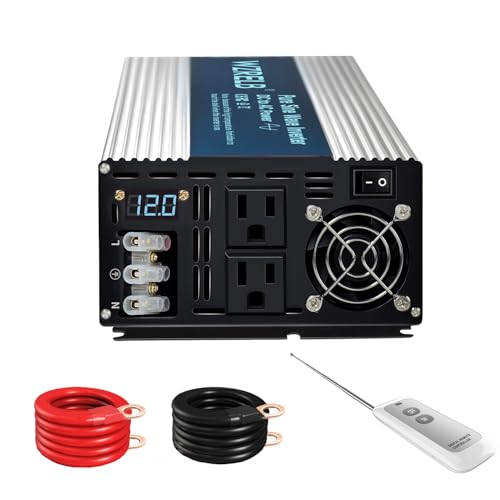
Best Value Hardwire Unit
WZRELB 2500W Pure Sine Wave Inverter, 12V DC to 110V/120V AC, Remote, Hardwire Terminal
budget hardwired installs
Our take Check price for WZRELB 2500W Pure Sine Wave Inverter, 12V DC to 110V/120V AC, Remote, Hardwire Terminal (opens in a new tab)

Best Wireless Remote
LVYUAN 2500W Pure Sine Wave Power Inverter, 12V DC to 110V/120V AC, Remote
switching on from inside the rig
Our take Check price for LVYUAN 2500W Pure Sine Wave Power Inverter, 12V DC to 110V/120V AC, Remote (opens in a new tab)

Best Fuse Protection
TVNIKD 2500 Watt Power Inverter, 12V to 110V/120V, 3 AC Outlets, LCD Screen
basic loads where waveform is not critical
Our take Check price for TVNIKD 2500 Watt Power Inverter, 12V to 110V/120V, 3 AC Outlets, LCD Screen (opens in a new tab)
Why Each Pick Made the Cut
Best for Shore Power Transfer1 of 5
EGSCATEE 2500W Pure Sine Wave Inverter with Built-in ATS, 12V DC to 110V AC, 5000W Peak on Amazon (opens in a new tab)
EGSCATEE 2500W Pure Sine Wave Inverter with Built-in ATS, 12V DC to 110V AC, 5000W Peak is the better fit when permanent installs wanting automatic shore transfer.
Best for
- permanent installs wanting automatic shore transfer
Why it made the shortlist
The intended use case is permanent installs wanting automatic shore transfer. The documented setup centers on 2500W, 5000W peak, built-in ATS, about 12ms, hardwired AC input.
What separates it on paper is stated 12ms transfer between shore power and battery. Against the other 4 picks, the useful comparison starts with 2500W, 5000W peak and built-in ATS, about 12ms. Those details show whether its configuration suits the job better than a neighboring recommendation.
Before committing, account for no battery charger, so a converter is still needed. Confirm the exact model number and included components before ordering. Check dimensions, compatibility and maintenance needs against the way you plan to use and store it.
Key dimensions & specs
- 2500W, 5000W peak
- Built-in ATS, about 12ms
- Hardwired AC input
Pros
- Stated 12ms transfer between shore power and battery
- Hardwire terminal block for live, neutral and ground
- Pure sine output for CPAP and sensitive electronics
- Five protections including overload and over-temperature
Cons
- No battery charger, so a converter is still needed
- Listing excerpt omits idle draw and warranty
Best Outlets and Ports2 of 5
TAGEEBLU 2500 Watt Pure Sine Wave Inverter, 12V DC to 110V/120V AC, 5000W Peak on Amazon (opens in a new tab)
Choose TAGEEBLU 2500 Watt Pure Sine Wave Inverter, 12V DC to 110V/120V AC, 5000W Peak for four AC outlets plus four USB ports in one unit.
Best for
- plug-in setups with many devices
Why it made the shortlist
TAGEEBLU 2500 Watt Pure Sine Wave Inverter, 12V DC to 110V/120V AC, 5000W Peak is positioned for plug-in setups with many devices. The documented setup centers on four AC, four USB, pure sine, 2 second peak, aluminum case, two fans.
The feature doing most of the work here is four AC outlets plus four USB ports in one unit. Against the other 4 picks, the useful comparison starts with four AC, four USB and pure sine, 2 second peak. Those details show whether its configuration suits the job better than a neighboring recommendation.
The practical constraint here is no hardwire terminal or transfer switch listed. Confirm the exact model number and included components before ordering. Check dimensions, compatibility and maintenance needs against the way you plan to use and store it.
Key dimensions & specs
- Four AC, four USB
- Pure sine, 2 second peak
- Aluminum case, two fans
Pros
- Four AC outlets plus four USB ports in one unit
- Listing states peak lasts only 2 seconds
- Pure sine output stated for CPAP and sensitive gear
- Warns that startup surges can reach 3 to 6 times
Cons
- No hardwire terminal or transfer switch listed
- Costs $48.30 more than the cheapest hardwire option
Best Value Hardwire Unit3 of 5
WZRELB 2500W Pure Sine Wave Inverter, 12V DC to 110V/120V AC, Remote, Hardwire Terminal on Amazon (opens in a new tab)
WZRELB 2500W Pure Sine Wave Inverter, 12V DC to 110V/120V AC, Remote, Hardwire Terminal makes the shortlist because hardwire terminal supports a permanent panel connection.
Best for
- budget hardwired installs
Why it made the shortlist
This model is aimed at budget hardwired installs. The documented setup centers on hardwire terminal, remote, soft-start design, three aluminum-case fans.
The most useful documented advantage is hardwire terminal supports a permanent panel connection. Against the other 4 picks, the useful comparison starts with hardwire terminal, remote and soft-start design. Those details show whether its configuration suits the job better than a neighboring recommendation.
The main limitation to plan around is only two AC outlets on the unit. Confirm the exact model number and included components before ordering. Check dimensions, compatibility and maintenance needs against the way you plan to use and store it.
Key dimensions & specs
- Hardwire terminal, remote
- Soft-start design
- Three aluminum-case fans
Pros
- Hardwire terminal supports a permanent panel connection
- Soft-start design eases the load of motor startups
- Includes a remote controller and DC volt display
Cons
- Only two AC outlets on the unit
- Three fans run continuously, adding noise in small rigs
Best Wireless Remote4 of 5
LVYUAN 2500W Pure Sine Wave Power Inverter, 12V DC to 110V/120V AC, Remote on Amazon (opens in a new tab)
The strongest case for LVYUAN 2500W Pure Sine Wave Power Inverter, 12V DC to 110V/120V AC, Remote is remote controls power from up to 50 meters.
Best for
- switching on from inside the rig
Why it made the shortlist
For switching on from inside the rig, this is one of the more relevant configurations in the shortlist. The documented setup centers on remote works to 50 meters, reverse polarity protection, aluminum body.
Its case starts with remote controls power from up to 50 meters. Against the other 4 picks, the useful comparison starts with remote works to 50 meters and reverse polarity protection. Those details show whether its configuration suits the job better than a neighboring recommendation.
The trade-off worth checking first is no hardwire terminal or transfer switch is listed. Confirm the exact model number and included components before ordering. Check dimensions, compatibility and maintenance needs against the way you plan to use and store it.
Key dimensions & specs
- Remote works to 50 meters
- Reverse polarity protection
- Aluminum body
Pros
- Remote controls power from up to 50 meters
- Reverse polarity protection with an internal fuse
- Auto shutdown and alarm on faults
Cons
- No hardwire terminal or transfer switch is listed
- Voltage conversion claim is not overall efficiency
Best Fuse Protection5 of 5
TVNIKD 2500 Watt Power Inverter, 12V to 110V/120V, 3 AC Outlets, LCD Screen on Amazon (opens in a new tab)
TVNIKD 2500 Watt Power Inverter, 12V to 110V/120V, 3 AC Outlets, LCD Screen is the better fit when basic loads where waveform is not critical.
Best for
- basic loads where waveform is not critical
Why it made the shortlist
The intended use case is basic loads where waveform is not critical. The documented setup centers on ten 30A fuses, lCD with voltage alarms, three AC, one USB.
What separates it on paper is ten 30A internal fuses protect against short circuits. Against the other 4 picks, the useful comparison starts with ten 30A fuses and lCD with voltage alarms. Those details show whether its configuration suits the job better than a neighboring recommendation.
Before committing, account for waveform is not stated as pure sine in the listing. Confirm the exact model number and included components before ordering. Check dimensions, compatibility and maintenance needs against the way you plan to use and store it.
Key dimensions & specs
- Ten 30A fuses
- LCD with voltage alarms
- Three AC, one USB
Pros
- Ten 30A internal fuses protect against short circuits
- LCD shows real-time battery status and alarms
- Fans run only when the unit warms up
- Three AC outlets for a modest device count
Cons
- Waveform is not stated as pure sine in the listing
How We Built This Shortlist
Each pick was assessed across 5 criteria weighted for real-world use.
- What 2500W actually means
- We separated the continuous rating from the peak figure, which in these listings is a two-second burst, and noted where the listing wording blurs the two.
- DC current and bank fit
- We estimated the 12V current at full load, about 208 amps before losses, and judged how realistic that is for a typical RV battery bank and cables.
- Installation style
- We checked for a hardwire terminal, a built-in transfer switch and a remote, since those decide whether the unit suits a permanent install or a plug-in setup.
- Protections and cooling
- We compared stated protections against overload, over-temperature, low voltage and reverse polarity, plus how the fans behave.
- Gaps in the listing
- We noted what each listing does not publish, such as idle draw, weight, warranty and waveform, because missing specs are a buying risk.
What Matters Before You Choose a 2500 Watt RV Inverter
Key buying criteria so you get the right fit the first time.
Continuous versus peak definition
Continuous watts are the sustained limit, and peak watts are a short burst, which in the TAGEEBLU listing is stated as 2 seconds. Running near 2500W continuously will heat the unit and may trigger thermal protection, so size for about 80 percent of the rating if loads run for hours. Check that the listing says continuous for the 2500 figure, not just peak.
DC current on a 12V system
At 2500W, a 12V system pulls about 208 amps before losses and about 231 at 90 percent efficiency. A 200A battery management system will trip near that load, so you need two or more batteries in parallel or a higher-limit battery. Look up your battery's continuous discharge current and compare.
Transfer switch behavior
An automatic transfer switch moves your outlets between shore power and battery, and a fast one prevents computers and TVs from rebooting. Only the EGSCATEE lists a figure, about 12 milliseconds. If a listing says nothing about transfer, assume you will need a separate switch.
Hardwire terminal versus outlets
A hardwire terminal lets you connect the inverter to your RV's AC panel, so every outlet works without cords. Outlets on the unit are fine for small loads but can overheat if you run a 1500W microwave through a cord. Check for an AC terminal block marked live, neutral and ground.
Waveform and startup surge
Pure sine wave is smoother power for motors and sensitive electronics, and the TAGEEBLU warns that startup power can be 3 to 6 times the running figure. A compressor air conditioner can easily exceed a 5000W peak. Verify the waveform in the title and look at your appliance's startup watts on its label.
Cooling, fans and noise
Inverters make heat in proportion to load, so cooling is what keeps a 2500W rating real. Fans that run constantly, such as the WZRELB's three, add noise in a small rig, while temperature-controlled fans stay quiet at low loads. Look for temperature-controlled fan wording and mount the unit where air can move.
Match a 2500 Watt RV Inverter to Your RV
By Installation Style
| Your situation | Recommended pick | Why |
|---|---|---|
| Permanent install with shore power switchover | EGSCATEE 2500W | Built-in ATS at about 12ms plus hardwire input |
| Hardwired panel feed on a tight budget | WZRELB 2500W | Hardwire terminal at $121.69 |
| Plug in laptops, TV and a microwave | TAGEEBLU 2500W | Four AC outlets and four USB ports |
| Control it from inside the RV | LVYUAN 2500W | Remote reaches up to 50 meters |
| Basic loads, fuse-protected | TVNIKD 2500W | Ten 30A fuses and an LCD |
Scroll sideways to see every column.
By Budget
| Budget | Recommended pick |
|---|---|
| Under $125 | WZRELB 2500W |
| $145 to $160 | LVYUAN 2500W or TVNIKD 2500W |
| $170 | TAGEEBLU 2500W |
| $220 | EGSCATEE 2500W |
Plug-In vs Hardwired
- Plug-in
- Uses the outlets on the unit itself, which is flexible and quick to install. The TAGEEBLU 2500W (four AC outlets) and TVNIKD 2500W (three) suit this style, though high loads on a plug-in outlet strain its contacts.
- Hardwired
- Connects to the RV's AC wiring through a terminal block, so the whole panel or chosen circuits run off the inverter. The EGSCATEE 2500W and WZRELB 2500W list a hardwire terminal, which keeps outlets in the walls and avoids extension cords.
Most owners with an inverter in a bay should hardwire it unless they plan to move it between vehicles.
By Waveform Confidence
| What you plan to run | Recommended pick | Why |
|---|---|---|
| CPAP machine or medical gear | TAGEEBLU 2500W | Listing explicitly names CPAP and pure sine |
| Refrigerator or microwave | EGSCATEE 2500W | Pure sine plus 12ms transfer if shore power drops |
| Variable-speed air conditioner | TAGEEBLU 2500W | Listing names VFD air conditioners, but check its startup limits |
| Chargers and tools only | WZRELB 2500W | Pure sine and soft-start at the lowest price |
| Unconfirmed waveform | TVNIKD 2500W | Ask the seller before connecting motors |
Scroll sideways to see every column.
For Running a Microwave Specifically
- Look for
- A microwave rated 1000W cooking power usually draws about 1500W from the wall, so the inverter needs to handle that continuous load plus losses. That is roughly 140 amps from a 12V battery, and the inverter should be pure sine with a surge rating above the microwave's startup.
- In this comparison
- Any of the five handles a 1000W microwave in principle, but the EGSCATEE 2500W and TAGEEBLU 2500W state pure sine output and are the safest choices. The TVNIKD 2500W does not state waveform in the listing excerpt.
When to Spend More
- Spend more if
- You want shore power to hand over to the battery with minimal interruption. The EGSCATEE 2500W at $219.99 states a 12ms transfer time and takes a hardwired AC input.
- Save if
- You will switch loads manually and run it only on the road. The WZRELB 2500W at $121.69 gives pure sine and a hardwire terminal for $98.30 less than the EGSCATEE.
Before You Bring One Home
Can a 2500W inverter run an RV air conditioner?
It can run a small or soft-start unit, but most rooftop air conditioners have a startup surge that can exceed a 5000W peak. The TAGEEBLU listing names variable-frequency air conditioners, but check your air conditioner's label for starting watts before trying.
What is the biggest mistake with 2500W inverters?
Treating the 5000W peak as usable power. It lasts about 2 seconds in the TAGEEBLU listing, so size by the continuous 2500W, and remember that heating appliances use continuous power, not surges.
Is the EGSCATEE worth $50 over the TAGEEBLU?
If you want automatic switchover and a hardwired installation, yes, since a separate transfer switch costs more than that. If you only plug things into the unit's outlets, the TAGEEBLU gives you more outlets and ports for less.
How do I connect a 2500W inverter to my battery?
Use heavy cable sized for over 230 amps, keep it short, fit a large fuse near the battery positive, and tighten terminals fully. Follow the manual's gauge recommendation, because the cable included in some kits is only for light use.
Do I need a 12V lithium battery bank for this?
Not required, but a 2500W load drains lead-acid batteries quickly and stresses them. Lithium batteries with high continuous current ratings, in parallel, are the better match for sustained loads.
Why did you exclude the 48V OLTEANP 2500W?
Its listing gives a 48V input for a 48V battery system, while this guide is about 12V RV banks. Connecting it to a 12V battery would not work, so we left it out.
Bottom Line
Best overall: EGSCATEE 2500W Pure Sine Wave Inverter with Built-in ATS, 12V DC to 110V AC, 5000W Peak — best for shore power transfer pick in this roundup. See the full verdicts above for every pick, with pros, cons and who each one suits.
Browse all 2500 watt rv inverters on Amazon — Prime-eligible options with current pricing.