
Buying Guide
6 Best 400 Watt RV Solar Panels in 2026: A Practical RV Guide
Six 400W RV solar options compared as 2x200W, 4x100W and portable sets: roof area, wiring layout, bifacial claims and cost per watt, from $174.56 to $399.99.
By Hardcastle's RV Editors
10 min read6 products evaluated
No single 400W panel exists in this price range. Every option here is a set: two 200W panels, four 100W panels, or one folding portable that adds up to 400W. That matters more than the cost per watt, because the layout decides how much roof you cover, how you wire the strings, and what a shaded corner does to the rest. At 5 peak sun hours, 400W is 2,000 watt-hours nominal and roughly 1,500 usable after an estimated 25 percent loss.
We compared six 400W sets priced from $174.56 to $399.99 by roof footprint, panel count, wiring options, bifacial claims and the evidence a listing gives for its numbers. Two of them are bifacial, which sounds like free extra power but mostly pays off on reflective ground, not on a dark RV roof, so we treat those claims with care.
Hardcastle’s RV field notes
The Rig Fit Check
A quick way to connect the shortlist to the space, workload and ownership details that matter after the box arrives.
- Start with the job
- HQST 400W Solar Panel Set, 2 x 200W, N-Type 16BB, IP65 leads this shortlist for a simple two-panel roof array on a van or small RV. Use that fit as a reference point, then compare the alternatives against your own space and workload.
- Specs that separate the picks
- The first details to compare are 2 x 200W N-type 16BB, 2 x 200W bifacial, 18BB, Four 100W, 31.8 x 27.5 in. Confirm the exact model and included components before ordering.
- Trade-off to plan for
- Exact dimensions are missing from the listing bullets
The Practical Shortlist
A road-tested-thinking look at 6 options, organized around the job each one suits best.
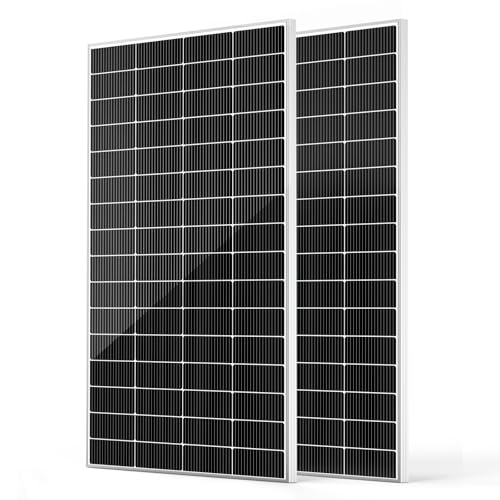
Best Overall
HQST 400W Solar Panel Set, 2 x 200W, N-Type 16BB, IP65
a simple two-panel roof array on a van or small RV
Our take Check price for HQST 400W Solar Panel Set, 2 x 200W, N-Type 16BB, IP65 (opens in a new tab)
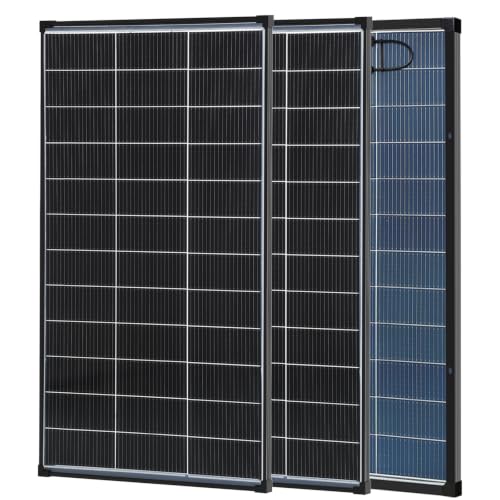
Best Documented Footprint
AeternaSol 400W Bifacial Solar Panels, 2 x 200W N-Type 18BB, IP68
van roofs and ground mounts over reflective surfaces
Our take Check price for AeternaSol 400W Bifacial Solar Panels, 2 x 200W N-Type 18BB, IP68 (opens in a new tab)

Lowest Cost per Watt
HQST 400W 12V Solar Panel Set, 4 x 100W, 23% Efficiency, IP65
buyers comparing capacity, compatibility, included components and storage needs
Our take Check price for HQST 400W 12V Solar Panel Set, 4 x 100W, 23% Efficiency, IP65 (opens in a new tab)

Best 4-Panel Details
Traver Force 400W 12V Monocrystalline Solar Panel Set, 4 x 100W, 10BB
four-panel layouts that need sealed connectors
Our take Check price for Traver Force 400W 12V Monocrystalline Solar Panel Set, 4 x 100W, 10BB (opens in a new tab)

Best Output Warranty
JJN 400W Bifacial Solar Panels, 2 x 200W 12V N-Type Monocrystalline
buyers who value a long written warranty
Our take Check price for JJN 400W Bifacial Solar Panels, 2 x 200W 12V N-Type Monocrystalline (opens in a new tab)

Best Portable
Renogy 400W Portable Solar Panel with Carry Case, IP67
shady campsites and power station owners
Our take Check price for Renogy 400W Portable Solar Panel with Carry Case, IP67 (opens in a new tab)
Why Each Pick Made the Cut
Best Overall1 of 6
HQST 400W Solar Panel Set, 2 x 200W, N-Type 16BB, IP65 on Amazon (opens in a new tab)
HQST 400W Solar Panel Set, 2 x 200W, N-Type 16BB, IP65 is the better fit when a simple two-panel roof array on a van or small RV.
Best for
- a simple two-panel roof array on a van or small RV
Why it made the shortlist
The intended use case is a simple two-panel roof array on a van or small RV. The documented setup centers on 2 x 200W N-type 16BB, up to 25.4% efficiency, iP65, 87.4% at 30 years.
What separates it on paper is two panels mean fewer mounts, wires and connections. Against the other 5 picks, the useful comparison starts with 2 x 200W N-type 16BB and up to 25.4% efficiency. Those details show whether its configuration suits the job better than a neighboring recommendation.
Before committing, account for exact dimensions are missing from the listing bullets. Confirm the exact model number and included components before ordering. Check dimensions, compatibility and maintenance needs against the way you plan to use and store it.
Key dimensions & specs
- 2 x 200W N-type 16BB
- Up to 25.4% efficiency
- IP65, 87.4% at 30 years
Pros
- Two panels mean fewer mounts, wires and connections
- Listed 13 percent smaller than conventional PERC panels
- 30-year service life at 87.4 percent output stated
- Rated for 2,400 Pa wind load
Cons
- Exact dimensions are missing from the listing bullets
- One shaded corner hits a large share of output
Best Documented Footprint2 of 6
AeternaSol 400W Bifacial Solar Panels, 2 x 200W N-Type 18BB, IP68 on Amazon (opens in a new tab)
Choose AeternaSol 400W Bifacial Solar Panels, 2 x 200W N-Type 18BB, IP68 for exact size listed: 52.76 by 26.38 inches each.
Best for
- van roofs and ground mounts over reflective surfaces
Why it made the shortlist
AeternaSol 400W Bifacial Solar Panels, 2 x 200W N-Type 18BB, IP68 is positioned for van roofs and ground mounts over reflective surfaces. The documented setup centers on 2 x 200W bifacial, 18BB, 52.76 x 26.38 inch panels, iP68 potted junction.
The feature doing most of the work here is exact size listed: 52.76 by 26.38 inches each. Against the other 5 picks, the useful comparison starts with 2 x 200W bifacial, 18BB and 52.76 x 26.38 inch panels. Those details show whether its configuration suits the job better than a neighboring recommendation.
The practical constraint here is costs $43 more than the HQST 2x200W set. Measure the narrowest access point and the available storage footprint before ordering. Confirm what the stated dimension refers to on the exact model and configuration.
Key dimensions & specs
- 2 x 200W bifacial, 18BB
- 52.76 x 26.38 inch panels
- IP68 potted junction
Pros
- Exact size listed: 52.76 by 26.38 inches each
- Bifacial back side can add power over light ground
- Fits Class B van roofs by the listing
Cons
- Costs $43 more than the HQST 2x200W set
- Rear-side gain is small on a dark flat roof
Lowest Cost per Watt3 of 6
HQST 400W 12V Solar Panel Set, 4 x 100W, 23% Efficiency, IP65 on Amazon (opens in a new tab)
HQST 400W 12V Solar Panel Set, 4 x 100W, 23% Efficiency, IP65 makes the shortlist because four small panels fit around roof vents.
Best for
- buyers comparing capacity, compatibility, included components and storage needs
Why it made the shortlist
This model is aimed at buyers comparing capacity, compatibility, included components and storage needs. The documented setup centers on four 100W, 31.8 x 27.5 in, 23% Grade A+ cells, 5-year product assurance.
The most useful documented advantage is four small panels fit around roof vents. Against the other 5 picks, the useful comparison starts with four 100W, 31.8 x 27.5 in and 23% Grade A+ cells. Those details show whether its configuration suits the job better than a neighboring recommendation.
The main limitation to plan around is needs about 5 more square feet than 2x200W sets. Measure the narrowest access point and the available storage footprint before ordering. Confirm what the stated dimension refers to on the exact model and configuration.
Key dimensions & specs
- Four 100W, 31.8 x 27.5 in
- 23% Grade A+ cells
- 5-year product assurance
Pros
- Four small panels fit around roof vents
- 80 percent output retained at 25 years, listed
Cons
- Needs about 5 more square feet than 2x200W sets
- Four panels need more wiring and connectors
Best 4-Panel Details4 of 6
Traver Force 400W 12V Monocrystalline Solar Panel Set, 4 x 100W, 10BB on Amazon (opens in a new tab)
The strongest case for Traver Force 400W 12V Monocrystalline Solar Panel Set, 4 x 100W, 10BB is iP68 connectors resist water at the cable joints.
Best for
- four-panel layouts that need sealed connectors
Why it made the shortlist
For four-panel layouts that need sealed connectors, this is one of the more relevant configurations in the shortlist. The documented setup centers on 4 x 100W, 182mm 10BB cells, iP65 box, IP68 connectors, 5-year product assurance.
Its case starts with iP68 connectors resist water at the cable joints. Against the other 5 picks, the useful comparison starts with 4 x 100W, 182mm 10BB cells and iP65 box, IP68 connectors. Those details show whether its configuration suits the job better than a neighboring recommendation.
The trade-off worth checking first is costs $55 more than the HQST 4x100W. Confirm the exact model number and included components before ordering. Check dimensions, compatibility and maintenance needs against the way you plan to use and store it.
Key dimensions & specs
- 4 x 100W, 182mm 10BB cells
- IP65 box, IP68 connectors
- 5-year product assurance
Pros
- IP68 connectors resist water at the cable joints
- Listed 25 percent cell conversion on all four panels
- 25-year performance guarantee is stated in the listing
- Four pre-drilled holes per panel simplify mounting
Cons
- Costs $55 more than the HQST 4x100W
- Panel dimensions are not in the listing bullets
Best Output Warranty5 of 6
JJN 400W Bifacial Solar Panels, 2 x 200W 12V N-Type Monocrystalline on Amazon (opens in a new tab)
JJN 400W Bifacial Solar Panels, 2 x 200W 12V N-Type Monocrystalline is the better fit when buyers who value a long written warranty.
Best for
- buyers who value a long written warranty
Why it made the shortlist
The intended use case is buyers who value a long written warranty. The documented setup centers on 2 x 200W bifacial N-type, 24.3 lb per panel, 10-year workmanship warranty.
What separates it on paper is 10-year workmanship warranty, longest stated here. Its 24.3 lb per panel specification sits at the lower end of the comparable range in this 2-product comparison. Confirm whether that figure refers to tool weight or working capacity before comparing it directly.
Before committing, account for costs $53 more than the HQST 2x200W set. Confirm whether the stated figure refers to product weight or rated working capacity. Compare it with your lifting, transport and support requirements before deciding.
Key dimensions & specs
- 2 x 200W bifacial N-type
- 24.3 lb per panel
- 10-year workmanship warranty
Pros
- 10-year workmanship warranty, longest stated here
- Weight listed: 24.3 pounds per panel
- Over 88.9 percent output promised at 30 years
- IP67 junction box handles wet roofs
Cons
- Costs $53 more than the HQST 2x200W set
- Listing says panels only, no mounts or controller
Best Portable6 of 6
Renogy 400W Portable Solar Panel with Carry Case, IP67 on Amazon (opens in a new tab)
Choose Renogy 400W Portable Solar Panel with Carry Case, IP67 for carry case and folding design store in a compartment.
Best for
- shady campsites and power station owners
Why it made the shortlist
Renogy 400W Portable Solar Panel with Carry Case, IP67 is positioned for shady campsites and power station owners. The documented setup centers on 400W folding, 30.2 lb, folds to 33.7 x 27.95 in, iP67 with carry case.
The feature doing most of the work here is carry case and folding design store in a compartment. Its 400W folding, 30.2 lb specification sits at the upper end of the comparable range in this 2-product comparison. Confirm whether that figure refers to tool weight or working capacity before comparing it directly.
The practical constraint here is costs $193 more than the HQST 2x200W set. Confirm whether the stated figure refers to product weight or rated working capacity. Compare it with your lifting, transport and support requirements before deciding.
Key dimensions & specs
- 400W folding, 30.2 lb
- Folds to 33.7 x 27.95 in
- IP67 with carry case
Pros
- Carry case and folding design store in a compartment
- Works with major power stations by the listing
- Parallel wiring limits output loss when partly shaded
- No roof drilling; panel moves with the sun
Cons
- Costs $193 more than the HQST 2x200W set
- Does not charge while the rig is driving
How We Built This Shortlist
Each pick was assessed across 5 criteria weighted for real-world use.
- Layout and roof footprint
- We treated each 400W listing as a set and calculated roof area from the published panel sizes where available, since a 4x100W set and a 2x200W set cover different space.
- Daily watt-hours
- We converted 400W to 1,200, 2,000 and 2,800 watt-hours at 3, 5 and 7 sun hours and applied a stated 25 percent loss estimate.
- Wiring and controller fit
- We estimated current at 12V, about 30 amps, and noted how many panels must be wired and what the listing says about series or parallel limits.
- Bifacial claims
- We read bifacial claims as best-case, up-to figures and considered whether a dark RV roof or a light ground mount would realize any gain.
- Evidence and cost per watt
- We divided price by 400W and looked for published ratings, warranties and testing behind each spec.
What Matters Before You Choose a 400 Watt RV Solar Panel
Key buying criteria so you get the right fit the first time.
Set layout and roof area
A 400W listing is a set of panels, not one panel, so the layout controls roof use. Two 200W panels at 52.76 by 26.38 inches cover about 19.3 square feet, while four 100W panels at 31.8 by 27.5 inches cover about 24.3. Measure your free roof space and plan around vents, fans and A/C shrouds before ordering.
Series vs parallel wiring
Wiring panels in series adds voltage, which suits an MPPT controller and thinner cable, while parallel adds current and is more forgiving of shade. At 12V a 400W array makes about 30 amps, so parallel runs need thick cable and fusing. Decide on a layout first, then check the controller's maximum input voltage using the panel Voc.
Cold-weather open-circuit voltage
Panel voltage rises as temperature drops, often 10 to 15 percent above the label at freezing. Two 200W panels in series can approach the limit of a 100V controller on a cold morning. Find Voc on the panel label, multiply by your coldest correction, and stay under the controller's rated input.
Bifacial claims
Bifacial panels collect light on the back, and listings quote up-to gains like 15 percent. Those gains depend on a bright surface below the panel and a tilted mount. On a flat dark roof expect little, so pay for bifacial only if your install has a reflective ground or elevated rack.
Daily watt-hours and battery match
A 400W array makes 1,200 to 2,800 watt-hours nominally at 3 to 7 sun hours, around 900 to 2,100 usable after about 25 percent losses. A 100Ah 12.8V lithium battery stores about 1,280 watt-hours, so the array can fill it quickly. Compare your daily load to the 5 sun hour estimate and size the battery to cover cloudy days.
Warranty, ratings and testing
Listings quote wind and snow loads, such as 2,400 and 5,400 Pa, plus IP ratings and long output warranties. A 5-year product assurance and a 10-year workmanship warranty differ in what they cover. Read the written terms, and prefer sets that publish loads, ratings and testing over those that just say durable.
Match a 400 Watt RV Solar Panel to Your RV
By Roof Layout
| Your roof | Recommended pick | Why |
|---|---|---|
| Clear rectangle, van or small trailer | HQST 2x200W | Two panels, fewer mounts, N-type cells |
| Van roof, exact fit matters | AeternaSol 2x200W | 52.76 by 26.38 inch size is listed |
| Cluttered roof with vents and a fan | HQST 4x100W | Four 31.8 by 27.5 inch panels fit around obstacles |
| Cluttered roof, sealed connectors wanted | Traver Force 4x100W | IP68 connectors on four panels |
| No roof drilling, shady camps | Renogy Portable 400W | Folds to 33.7 by 27.95 inches |
Scroll sideways to see every column.
By Budget
| Budget | Recommended pick |
|---|---|
| Under $180 | HQST 4x100W at $174.56 |
| $200 to $235 | HQST 2x200W at $206.99 or Traver Force 4x100W at $229.99 |
| $250 to $260 | AeternaSol 2x200W at $249.99 or JJN Bifacial at $259.99 |
| Around $400 | Renogy Portable 400W at $399.99 |
Two 200W Panels vs Four 100W Panels
- Two 200W panels
- Fewer mounts, wires and connectors, and about 19.3 square feet for the AeternaSol size. Shade on one corner affects half the array. The HQST 2x200W, AeternaSol 2x200W and JJN Bifacial are in this group.
- Four 100W panels
- More flexible placement around vents, and the option to wire two strings to limit shade loss. It uses about 24.3 square feet at HQST sizing and needs more cabling. The HQST 4x100W and Traver Force 4x100W are in this group.
Pick two 200W panels if you have a clear roof, and four 100W panels only when obstacles break the space up.
By Bifacial Expectations
| Your mounting | Recommended pick | Why |
|---|---|---|
| Flat roof, dark or white membrane | HQST 2x200W | Rear gain is small, so skip the premium |
| Ground mount on light gravel or snow | AeternaSol 2x200W | Bifacial rear side can add up to 15 percent |
| Tilted rack, want a long warranty | JJN Bifacial | 10-year workmanship warranty |
| Mounts need exact weight | JJN Bifacial | 24.3 pounds per panel listed |
Scroll sideways to see every column.
For Full-Time Living Specifically
- Look for
- About 1,500 usable watt-hours a day at 5 sun hours, a controller sized for roughly 30 amps at 12V, and enough roof for the array without blocking vents or a fan.
- In this comparison
- The HQST 2x200W gives the simplest permanent array, and the AeternaSol 2x200W suits a van roof where exact fit matters. A lithium battery bank around 200Ah stores about 2,560 watt-hours, enough to carry a cloudy afternoon.
When to Spend More
- Spend more if
- You camp in shade or want no drilling; the Renogy Portable 400W is the folding option, and the JJN Bifacial adds a 10-year workmanship warranty for a keep-it-forever install.
- Save if
- You have a clear sunny roof and a controller; the HQST 4x100W at $174.56 or the HQST 2x200W at $206.99 delivers the same 400W.
Before You Bring One Home
How many 100W panels make 400W?
Four 100W panels make 400W nominal, and two 200W panels do too. Four small panels take about 24 square feet at HQST sizing, while two 200W panels at AeternaSol sizing take about 19. Choose by roof shape.
What size controller does a 400W array need?
At 12V, 400W is about 30 to 33 amps, so a 40A MPPT controller gives headroom. Higher-voltage series strings reduce amps, but you must stay under the controller's maximum input voltage in cold weather. Check the controller's rating before wiring.
Are bifacial panels worth it on an RV roof?
Usually not. The rear gain depends on light reflected from below, and a flat dark roof sits close to the surface with little light behind it. They make sense on a tilted ground mount over pale gravel or snow.
Can 400W run an RV air conditioner?
Not directly. A rooftop air conditioner commonly draws 1,200 watts or more when running, which exceeds 400W of panels. A large battery and inverter could carry it for short periods, but not through a full afternoon.
How do I wire four 100W panels?
You can wire them all in parallel for 12V, or as two series pairs wired in parallel, which suits an MPPT controller. Use matching panels, fuse each parallel string if required, and follow the controller manual.
How much weight does a 400W array add to my roof?
It depends on the panels. The JJN lists 24.3 pounds per 200W panel, so the pair adds about 48.6 pounds, plus brackets. Check your roof's rated load and spread weight across the structure.
Bottom Line
Best overall: HQST 400W Solar Panel Set, 2 x 200W, N-Type 16BB, IP65 — best overall pick in this roundup. See the full verdicts above for every pick, with pros, cons and who each one suits.
Browse all 400 watt rv solar panels on Amazon — Prime-eligible options with current pricing.