
Buying Guide
6 Best Solar Panels for a Class C Motorhome in 2026: A Practical RV Guide
Six roof-mount solar panels and kits of 100W or more for Class C motorhomes, compared on weight, footprint, mounting and cost per watt, from $71 to $243.
By Hardcastle's RV Editors
10 min read6 products evaluated
A Class C roof is not a blank canvas. Between the air conditioner, vents, a skylight and an antenna there is often less open space than the 40 or so square feet a 400W array would want, and what is left is also the part of the roof you walk on when you reach the vents. So the useful question is not how many watts you can buy, but how many watts per square foot and per pound you can fit in the spaces that exist.
We compared six roof-suitable options, all 100W or larger, priced from $71.05 to $243.09. Four are single 100W panels, two are 200W kits with a controller, and one is a flexible panel for curved surfaces. We looked at published dimensions and weights, mounting hardware, controller inclusion and cost per watt, and we note where the listing is silent.
Hardcastle’s RV field notes
The Rig Fit Check
A quick way to connect the shortlist to the space, workload and ownership details that matter after the box arrives.
- Start with the job
- Renogy 200W 12V N-Type RV Solar Panel Kit with Adventurer 30A Controller leads this shortlist for owners wanting a ready-to-wire 200W kit. Use that fit as a reference point, then compare the alternatives against your own space and workload.
- Specs that separate the picks
- The first details to compare are 200W, 22% efficiency, 2 x 100W, 21.5% efficiency, 100W, 25% efficiency. Confirm the exact model and included components before ordering.
- Trade-off to plan for
- Costs $57 more than the ECO-WORTHY 200W Kit
The Practical Shortlist
A road-tested-thinking look at 6 options, organized around the job each one suits best.
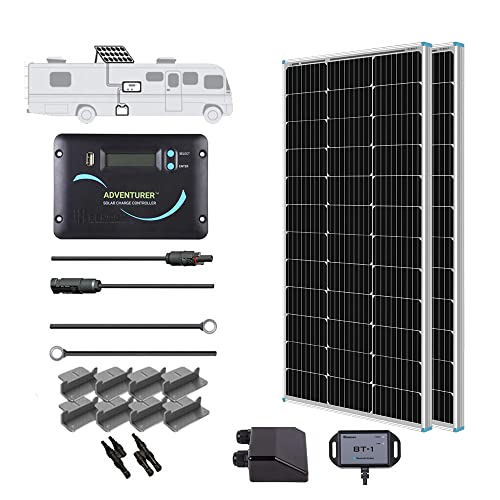
Best Complete Kit
Renogy 200W 12V N-Type RV Solar Panel Kit with Adventurer 30A Controller
owners wanting a ready-to-wire 200W kit
Our take Check price for Renogy 200W 12V N-Type RV Solar Panel Kit with Adventurer 30A Controller (opens in a new tab)
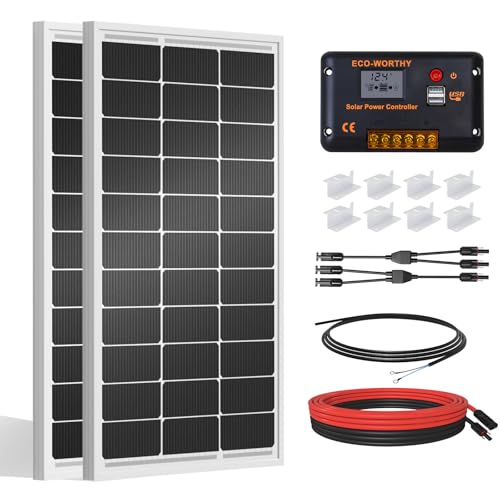
Best Value Kit
ECO-WORTHY 200 Watt 12V/24V Monocrystalline Solar Panel Kit with 30A PWM Controller
cheapest complete 200W with controller
Our take Check price for ECO-WORTHY 200 Watt 12V/24V Monocrystalline Solar Panel Kit with 30A PWM Controller (opens in a new tab)

Best Warranty
Renogy 100 Watt Solar Panel, N-Type 16BB, 25% Efficiency
budget builds and adding to an existing array
Our take Check price for Renogy 100 Watt Solar Panel, N-Type 16BB, 25% Efficiency (opens in a new tab)

Best Lightweight Rigid Panel
ECO-WORTHY 100W Ultra Slim Solar Panel, 4.7 lb, 18BB N-Type, 25% Efficiency
weight-limited roofs and one-person installs
Our take Check price for ECO-WORTHY 100W Ultra Slim Solar Panel, 4.7 lb, 18BB N-Type, 25% Efficiency (opens in a new tab)

Best Documented Rigid Panel
Callsun N-Type 16BB 100 Watt Solar Panel, 25% High Efficiency
careful roof planning with exact dimensions
Our take Check price for Callsun N-Type 16BB 100 Watt Solar Panel, 25% High Efficiency (opens in a new tab)

Best for Curved Roof Areas
Renogy Flexible Solar Panel 100 Watt, 240 Degree Ultra Flex Bendable
curved roof areas rigid panels cannot cover
Our take Check price for Renogy Flexible Solar Panel 100 Watt, 240 Degree Ultra Flex Bendable (opens in a new tab)
Why Each Pick Made the Cut
Best Complete Kit1 of 6
Renogy 200W 12V N-Type RV Solar Panel Kit with Adventurer 30A Controller on Amazon (opens in a new tab)
The strongest case for Renogy 200W 12V N-Type RV Solar Panel Kit with Adventurer 30A Controller is flush-mount controller reads easily inside the coach.
Best for
- owners wanting a ready-to-wire 200W kit
Why it made the shortlist
For owners wanting a ready-to-wire 200W kit, this is one of the more relevant configurations in the shortlist. The documented setup centers on 200W, 22% efficiency, adventurer-Li 30A PWM, five-year warranty.
Its case starts with flush-mount controller reads easily inside the coach. Against the other 5 picks, the useful comparison starts with 200W, 22% efficiency and adventurer-Li 30A PWM. Those details show whether its configuration suits the job better than a neighboring recommendation.
The trade-off worth checking first is costs $57 more than the ECO-WORTHY 200W Kit. Confirm the exact model number and included components before ordering. Check dimensions, compatibility and maintenance needs against the way you plan to use and store it.
Key dimensions & specs
- 200W, 22% efficiency
- Adventurer-Li 30A PWM
- Five-year warranty
Pros
- Flush-mount controller reads easily inside the coach
- Five-year warranty is the longest among the kits
- Supports lithium, lead-acid and gel batteries
- Y-branch connectors are included for wiring
Cons
- Costs $57 more than the ECO-WORTHY 200W Kit
- Panel weight and dimensions are not stated
Best Value Kit2 of 6
ECO-WORTHY 200 Watt 12V/24V Monocrystalline Solar Panel Kit with 30A PWM Controller on Amazon (opens in a new tab)
ECO-WORTHY 200 Watt 12V/24V Monocrystalline Solar Panel Kit with 30A PWM Controller is the better fit when cheapest complete 200W with controller.
Best for
- cheapest complete 200W with controller
Why it made the shortlist
The intended use case is cheapest complete 200W with controller. The documented setup centers on 2 x 100W, 21.5% efficiency, 35.2 x 23.1 in each, 30A PWM controller.
What separates it on paper is costs $185.99, about $0.93 per watt with controller. Its 35.2 x 23.1 in each specification sits at the upper end of the comparable range in this 3-product comparison. Check that dimension against access points, working space and storage before choosing.
Before committing, account for support period is only one year. Measure the narrowest access point and the available storage footprint before ordering. Confirm what the stated dimension refers to on the exact model and configuration.
Key dimensions & specs
- 2 x 100W, 21.5% efficiency
- 35.2 x 23.1 in each
- 30A PWM controller
Pros
- Costs $185.99, about $0.93 per watt with controller
- Panels wire in series or parallel for 12V or 24V
- Size is published: 35.2 x 23.1 inches each
- Rated for 2,400Pa wind and 5,400Pa snow
Cons
- Support period is only one year
- Panels are less dense than the Callsun 100W
Best Warranty3 of 6
Renogy 100 Watt Solar Panel, N-Type 16BB, 25% Efficiency on Amazon (opens in a new tab)
Choose Renogy 100 Watt Solar Panel, N-Type 16BB, 25% Efficiency for 10-year workmanship and 25-year performance terms.
Best for
- budget builds and adding to an existing array
Why it made the shortlist
Renogy 100 Watt Solar Panel, N-Type 16BB, 25% Efficiency is positioned for budget builds and adding to an existing array. The documented setup centers on 100W, 25% efficiency, iP67, 16BB cells, 25-year performance guarantee.
The feature doing most of the work here is 10-year workmanship and 25-year performance terms. Against the other 5 picks, the useful comparison starts with 100W, 25% efficiency and iP67, 16BB cells. Those details show whether its configuration suits the job better than a neighboring recommendation.
The practical constraint here is dimensions and weight are not published. Confirm the exact model number and included components before ordering. Check dimensions, compatibility and maintenance needs against the way you plan to use and store it.
Key dimensions & specs
- 100W, 25% efficiency
- IP67, 16BB cells
- 25-year performance guarantee
Pros
- 10-year workmanship and 25-year performance terms
- Low degradation: 1 percent first year, 0.4 percent after
- Tested to 2,400Pa wind and 5,400Pa snow
Cons
- Dimensions and weight are not published
- Panel only, with no controller or brackets
Best Lightweight Rigid Panel4 of 6
ECO-WORTHY 100W Ultra Slim Solar Panel, 4.7 lb, 18BB N-Type, 25% Efficiency on Amazon (opens in a new tab)
ECO-WORTHY 100W Ultra Slim Solar Panel, 4.7 lb, 18BB N-Type, 25% Efficiency makes the shortlist because weighs 4.7 pounds, about 7 pounds under the Callsun.
Best for
- weight-limited roofs and one-person installs
Why it made the shortlist
This model is aimed at weight-limited roofs and one-person installs. The documented setup centers on 100W, 4.7 lb, 0.2 in thick, iP68, 25% efficiency, mounting hardware included.
The most useful documented advantage is weighs 4.7 pounds, about 7 pounds under the Callsun. Against the other 5 picks, the useful comparison starts with 100W, 4.7 lb, 0.2 in thick and iP68, 25% efficiency. Those details show whether its configuration suits the job better than a neighboring recommendation.
The main limitation to plan around is no controller is included, so budget extra. Confirm whether the stated figure refers to product weight or rated working capacity. Compare it with your lifting, transport and support requirements before deciding.
Key dimensions & specs
- 100W, 4.7 lb, 0.2 in thick
- IP68, 25% efficiency
- Mounting hardware included
Pros
- Weighs 4.7 pounds, about 7 pounds under the Callsun
- Only 0.2 inches thick, less wind resistance
- Brackets, foam pads and screws are included
- N-type cells at 25 percent efficiency
Cons
- No controller is included, so budget extra
- Written warranty terms are unclear in the listing
Best Documented Rigid Panel5 of 6
Callsun N-Type 16BB 100 Watt Solar Panel, 25% High Efficiency on Amazon (opens in a new tab)
The strongest case for Callsun N-Type 16BB 100 Watt Solar Panel, 25% High Efficiency is size and weight are both published.
Best for
- careful roof planning with exact dimensions
Why it made the shortlist
For careful roof planning with exact dimensions, this is one of the more relevant configurations in the shortlist. The documented setup centers on 31.1 x 22.7 x 1.1 in, 100W, 11.4 lb, 25-year, 84.5% guarantee.
Its case starts with size and weight are both published. Its 31.1 x 22.7 x 1.1 in specification sits at between the lower and upper ends of the comparable range in this 3-product comparison. Check that dimension against access points, working space and storage before choosing.
The trade-off worth checking first is 11.4 pounds is heavy next to slim panels. Measure the narrowest access point and the available storage footprint before ordering. Confirm what the stated dimension refers to on the exact model and configuration.
Key dimensions & specs
- 31.1 x 22.7 x 1.1 in
- 100W, 11.4 lb
- 25-year, 84.5% guarantee
Pros
- Size and weight are both published
- Smaller footprint: about 4.9 square feet per panel
- 25-year guarantee to hold 84.5 percent output
- Reinforced corner guards and 3.2mm tempered glass
Cons
- 11.4 pounds is heavy next to slim panels
- No brackets, cables or controller are listed
Best for Curved Roof Areas6 of 6
Renogy Flexible Solar Panel 100 Watt, 240 Degree Ultra Flex Bendable on Amazon (opens in a new tab)
Renogy Flexible Solar Panel 100 Watt, 240 Degree Ultra Flex Bendable is the better fit when curved roof areas rigid panels cannot cover.
Best for
- curved roof areas rigid panels cannot cover
Why it made the shortlist
The intended use case is curved roof areas rigid panels cannot cover. The documented setup centers on 100W flexible, 0.1 in thick, bends to 240 degrees, tested to 2,400Pa wind.
What separates it on paper is follows curved cab-over or cap surfaces. Its 100W flexible, 0.1 in thick specification sits at the lower end of the comparable range in this 3-product comparison. Check that dimension against access points, working space and storage before choosing.
Before committing, account for costs about $1.04 per watt, the highest here. Measure the narrowest access point and the available storage footprint before ordering. Confirm what the stated dimension refers to on the exact model and configuration.
Key dimensions & specs
- 100W flexible, 0.1 in thick
- Bends to 240 degrees
- Tested to 2,400Pa wind
Pros
- Follows curved cab-over or cap surfaces
- Weighs about 70 percent less than glass panels
- Only 0.1 inch thick, almost invisible on roofs
- Tested to 2,400Pa wind and 5,400Pa snow
Cons
- Costs about $1.04 per watt, the highest here
- Efficiency, weight and warranty are not in the listing
How We Built This Shortlist
Each pick was assessed across 5 criteria weighted for real-world use.
- Roof footprint per watt
- We used published dimensions to estimate square feet and watts per square foot, and noted where a listing gives none, since Class C roofs lose space to vents and the air conditioner.
- Weight on the roof
- We compared panel weights where listed, from 4.7 pounds for the slim panel to 11.4 pounds for the Callsun, and flagged missing weights.
- Mounting and what is in the box
- We checked for brackets, adhesive sheets, cables, Y-connectors and controllers so you know what else you will need to buy.
- Weather and wind ratings
- We read the wind, snow and ingress ratings, such as 2,400Pa wind and 5,400Pa snow, because a motorhome sees highway wind.
- Cost per watt and warranty
- We divided price by watts and compared written warranty and performance guarantee terms.
What Matters Before You Choose a Solar Panel for a Class C Motorhome
Key buying criteria so you get the right fit the first time.
Roof footprint, not just watts
A Class C roof loses space to the air conditioner, vents, skylight and antenna, so the usable area may be well under what a 400W array needs. A 100W panel takes about 4.9 to 5.7 square feet depending on the model. Measure the open rectangles on your roof and compare them with the dimensions in the listing.
Weight per panel
Rooftop weight raises the center of gravity and counts against your cargo capacity. Panels here range from 4.7 pounds for the slim 100W to 11.4 pounds for a standard glass 100W, which is nearly a 7 pound difference per panel. Look for a weight in the bullets or title, and add up the array.
Mounting method and hardware
Roof mounts need brackets or adhesive, and each screw hole is a potential leak. Some panels include six brackets, foam pads and adhesive sheets, while others list none. Check the package contents, and plan to seal every roof penetration with RV-approved sealant.
Wind and snow ratings
A motorhome sees highway wind at 60 mph or more, so a panel's pressure rating matters. The listings here cite 2,400Pa wind and 5,400Pa snow loads. Look for these numbers, and avoid panels with no rating.
Controller type and size
A PWM controller is simple and cheap, while MPPT can harvest more in cold or low light, but the 200W kits here include 30A PWM units. A 30A controller at 12V handles about 430W (estimate), so it leaves room for a second pair. Check the controller type and whether it supports your battery chemistry.
Shading from roof obstacles
A shadow from a vent or air conditioner on one panel can cut a series string, so wiring matters. Parallel wiring keeps unshaded panels working, while series wiring is limited by the weakest panel. Walk the roof at different times of day and consider parallel wiring if shadows move.
Match a Solar Panel for a Class C Motorhome to Your RV
By Available Roof Space
| Your situation | Recommended pick | Why |
|---|---|---|
| One small open spot behind the vents | Callsun 100W | 31.1 x 22.7 inches, about 4.9 square feet |
| A clear 3 x 8 foot strip for two panels | ECO-WORTHY 200W Kit | Two 35.2 x 23.1 inch panels plus controller |
| Open rectangle with room to pre-wire a controller | Renogy 200W Kit | 200W kit with flush-mount 30A controller |
| Curved cab-over or front cap area | Renogy Flex 100W | Bends to follow curved surfaces |
| Weight limit near the roof edge | ECO-WORTHY Slim 100W | 4.7 pounds and 0.2 inches thick |
Scroll sideways to see every column.
By Budget
| Budget | Recommended pick |
|---|---|
| Under $80 | Renogy 100W N-Type or Callsun 100W |
| $90 | ECO-WORTHY Slim 100W |
| $105 | Renogy Flex 100W |
| $186 to $243 | ECO-WORTHY 200W Kit or Renogy 200W Kit |
Rigid Glass vs Flexible
- Rigid
- A framed glass panel stands off the roof on brackets, so air moves underneath and the surface stays flat. The Renogy 100W N-Type, Callsun 100W, ECO-WORTHY Slim 100W and both 200W kits are rigid.
- Flexible
- A thin bendable panel weighs far less and follows curves, but it is typically glued flat and runs hotter with no gap underneath. The Renogy Flex 100W is the only flexible panel here.
Most Class C owners with a flat roof section should default to rigid and use flexible only for the curved cab-over.
By Installation Style
| How you want to install | Recommended pick |
|---|---|
| Hardware included, one-person job | ECO-WORTHY Slim 100W |
| Plug-and-play cables and controller | Renogy 200W Kit |
| Cheapest start, add components later | Renogy 100W N-Type |
| Pre-planned layout with exact dimensions | Callsun 100W |
For Dry Camping With a Compressor Fridge Specifically
- Look for
- At least 200W so a nominal 800Wh a day (200W x 4 sun hours, estimate) covers a compressor fridge, lights and charging, and a controller that supports lithium or lead-acid.
- In this comparison
- The Renogy 200W Kit and ECO-WORTHY 200W Kit both reach 200W with a 30A controller, while a single Callsun 100W or Renogy 100W N-Type covers only a light-use top-up.
When to Spend More
- Spend more if
- You camp off-grid; the Renogy 200W Kit gives a five-year warranty and a flush-mount controller, and the ECO-WORTHY Slim 100W saves roof weight.
- Save if
- You mostly use hookups and want a battery top-up; the Renogy 100W N-Type at $71.05 is the cheapest per watt and has a long guarantee.
Before You Bring One Home
How many watts do I need on a Class C motorhome?
Add up your daily use. A compressor fridge, lights, water pump and charging often total 600 to 1,000Wh a day, which 200W provides in sun (200W x 4 hours is 800Wh nominal, estimate). Run an air conditioner and you need far more than a roof can hold.
Can I walk on solar panels on my roof?
Do not walk on glass panels or flexible panels unless the maker says so. Plan access paths to vents and the air conditioner that stay clear, and leave a gap between panels and roof fixtures.
Is the Renogy 200W Kit worth $57 more than the ECO-WORTHY 200W Kit?
It is if you value the five-year warranty and the flush-mount controller. The ECO-WORTHY gives the same 200W for $185.99 with a one-year support period. For a rarely used rig the cheaper kit is fine.
Should I choose a flexible panel for a Class C roof?
Only for curved areas. Rigid panels run cooler on brackets and last longer. The Renogy Flex 100W is the pick for a curved cab-over; otherwise default to rigid.
How do I wire two 100W panels?
In parallel for 12V, which keeps the current up and is more tolerant of shading, or in series for 24V, which raises voltage. The ECO-WORTHY kit supports both, and the controller must match.
How do I prevent roof leaks when mounting panels?
Use brackets with foam pads, seal each screw with RV roof sealant compatible with your roof material, and inspect the seals twice a year. Check for lifted adhesive after long drives.
Bottom Line
Best overall: Renogy 200W 12V N-Type RV Solar Panel Kit with Adventurer 30A Controller — best complete kit pick in this roundup. See the full verdicts above for every pick, with pros, cons and who each one suits.
Browse all solar panels for a class c motorhome on Amazon — Prime-eligible options with current pricing.