
Buying Guide
6 Best Lithium RV Batteries With Low Temperature Protection in 2026: A Practical RV Guide
Six lithium RV batteries with low-temperature protection or self-heating compared on charge cutoffs, heater conditions, size, and price for winter camping.
By Hardcastle's RV Editors
11 min read6 products evaluated
Lithium iron phosphate batteries can be damaged by charging when the cells are below freezing, so a good battery blocks charging in the cold. That protection is what a low temperature cutoff does, and it is a safeguard, not a way to keep charging. A self-heating battery goes one step further and warms its own cells so charging can resume, but the heater has its own conditions, and listings rarely make them obvious.
We compared six 12V batteries from $250 to $600 on the exact temperatures at which charging and discharging stop, whether a heater exists and what has to be true for it to run, physical size, capacity and price. Four of the six are self-heating, two are cutoff-only, and the differences between them decide whether your battery works on a freezing January morning or sits idle until noon.
Hardcastle’s RV field notes
The Rig Fit Check
A quick way to connect the shortlist to the space, workload and ownership details that matter after the box arrives.
- Start with the job
- Renogy 12V 100Ah Self-Heating LiFePO4 Battery with DuoHeat, Mini Size leads this shortlist for tight, unheated bays in winter. Use that fit as a reference point, then compare the alternatives against your own space and workload.
- Specs that separate the picks
- The first details to compare are Dual 110W heating pads, Two heating modes, Bluetooth 5.0, 300Ah, about 3,840Wh. Confirm the exact model and included components before ordering.
- Trade-off to plan for
- No Bluetooth app is mentioned in the listing
The Practical Shortlist
A road-tested-thinking look at 6 options, organized around the job each one suits best.

Best Overall
Renogy 12V 100Ah Self-Heating LiFePO4 Battery with DuoHeat, Mini Size
tight, unheated bays in winter
Our take Check price for Renogy 12V 100Ah Self-Heating LiFePO4 Battery with DuoHeat, Mini Size (opens in a new tab)

Best for Group 24 and App Control
LiTime 12V 100Ah Group 24 Self-Heating LiFePO4 Battery with Bluetooth
Group 24 swaps with app monitoring
Our take Check price for LiTime 12V 100Ah Group 24 Self-Heating LiFePO4 Battery with Bluetooth (opens in a new tab)
Best High Capacity
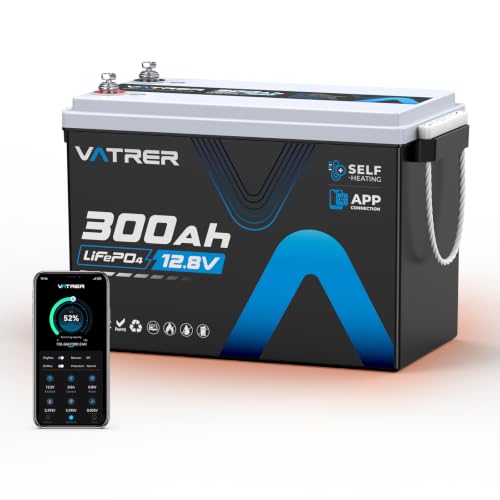
VATRER 12V 300Ah Self-Heating LiFePO4 Battery with App Monitoring
full-time winter rigs with converter or generator charging
Our take Check price for VATRER 12V 300Ah Self-Heating LiFePO4 Battery with App Monitoring (opens in a new tab)
Best Budget Self-Heating
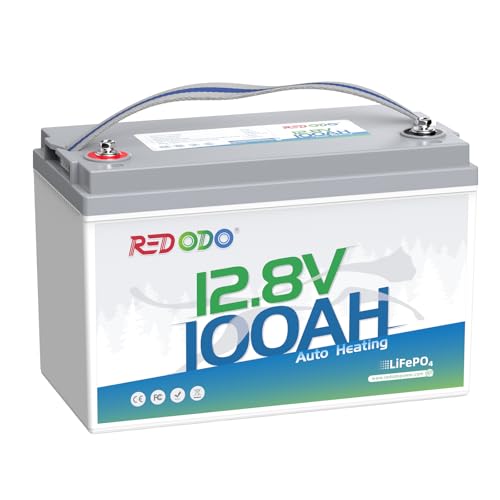
Redodo 12V 100Ah LiFePO4 Self-Heating Group 31 Deep Cycle Battery
budget buyers wanting a heater
Our take Check price for Redodo 12V 100Ah LiFePO4 Self-Heating Group 31 Deep Cycle Battery (opens in a new tab)

Best Documented Cutoffs
GREENOE 12V 100Ah LiFePO4 Battery, BCI Group 31, Low-Temp Protection
heated-space installs needing clear cutoff numbers
Our take Check price for GREENOE 12V 100Ah LiFePO4 Battery, BCI Group 31, Low-Temp Protection (opens in a new tab)

Best Cheapest Protection
Power Queen 12V 100Ah LiFePO4 Battery with Low Temp Protection
lowest-cost protection in a warm space
Our take Check price for Power Queen 12V 100Ah LiFePO4 Battery with Low Temp Protection (opens in a new tab)
Why Each Pick Made the Cut
Best Overall1 of 6
Renogy 12V 100Ah Self-Heating LiFePO4 Battery with DuoHeat, Mini Size on Amazon (opens in a new tab)
The strongest case for Renogy 12V 100Ah Self-Heating LiFePO4 Battery with DuoHeat, Mini Size is dual heating pads warm the cells about 40 percent faster.
Best for
- tight, unheated bays in winter
Why it made the shortlist
For tight, unheated bays in winter, this is one of the more relevant configurations in the shortlist. The documented setup centers on dual 110W heating pads, operates -22°F to 131°F, group 22NF, 100A BMS.
Its case starts with dual heating pads warm the cells about 40 percent faster. Against the other 5 picks, the useful comparison starts with dual 110W heating pads and operates -22°F to 131°F. Those details show whether its configuration suits the job better than a neighboring recommendation.
The trade-off worth checking first is no Bluetooth app is mentioned in the listing. Confirm the exact model number and included components before ordering. Check dimensions, compatibility and maintenance needs against the way you plan to use and store it.
Key dimensions & specs
- Dual 110W heating pads
- Operates -22°F to 131°F
- Group 22NF, 100A BMS
Pros
- Dual heating pads warm the cells about 40 percent faster
- Rated for operation down to minus 22°F
- Group 22NF case is 45 percent smaller than comparable
- IP65 weatherproof case suits unheated bays
Cons
- No Bluetooth app is mentioned in the listing
- 100Ah gives only about 1,280Wh for the whole rig
Best for Group 24 and App Control2 of 6
LiTime 12V 100Ah Group 24 Self-Heating LiFePO4 Battery with Bluetooth on Amazon (opens in a new tab)
LiTime 12V 100Ah Group 24 Self-Heating LiFePO4 Battery with Bluetooth is the better fit when group 24 swaps with app monitoring.
Best for
- Group 24 swaps with app monitoring
Why it made the shortlist
The intended use case is Group 24 swaps with app monitoring. The documented setup centers on two heating modes, Bluetooth 5.0, heats below 41°F when charging, group 24, 22.71 lb.
What separates it on paper is two heating modes: Regular and Energy-Efficient. Its Group 24, 22.71 lb specification sits at between the lower and upper ends of the comparable range in this 3-product comparison. Confirm whether that figure refers to tool weight or working capacity before comparing it directly.
Before committing, account for heater runs only when a charge source is present. Confirm whether the stated figure refers to product weight or rated working capacity. Compare it with your lifting, transport and support requirements before deciding.
Key dimensions & specs
- Two heating modes, Bluetooth 5.0
- Heats below 41°F when charging
- Group 24, 22.71 lb
Pros
- Two heating modes: Regular and Energy-Efficient
- Bluetooth app shows charge level and heating status
- Fits a standard Group 24 lead-acid tray
- Weighs 22.71 pounds, much lighter than lead-acid
Cons
- Heater runs only when a charge source is present
- Costs $109 more than the Redodo self-heating
Best High Capacity3 of 6
VATRER 12V 300Ah Self-Heating LiFePO4 Battery with App Monitoring on Amazon (opens in a new tab)
Choose VATRER 12V 300Ah Self-Heating LiFePO4 Battery with App Monitoring for 3,840Wh nominal covers a whole rig for days.
Best for
- full-time winter rigs with converter or generator charging
Why it made the shortlist
VATRER 12V 300Ah Self-Heating LiFePO4 Battery with App Monitoring is positioned for full-time winter rigs with converter or generator charging. The documented setup centers on 300Ah, about 3,840Wh, heats below 32°F above 10A, 15.12 x 7.64 x 9.76 in.
The feature doing most of the work here is 3,840Wh nominal covers a whole rig for days. Its 300Ah, about 3,840Wh specification sits at the upper end of the comparable range in this 2-product comparison. Treat the battery platform and included charger as part of the fit, not just the headline number.
The practical constraint here is heater needs charge current above 10 amps to start. Confirm whether the battery and charger are included with the exact package. Check platform compatibility and published runtime against the area or workload you need to cover.
Key dimensions & specs
- 300Ah, about 3,840Wh
- Heats below 32°F above 10A
- 15.12 x 7.64 x 9.76 in
Pros
- 3,840Wh nominal covers a whole rig for days
- Costs about $156 per kilowatt-hour nominal
- App tracks voltage, current, temperature and faults
- Compact for 300Ah at 15.12 inches long
Cons
- Heater needs charge current above 10 amps to start
- Not designed for golf cart use per the listing
Best Budget Self-Heating4 of 6
Redodo 12V 100Ah LiFePO4 Self-Heating Group 31 Deep Cycle Battery on Amazon (opens in a new tab)
Redodo 12V 100Ah LiFePO4 Self-Heating Group 31 Deep Cycle Battery makes the shortlist because cheapest self-heating battery here at $259.99.
Best for
- budget buyers wanting a heater
Why it made the shortlist
This model is aimed at budget buyers wanting a heater. The documented setup centers on dual heating pads, 100W total, cut-off below 32°F, group 31, 23.32 lb.
The most useful documented advantage is cheapest self-heating battery here at $259.99. Its Group 31, 23.32 lb specification sits at the upper end of the comparable range in this 3-product comparison. Confirm whether that figure refers to tool weight or working capacity before comparing it directly.
The main limitation to plan around is no Bluetooth app is mentioned in the listing. Confirm whether the stated figure refers to product weight or rated working capacity. Compare it with your lifting, transport and support requirements before deciding.
Key dimensions & specs
- Dual heating pads, 100W total
- Cut-off below 32°F
- Group 31, 23.32 lb
Pros
- Cheapest self-heating battery here at $259.99
- Charging resumes automatically when cells warm
- Dual pads totaling 100 watts of heat
- Weighs 23.32 pounds versus 66 for AGM
Cons
- No Bluetooth app is mentioned in the listing
Best Documented Cutoffs5 of 6
GREENOE 12V 100Ah LiFePO4 Battery, BCI Group 31, Low-Temp Protection on Amazon (opens in a new tab)
The strongest case for GREENOE 12V 100Ah LiFePO4 Battery, BCI Group 31, Low-Temp Protection is cutoffs are stated in plain temperature numbers.
Best for
- heated-space installs needing clear cutoff numbers
Why it made the shortlist
For heated-space installs needing clear cutoff numbers, this is one of the more relevant configurations in the shortlist. The documented setup centers on discharge cutoff below -4°F, uL tested, IP65, group 31, 22.48 lb.
Its case starts with cutoffs are stated in plain temperature numbers. Its Group 31, 22.48 lb specification sits at the lower end of the comparable range in this 3-product comparison. Confirm whether that figure refers to tool weight or working capacity before comparing it directly.
The trade-off worth checking first is no heater, so charging stops in a freeze. Confirm whether the stated figure refers to product weight or rated working capacity. Compare it with your lifting, transport and support requirements before deciding.
Key dimensions & specs
- Discharge cutoff below -4°F
- UL tested, IP65
- Group 31, 22.48 lb
Pros
- Cutoffs are stated in plain temperature numbers
- UL tested with IP65 water and dust protection
- Handles 300A surge for three seconds
- Expandable to 48V 400Ah in 4S4P
Cons
- No heater, so charging stops in a freeze
- Costs $40 more than the self-heating Redodo
Best Cheapest Protection6 of 6
Power Queen 12V 100Ah LiFePO4 Battery with Low Temp Protection on Amazon (opens in a new tab)
Power Queen 12V 100Ah LiFePO4 Battery with Low Temp Protection is the better fit when lowest-cost protection in a warm space.
Best for
- lowest-cost protection in a warm space
Why it made the shortlist
The intended use case is lowest-cost protection in a warm space. The documented setup centers on 100Ah, 1,280Wh nominal, charge cutoff below 41°F, five-year warranty.
What separates it on paper is cautious 41°F cutoff protects the cells early. Its 100Ah, 1,280Wh nominal specification sits at the lower end of the comparable range in this 2-product comparison. Treat the battery platform and included charger as part of the fit, not just the headline number.
Before committing, account for marketed for trolling motors, not RV use. Confirm whether the battery and charger are included with the exact package. Check platform compatibility and published runtime against the area or workload you need to cover.
Key dimensions & specs
- 100Ah, 1,280Wh nominal
- Charge cutoff below 41°F
- Five-year warranty
Pros
- Cautious 41°F cutoff protects the cells early
- Five-year warranty on a budget battery
- Can be expanded up to a 48V 400Ah bank
Cons
- Marketed for trolling motors, not RV use
- No heater and no app, so cold stops charging
How We Built This Shortlist
Each pick was assessed across 5 criteria weighted for real-world use.
- Cutoff temperatures
- We recorded the exact temperatures at which charging and discharging stop, and discounted listings that only say low-temp protection with no numbers.
- Heater conditions
- For self-heating batteries we checked what must be true for the heater to run, such as a minimum charge current or an active charge source.
- Operating range and enclosure
- We compared stated operating temperature ranges, IP ratings and case sizes, since a cold-weather battery also has to survive an exposed bay.
- Capacity and cost
- We compared nominal watt-hours and cost per kilowatt-hour, noting that a 100Ah unit and a 300Ah unit serve different jobs.
- Fit and expandability
- We checked the group size, weight and series or parallel limits so the battery fits the tray and can grow with a bank.
What Matters Before You Choose a Lithium RV Battery With Low Temperature Protection
Key buying criteria so you get the right fit the first time.
Charge cutoff temperature
Lithium iron phosphate cells can be permanently damaged if charged below about 32°F, so the battery management system blocks charging in the cold. The threshold varies, with some batteries cutting off at 41°F and others at 32°F. Look for the exact number in the listing, because a vague 'low-temp protection' tells you nothing about when your battery will refuse to charge.
Discharge cutoff temperature
Discharging is more tolerant of cold than charging, and many batteries allow it down to about minus 4°F before the BMS shuts the output. When that happens, your furnace blower, water pump and lights all drop out at once. Check the stated discharge limit, and consider whether your coldest nights could reach it.
Heater trigger conditions
A self-heating battery needs power to run its heater, and most only heat when a charger is connected and the cell temperature is below a set point. Some also require a minimum charge current, such as 10 amps. Read the heater description for what must be true before it turns on, and match it to how you charge in winter.
Operating temperature range
A stated operating range, such as minus 22°F to 131°F, tells you the extremes the battery is built to survive, which matters for both a freezing bay and a hot summer. Many listings skip it. Look for both a low and a high number, and note whether the range applies to charging, discharging or both.
Capacity versus heater cost
Heating pads use energy, and a smaller battery loses a larger share of its capacity to staying warm. A 300Ah battery has three times the 100Ah energy, so the heater is a smaller fraction of the total. Think about how long you stay out in cold weather before choosing between 100Ah and a larger bank.
Case size and weatherproofing
Group sizes such as 22NF, 24 and 31 define how a battery fits a tray, and an IP65 or higher rating tells you how well the case resists water and dust. A cold bay often means condensation, so a sealed case matters. Measure your tray and look for an IP rating in the listing.
Match a Lithium RV Battery With Low Temperature Protection to Your RV
By How Cold It Gets
| Your situation | Recommended pick | Why |
|---|---|---|
| Below 0°F nights with the trailer plugged in | Renogy 100Ah Self-Heating | Rated to operate down to minus 22°F |
| Freezing nights, wants app control | LiTime Self-Heating | Heats below 41°F and shows status by Bluetooth |
| Winter with a converter or generator, big bank needed | VATRER 300Ah | 300Ah heats when charging current passes 10A |
| Occasional light freezes on a budget | Redodo Self-Heating | Heater for $259.99 |
| Battery stays in a warm space all winter | GREENOE 100Ah | Clear cutoff numbers, no heater to pay for |
Scroll sideways to see every column.
By Budget
| Budget | Recommended pick |
|---|---|
| Under $260 | Power Queen or Redodo Self-Heating |
| $300 | GREENOE 100Ah |
| $350 to $370 | Renogy 100Ah Self-Heating or LiTime Self-Heating |
| Around $600 | VATRER 300Ah |
Self-Heating vs Cutoff-Only
- Self-heating
- Warms the cells so charging can continue below freezing, but needs a charge source and has its own trigger rules. The Renogy, LiTime, VATRER and Redodo batteries work this way.
- Cutoff-only
- Stops charging near freezing and waits for the cells to warm, which protects the battery but leaves you without charging in a cold snap. The GREENOE and Power Queen fit here.
If your bay can dip below 32°F while you rely on charging, choose a self-heating unit.
By Heater Power Source
| How you charge in winter | Recommended pick |
|---|---|
| Shore power converter, always plugged in | Renogy 100Ah Self-Heating or LiTime Self-Heating |
| Generator or strong converter above 10A | VATRER 300Ah |
| Small solar array only on short days | Redodo Self-Heating with a stronger charge source added |
| Mostly off-grid, battery kept inside the cabin | GREENOE 100Ah |
For Snowbird and Winter Parking Specifically
- Look for
- A heater that also works when the trailer is plugged in at a storage lot, an IP65 or better case, and a published operating range. If the heater only runs while charging, make sure shore power stays connected.
- In this comparison
- The Renogy 100Ah Self-Heating is rated to minus 22°F, and the LiTime Self-Heating heats below 41°F when charging, which makes either a fit if the converter stays plugged in.
When to Spend More
- Spend more if
- You camp below freezing or want a big bank; the Renogy 100Ah Self-Heating publishes a minus 22°F range, and the VATRER 300Ah gives 3,840Wh with a heater.
- Save if
- Your battery stays above freezing; the Power Queen costs $249.99 and protects the cells with a 41°F charging cutoff.
Before You Bring One Home
Does a low temperature cutoff keep my battery warm?
No. A cutoff only blocks charging when the cells are too cold, which protects them but does not heat them. Only a self-heating battery adds a heater, and most heaters run only while a charger is connected.
Can I charge a lithium battery from solar in winter?
Yes, if the battery is above its charge cutoff or heats itself. A battery like the VATRER 300Ah needs more than 10 amps of charging current to start its heater, so a small panel on a short day may not be enough to warm it.
Is a self-heating battery worth the extra cost over a cutoff-only one?
If your bay drops below freezing while you need charging, yes. The Redodo self-heating battery costs only $10 more than the cutoff-only Power Queen. If the battery stays in a heated space, a cutoff-only battery is fine.
How do I install a cold-weather lithium battery?
Mount it securely, connect the negative last, and fuse the positive cable. Keep it in the warmest practical spot, away from exterior walls. Confirm that your converter and solar controller have a lithium profile.
Will the battery stop powering my furnace in the cold?
It can. Discharging is allowed down to about minus 4°F on the GREENOE, but below that limit the BMS cuts the output. Warm the compartment or choose a battery rated for a lower range.
How should I store the battery over winter?
Disconnect loads, keep it at around 50 to 80 percent charge, and store it somewhere above the charging limit if possible. Check it monthly, and recharge before use.
Bottom Line
Best overall: Renogy 12V 100Ah Self-Heating LiFePO4 Battery with DuoHeat, Mini Size — best overall pick in this roundup. See the full verdicts above for every pick, with pros, cons and who each one suits.
Browse all lithium rv batteries with low temperature protection on Amazon — Prime-eligible options with current pricing.