
Buying Guide
6 Best RV Batteries in 2026: A Practical RV Guide
Six RV house batteries compared across LiFePO4 and AGM on usable energy, cost per kWh, case size, cold limits and warranty, from $125 to $260.
By Hardcastle's RV Editors
11 min read6 products evaluated
Choosing an RV battery starts with a chemistry decision, not a brand decision. A lithium iron phosphate (LiFePO4) battery and an AGM lead-acid battery can both say 12V and 100Ah on the label, yet one gives you roughly twice the usable energy, weighs a third as much and keeps its capacity through thousands of cycles, while the other costs less up front and charges happily in a freeze. This page is the starting point for that choice, and it keeps the engine-starting battery out of the picture entirely.
We compared six house-bank options priced from $124.99 to $259.95: four 100Ah LiFePO4 batteries in Group 24 and Group 31 cases, one pure-lead dual-purpose AGM, and a pair of small 35Ah AGM batteries. Each is judged on nominal and usable watt-hours, price per usable kilowatt-hour, case size, low-temperature behavior, maintenance and warranty. If you already know your chemistry, the niche guides linked at the bottom go deeper on solar charging, 12V cycling and 200Ah capacity.
Hardcastle’s RV field notes
The Rig Fit Check
A quick way to connect the shortlist to the space, workload and ownership details that matter after the box arrives.
- Start with the job
- SUPER EMPOWER 12V 100Ah LiFePO4 Battery, Group 24 leads this shortlist for first-time lithium upgraders who want clear charge settings. Use that fit as a reference point, then compare the alternatives against your own space and workload.
- Specs that separate the picks
- The first details to compare are 1,280Wh nominal, Group 24, 24 lb, Group 31, Group 31, 1,280Wh. Confirm the exact model and included components before ordering.
- Trade-off to plan for
- No heater, so no charging below 32°F
The Practical Shortlist
A road-tested-thinking look at 6 options, organized around the job each one suits best.

Best Overall
SUPER EMPOWER 12V 100Ah LiFePO4 Battery, Group 24
first-time lithium upgraders who want clear charge settings
Our take Check price for SUPER EMPOWER 12V 100Ah LiFePO4 Battery, Group 24 (opens in a new tab)

Best Lightweight Group 31
VEMDIA 12V 100Ah LiFePO4 Battery, Group 31 Deep Cycle
Group 31 trays and tight lithium budgets
Our take Check price for VEMDIA 12V 100Ah LiFePO4 Battery, Group 31 Deep Cycle (opens in a new tab)

Best Documented Cycle Curve
Rvpozwer 12V 100Ah LiFePO4 Battery, Group 31, Built-in 100A BMS
deep daily cycling in a Group 31 tray
Our take Check price for Rvpozwer 12V 100Ah LiFePO4 Battery, Group 31, Built-in 100A BMS (opens in a new tab)
Best Budget Group 24 With Bluetooth
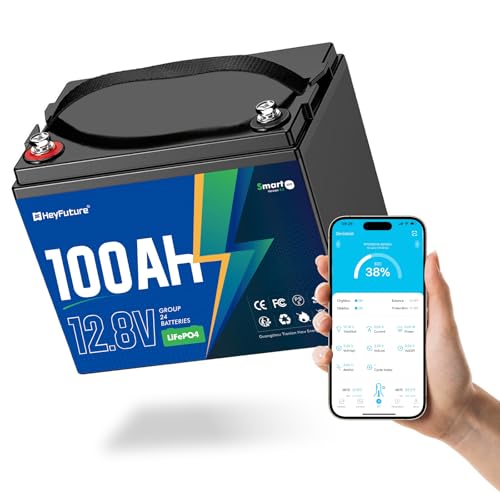
HeyFuture 12V 100Ah Bluetooth LiFePO4 Battery, Group 24
Group 24 owners who want a phone readout cheaply
Our take Check price for HeyFuture 12V 100Ah Bluetooth LiFePO4 Battery, Group 24 (opens in a new tab)

Best Lead-Acid Dual Purpose
Interstate Batteries Marine/RV 12V 70Ah 750CCA Group 24 AGM
dual-purpose starting and light house duty
Our take Check price for Interstate Batteries Marine/RV 12V 70Ah 750CCA Group 24 AGM (opens in a new tab)
Best Small AGM Pair
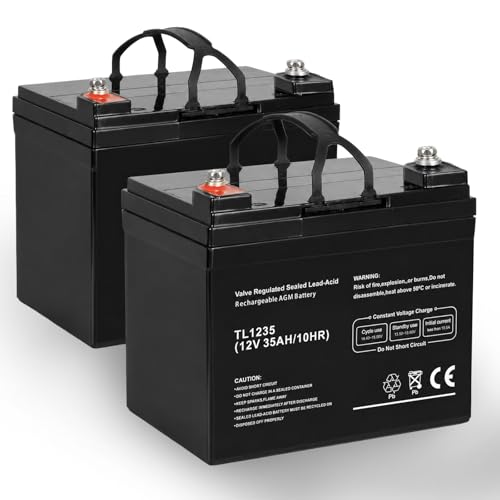
Daakmax 12V 35Ah Deep Cycle AGM Battery, Pack of 2
pop-up campers and short-weekend light loads
Our take Check price for Daakmax 12V 35Ah Deep Cycle AGM Battery, Pack of 2 (opens in a new tab)
Why Each Pick Made the Cut
Best Overall1 of 6
SUPER EMPOWER 12V 100Ah LiFePO4 Battery, Group 24 on Amazon (opens in a new tab)
The strongest case for SUPER EMPOWER 12V 100Ah LiFePO4 Battery, Group 24 is listing spells out 14.4 to 14.6 volt charging.
Best for
- first-time lithium upgraders who want clear charge settings
Why it made the shortlist
For first-time lithium upgraders who want clear charge settings, this is one of the more relevant configurations in the shortlist. The documented setup centers on 1,280Wh nominal, Group 24, 21.6 lb, 100A BMS, five-year warranty.
Its case starts with listing spells out 14.4 to 14.6 volt charging. Its 21.6 lb, 100A BMS specification sits at the lower end of the comparable range in this 2-product comparison. Confirm whether that figure refers to tool weight or working capacity before comparing it directly.
The trade-off worth checking first is no heater, so no charging below 32°F. Confirm whether the stated figure refers to product weight or rated working capacity. Compare it with your lifting, transport and support requirements before deciding.
Key dimensions & specs
- 1,280Wh nominal, Group 24
- 21.6 lb, 100A BMS
- Five-year warranty
Pros
- Listing spells out 14.4 to 14.6 volt charging
- Group 24 case at 21.6 pounds drops into old trays
- Charging pause and resume temperatures are published
Cons
- No heater, so no charging below 32°F
- Costs $33 more than the VEMDIA Group 31 pick
Best Lightweight Group 312 of 6
VEMDIA 12V 100Ah LiFePO4 Battery, Group 31 Deep Cycle on Amazon (opens in a new tab)
VEMDIA 12V 100Ah LiFePO4 Battery, Group 31 Deep Cycle is the better fit when group 31 trays and tight lithium budgets.
Best for
- Group 31 trays and tight lithium budgets
Why it made the shortlist
The intended use case is Group 31 trays and tight lithium budgets. The documented setup centers on 24 lb, Group 31, 100A smart BMS, 5-hour charge at 20A.
What separates it on paper is 24-pound weight is easy to lift into a tray. Its 24 lb, Group 31 specification sits at the upper end of the comparable range in this 2-product comparison. Confirm whether that figure refers to tool weight or working capacity before comparing it directly.
Before committing, account for listing does not state the warranty length. Confirm whether the stated figure refers to product weight or rated working capacity. Compare it with your lifting, transport and support requirements before deciding.
Key dimensions & specs
- 24 lb, Group 31
- 100A smart BMS
- 5-hour charge at 20A
Pros
- 24-pound weight is easy to lift into a tray
- Stops charging below 32°F to protect cells
- Five-hour recharge quoted from a 20A charger
Cons
- Listing does not state the warranty length
- Cycle figures differ between bullets, so verify before relying
Best Documented Cycle Curve3 of 6
Rvpozwer 12V 100Ah LiFePO4 Battery, Group 31, Built-in 100A BMS on Amazon (opens in a new tab)
Choose Rvpozwer 12V 100Ah LiFePO4 Battery, Group 31, Built-in 100A BMS for cycle count given at 100, 80 and 60 percent.
Best for
- deep daily cycling in a Group 31 tray
Why it made the shortlist
Rvpozwer 12V 100Ah LiFePO4 Battery, Group 31, Built-in 100A BMS is positioned for deep daily cycling in a Group 31 tray. The documented setup centers on group 31, 1,280Wh, 4,000 cycles at 100% DoD, up to 4S4P expansion.
The feature doing most of the work here is cycle count given at 100, 80 and 60 percent. Against the other 5 picks, the useful comparison starts with group 31, 1,280Wh and 4,000 cycles at 100% DoD. Those details show whether its configuration suits the job better than a neighboring recommendation.
The practical constraint here is title says 100A BMS but a bullet says 120A. Confirm the exact model number and included components before ordering. Check dimensions, compatibility and maintenance needs against the way you plan to use and store it.
Key dimensions & specs
- Group 31, 1,280Wh
- 4,000 cycles at 100% DoD
- Up to 4S4P expansion
Pros
- Cycle count given at 100, 80 and 60 percent
- Parallel up to 400Ah for a bigger bank
- Group 31 fit with a carry handle
Cons
- Title says 100A BMS but a bullet says 120A
- Warranty length is not stated in the listing text
Best Budget Group 24 With Bluetooth4 of 6
HeyFuture 12V 100Ah Bluetooth LiFePO4 Battery, Group 24 on Amazon (opens in a new tab)
HeyFuture 12V 100Ah Bluetooth LiFePO4 Battery, Group 24 makes the shortlist because bluetooth monitoring included at under $160.
Best for
- Group 24 owners who want a phone readout cheaply
Why it made the shortlist
This model is aimed at Group 24 owners who want a phone readout cheaply. The documented setup centers on group 24, Bluetooth, 1,280Wh nominal, five-year support.
The most useful documented advantage is bluetooth monitoring included at under $160. Against the other 5 picks, the useful comparison starts with group 24, Bluetooth and 1,280Wh nominal. Those details show whether its configuration suits the job better than a neighboring recommendation.
The main limitation to plan around is weight and cycle count are not in the listing. Confirm the exact model number and included components before ordering. Check dimensions, compatibility and maintenance needs against the way you plan to use and store it.
Key dimensions & specs
- Group 24, Bluetooth
- 1,280Wh nominal
- Five-year support
Pros
- Bluetooth monitoring included at under $160
- Group 24 size matches common battery boxes
- Series or parallel to 48V and 400Ah
- Case is described as shock resistant
Cons
- Weight and cycle count are not in the listing
- Cold cutoff temperature is named but not quantified
Best Lead-Acid Dual Purpose5 of 6
Interstate Batteries Marine/RV 12V 70Ah 750CCA Group 24 AGM on Amazon (opens in a new tab)
The strongest case for Interstate Batteries Marine/RV 12V 70Ah 750CCA Group 24 AGM is cranks engines and also powers house loads.
Best for
- dual-purpose starting and light house duty
Why it made the shortlist
For dual-purpose starting and light house duty, this is one of the more relevant configurations in the shortlist. The documented setup centers on 70Ah AGM, 750CCA, group 24 pure lead, about 840Wh nominal.
Its case starts with cranks engines and also powers house loads. Its 70Ah AGM, 750CCA specification sits at the upper end of the comparable range in this 2-product comparison. Treat the battery platform and included charger as part of the fit, not just the headline number.
The trade-off worth checking first is about 420Wh usable at a 50 percent discharge limit. Confirm whether the battery and charger are included with the exact package. Check platform compatibility and published runtime against the area or workload you need to cover.
Key dimensions & specs
- 70Ah AGM, 750CCA
- Group 24 pure lead
- About 840Wh nominal
Pros
- Cranks engines and also powers house loads
- Pure-lead plates are billed as lasting two to three times longer
- Sealed AGM design needs no watering
- Still accepts charge in freezing weather
Cons
- About 420Wh usable at a 50 percent discharge limit
- Costs $79.96 more than SUPER EMPOWER lithium
Best Small AGM Pair6 of 6
Daakmax 12V 35Ah Deep Cycle AGM Battery, Pack of 2 on Amazon (opens in a new tab)
Daakmax 12V 35Ah Deep Cycle AGM Battery, Pack of 2 is the better fit when pop-up campers and short-weekend light loads.
Best for
- pop-up campers and short-weekend light loads
Why it made the shortlist
The intended use case is pop-up campers and short-weekend light loads. The documented setup centers on 2 x 35Ah AGM, 70Ah when paralleled, one-year warranty.
What separates it on paper is two batteries for $124.99, about $62.50 each. Its 2 x 35Ah AGM specification sits at the lower end of the comparable range in this 2-product comparison. Treat the battery platform and included charger as part of the fit, not just the headline number.
Before committing, account for about 420Wh usable at a 50 percent limit. Confirm whether the battery and charger are included with the exact package. Check platform compatibility and published runtime against the area or workload you need to cover.
Key dimensions & specs
- 2 x 35Ah AGM
- 70Ah when paralleled
- One-year warranty
Pros
- Two batteries for $124.99, about $62.50 each
- Sealed AGM design is maintenance free
- Splits into two lighter units for carrying
- Low self-discharge suits seasonal storage use
Cons
- About 420Wh usable at a 50 percent limit
- One-year warranty is the shortest in this roundup
How We Built This Shortlist
Each pick was assessed across 5 criteria weighted for real-world use.
- Usable energy
- We converted each label to nominal watt-hours, then applied a depth-of-discharge limit by chemistry, 80 percent for lithium and 50 percent for lead-acid as planning assumptions, to compare what you can really draw.
- Cost per usable kilowatt-hour
- We divided each price by its usable energy so a $125 pair and a $260 single could be compared on one scale, and labelled those figures as estimates.
- Case size and weight
- We recorded the BCI group size, the listed dimensions and weight where published, and flagged listings that omit them, since fit in your tray decides the purchase.
- Charge and cold behavior
- We looked for the stated charge voltage, the temperatures where charging stops, and whether those numbers are published or only implied.
- Warranty and maintenance
- We compared warranty length, venting and watering needs, and whether a monitor or app is part of the battery.
What Matters Before You Choose an RV Battery
Key buying criteria so you get the right fit the first time.
Chemistry and usable energy
Chemistry decides how much of the label you can actually use. LiFePO4 is commonly cycled to 80 percent or more, so a 100Ah battery gives about 1,024 to 1,280Wh, while lead-acid is usually limited to around 50 percent, about 600Wh from 100Ah at 12V. That means a 70Ah AGM supplies roughly a third of the energy of a 100Ah lithium for more money. Read the chemistry in the title and compare watt-hours, not amp-hours.
Cycle life at stated depth
A cycle count only means something with its depth of discharge attached. Lithium listings here quote 4,000 cycles at 100 percent but up to 15,000 at 60 percent, so a headline number may assume you barely use the battery. If you drain it daily, the 100 percent figure is the one that applies. Find the line pairing cycles with percent depth, and treat a bare number as marketing.
Charge profile and charger match
A battery needs the right voltage to fill, and the wrong profile quietly undercharges it. The SUPER EMPOWER listing asks for 14.4 to 14.6 volts, which many older RV converters do not supply, and non-lithium chargers are not recommended. An undercharged lithium battery loses usable capacity every cycle. Check the converter or solar controller for a lithium mode before buying.
Case size, weight and mounting
Group 24 and Group 31 are standard footprints, and a Group 31 case is longer, so the VEMDIA at 12.9 inches will not fit a Group 24 tray. Weight matters for tongue weight and lifting, since 21.6 pounds of lithium replaces an AGM that can weigh far more. Measure the tray length, width and height, and confirm the terminal type and location on the listing.
Low-temperature behavior
Lithium cells can be damaged if charged below freezing, so a good battery management system stops charging near 32°F and does not restart until about 41°F, as the SUPER EMPOWER states. AGM batteries keep accepting charge in the cold but deliver less capacity. If your bay is unheated in winter, you need either AGM or a lithium battery with a heater. Look for the exact cutoff numbers rather than a generic phrase like all-weather.
Warranty and lifetime cost
A longer warranty protects you from the early failures cheap batteries show, and cost per lifetime kilowatt-hour tells you whether a cheap AGM is really cheap. A one-year AGM pair at $124.99 versus a five-year lithium at $179.99 flips once you count replacements. Divide price by usable energy and by claimed cycles, and read what the warranty excludes, such as charging below freezing.
Match an RV Battery to Your RV
By Chemistry and Job
| Your situation | Recommended pick | Why |
|---|---|---|
| Travel trailer house bank, daily use | SUPER EMPOWER 100Ah | Published charge settings and a five-year warranty |
| Group 31 tray, lowest lithium price | VEMDIA 100Ah | About $115 per nominal kWh, 24 lb |
| Deep cycling you want documented | Rvpozwer 100Ah | Cycle counts listed at 100, 80 and 60 percent |
| Want a phone readout on a budget | HeyFuture 100Ah | Bluetooth in a Group 24 case under $160 |
| One battery must start and run loads | Interstate AGM 70Ah | 750 cold-cranking amps plus deep-cycle design |
| Pop-up camper, few light loads | Daakmax 35Ah Pair | Two small AGMs for $124.99 |
Scroll sideways to see every column.
By Budget
| Budget | Recommended pick |
|---|---|
| Under $130 | Daakmax 35Ah Pair |
| $130 to $150 | VEMDIA 100Ah |
| $150 to $165 | Rvpozwer 100Ah or HeyFuture 100Ah |
| $165 to $185 | SUPER EMPOWER 100Ah |
| $250 to $260 | Interstate AGM 70Ah |
Lithium vs AGM
- LiFePO4 lithium
- Delivers about 80 to 100 percent of its rating, weighs roughly a third as much and survives thousands of cycles, but stops charging near 32°F and needs a lithium-aware charger. Here that is the SUPER EMPOWER, VEMDIA, Rvpozwer and HeyFuture.
- AGM lead-acid
- Costs less per battery, accepts charge in the cold and can crank an engine, but only about half the rating is safely usable and it is heavy. Here that is the Interstate AGM 70Ah and the Daakmax 35Ah Pair.
Most RV owners should default to lithium for a house bank unless the battery will charge in freezing weather without heat or must also start an engine.
By BCI Case Size
| Your tray | Recommended pick |
|---|---|
| Group 24 tray, want published specs | SUPER EMPOWER 100Ah |
| Group 24 tray, want Bluetooth | HeyFuture 100Ah |
| Group 31 tray, lowest price | VEMDIA 100Ah |
| Group 31 tray, cycle table in writing | Rvpozwer 100Ah |
| Group 24 tray, AGM with cranking | Interstate AGM 70Ah |
For Weekend Campers Without Solar Specifically
- Look for
- Enough nominal energy to cover two nights of loads plus a margin, and a charger that matches the chemistry. A 100Ah lithium holds 1,280Wh, so a 60W average load runs about 17 hours at 80 percent usable, an estimate before inverter losses.
- In this comparison
- The SUPER EMPOWER 100Ah gives you that energy in a Group 24 case, while the Daakmax 35Ah Pair covers a very light weekend at the lowest outlay.
When to Spend More
- Spend more if
- You want charge settings spelled out or a battery that also cranks: the SUPER EMPOWER 100Ah costs $33 more than the VEMDIA but documents its voltages, and the Interstate AGM adds the 750CCA rating.
- Save if
- Your bay is heated and your loads are modest: the VEMDIA 100Ah at $146.98 or the Daakmax 35Ah Pair at $124.99 cover the basics.
Before You Bring One Home
Can I replace my RV lead-acid battery with lithium?
Usually yes, if the size matches and the charger can supply 14.4 to 14.6 volts. Many older converters use a lead-acid profile that undercharges lithium, so check for a lithium or auto-detect mode. The SUPER EMPOWER listing also recommends a DC-DC charger for alternator or generator charging.
What is the most common mistake when buying an RV battery?
Comparing amp-hours across chemistries. A 100Ah lithium gives about 1,024 to 1,280Wh usable, while a 100Ah AGM gives roughly 600Wh at a 50 percent limit. Compare usable watt-hours and price per usable kilowatt-hour instead.
Is the SUPER EMPOWER worth $33 more than the VEMDIA?
If you will install it yourself and want clear charge voltages, cold limits and a five-year warranty, yes. If your tray is Group 31 and you already know your charger settings, the VEMDIA saves money at the same 1,280Wh.
How do I wire two batteries to get more capacity?
Connect positive to positive and negative to negative for parallel, which keeps 12V and adds amp-hours. Series raises voltage to 24V and is for 24V systems only. Use identical batteries of the same age, and fully charge each separately before joining them.
Should I use the Interstate AGM as a house battery?
It works, but it is a dual-purpose design with 750 cold-cranking amps. For a house bank, a deep-cycle battery gives more usable energy per dollar. Pick the Interstate when the same battery must start an engine.
How should I store RV batteries over winter?
Charge AGM batteries fully, since they self-discharge slowly, and disconnect loads. Store lithium at partial charge in a space above the low-temperature limit if possible. Check voltage every couple of months and recharge when needed.
Bottom Line
Best overall: SUPER EMPOWER 12V 100Ah LiFePO4 Battery, Group 24 — best overall pick in this roundup. See the full verdicts above for every pick, with pros, cons and who each one suits.
Browse all rv batteries on Amazon — Prime-eligible options with current pricing.